


TACTICAL ANALYSIS: Goals aside, Michael Olunga's crucial role in Harambee Stars dismantling Seychelles


Reading Time: 4min | Wed. 10.09.25. | 08:12
Kenya’s 5-0 victory was a product of tactical clarity and execution. Benni McCarthy’s switch to a 4-4-2 maximised the strengths of his personnel, with Olunga and Ogam’s movement destabilising Seychelles’ defensive structure
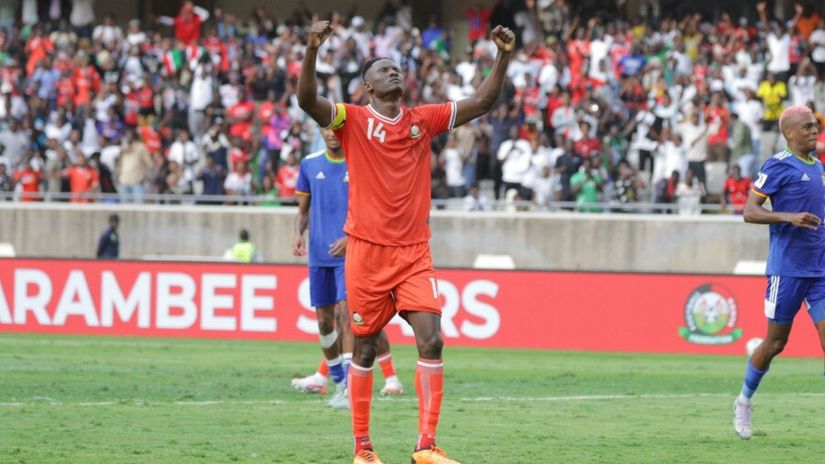
Harambee Stars soothed their 1-3 drubbing at the hands of The Gambia with a commanding 5-0 hiding of African minnow Seychelles in the 2026 FIFA World Cup qualifiers, with captain Michael Olunga at the centre of the demolition job.
Follow our WhatsApp channel for more news
The game also saw Olunga add to his 2026 FIFA World Cup qualifiers goals with a brace to equal Dennis Oliech's tally of 34 goals for Harambee Stars.
This marked Kenya's second victory in the qualifier campaign, their first also coming against Seychelles in 2023 at the Stade Félix Houphouët-Boigny in Ivory Coast, where Olunga similarly scored twice in a 5-0 triumph.
.jpg)
Coming off a 3-1 defeat to The Gambia, coach Benni McCarthy made notable adjustments to his lineup and tactical setup. Ryan Ogam was handed a starting role alongside Olunga in a front two, while Manzur Okwaro filled in at left-back for the suspended Abud Omar.
McCarthy also switched from his base 4-2-3-1 to a 4-4-2 formation, signalling an aggressive attacking approach.
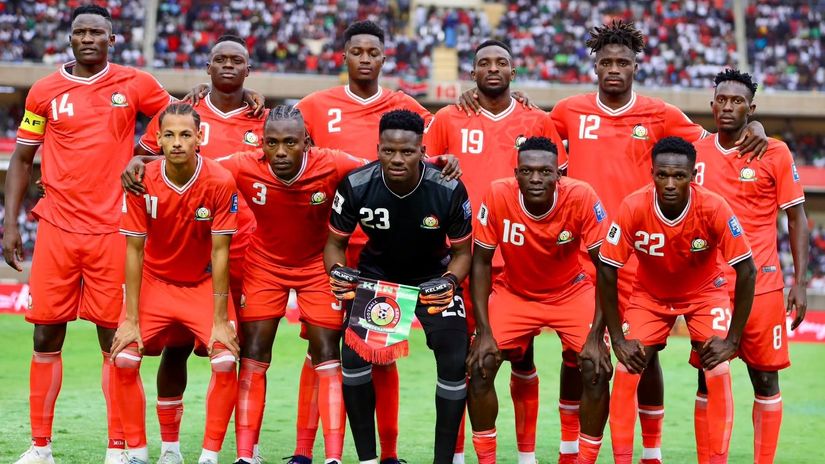
Kenya lined up with Brian Bwire in goal, protected by a back four of Rooney Onyango, Sylvester Owino, Collins Sichenje, and Okwaro.
The midfield pivot consisted of Duke Abuya and Alpha Onyango, with William Lenkupae and Job Ochieng providing width. Olunga and Ogam formed the striking partnership that became central to Kenya’s attacking dynamics.
Seychelles’ Low Block and Kenya’s Build-Up
Seychelles adopted a 5-3-2 low-block defensive system, ceding possession and defending deep. This approach allowed Kenya’s centre-backs, Owino and Sichenje, to comfortably build from the back, while fullbacks Rooney Onyango and Okwaro advanced high up the pitch to stretch play.
The midfield duo, particularly Abuya, played a crucial role in connecting phases of play by dropping deep to receive the ball and progressing it forward. While Okwaro remained conservative in the first half, Rooney Onyango pushed forward with intent, often operating as a winger.
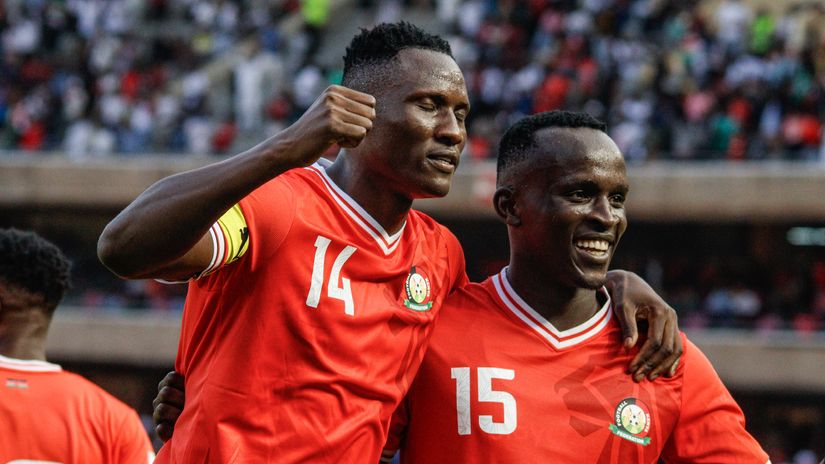
His advanced positioning allowed Lenkupae to drift centrally, creating overloads in midfield and opening attacking lanes.
Rooney’s directness and pace created repeated 1v1 situations against Seychelles’ left wingback Vince Fred. Kenya’s forwards, Olunga and Ogam, further disrupted the Seychelles defence with diagonal runs between Fred and centre-back Warren Mellie, forcing Mellie to track their movements and leaving Fred isolated.
This intelligent movement became a recurring theme in Kenya’s attacking success.
Set Piece Masterclass and Aerial Dominance
Kenya’s dominance in the air was evident early on and proved decisive. Set-piece routines orchestrated by Duke Abuya unsettled Seychelles with their unpredictability.
Abuya alternated deliveries between near and far posts, making it difficult for the opposition to track runners and anticipate the ball’s trajectory.
The opening goal came from a well-timed near-post delivery that Ogam converted, while Sichenje’s towering header at the far post doubled the lead. Kenya’s third goal also came via an aerial route, underlining their superiority in these situations.
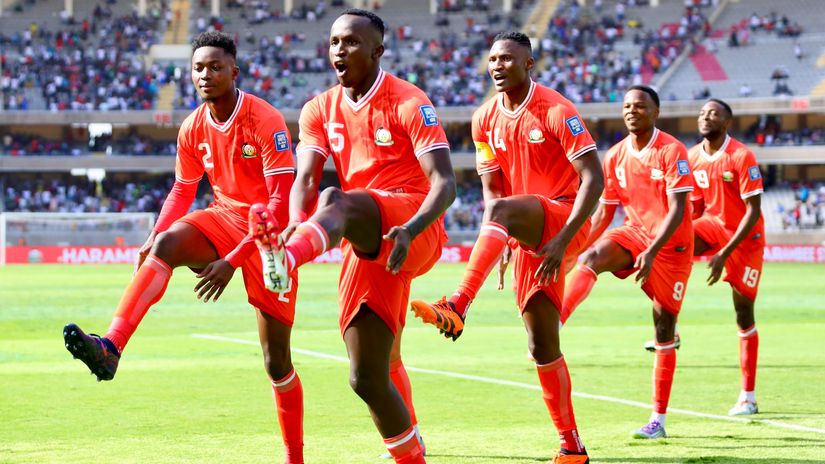
The team’s organisation was key, as they overloaded the penalty area, attacked specific zones, and ensured multiple players were making aggressive runs, overwhelming Seychelles’ defensive structure.
Michael Olunga’s Tactical Influence
While Olunga’s brace will capture headlines, his overall tactical contribution was equally vital. Operating as the focal point in attack, Olunga demonstrated exceptional hold-up play, frequently dropping into midfield to link with teammates and create overloads. This movement was instrumental in Kenya’s third goal.
Holding possession on the edge of the final third, Olunga released a perfectly timed pass to an advancing Abuya, who drove forward and struck the upright, allowing Ogam to finish the rebound.
Olunga’s ability to occupy defenders also created space for others; his diagonal runs between the Seychelles wingback and centre-back opened lanes for Lenkupae to attack from deep.
Furthermore, his intelligent positioning drew defenders centrally, leaving Rooney Onyango in isolation against Fred. This facilitated Kenya’s frequent 1v1 opportunities on the right flank, a key tactical weapon in dismantling Seychelles’ compact block.
Olunga’s performance showcased not just his scoring ability but his importance as a complete striker capable of influencing multiple phases of play.
A Statement of Tactical Superiority
Kenya’s 5-0 victory was a product of tactical clarity and execution. Benni McCarthy’s switch to a 4-4-2 maximised the strengths of his personnel, with Olunga and Ogam’s movement destabilising Seychelles’ defensive structure.
The aggressive fullback positioning, combined with clever midfield rotations, provided multiple attacking outlets, while set-piece proficiency added a ruthless edge.
Olunga’s all-round contribution epitomised Kenya’s dominance, combining goals, link-up play, and intelligent movement to create opportunities for teammates.
This performance not only reaffirmed Kenya’s aerial threat but also demonstrated their ability to adapt tactically, a positive sign as they push forward in their World Cup qualifying campaign.