


New owners - can Atletico finally catch up with Real Madrid?
.jpg)






Reading Time: 6min | Sun. 16.11.25. | 20:45
Huge American investment fund bought the second biggest club in the Spanish capital
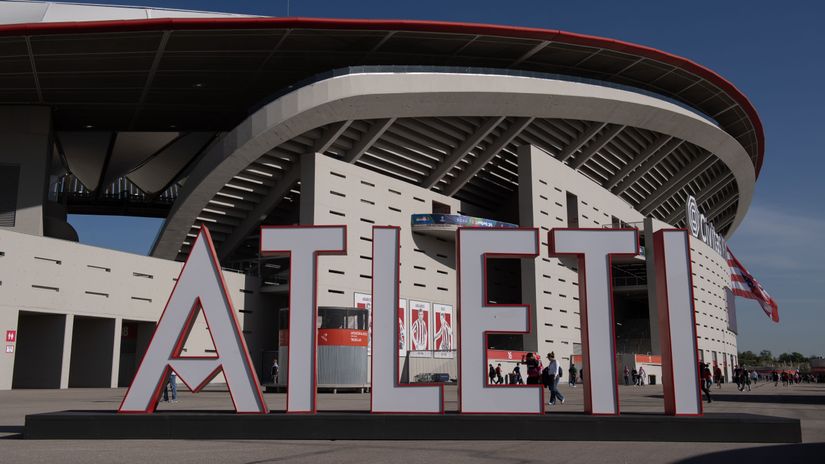
Rumors had been circulating since June that Atletico Madrid was being sold. Early in the season, insiders confirmed the news, and last week it was made official. Apollo Global Management, one of the largest investment funds in the world, is buying a majority stake. In this sale, the club’s total value has been estimated at 2.5 billion euros, and the financial giant is acquiring 57% for 1.4 billion. This is the largest operation of its kind in Spanish football to date.
🚨🇪🇸 𝐎𝐅𝐅𝐈𝐂𝐈𝐀𝐋 | Apollo Sports Capital have taken over Atletico Madrid! They are now a majority shareholder.💰
— EuroFoot (@eurofootcom) November 10, 2025
Statement: "The group intends to invest additional capital to support long-term plans, including further investment in teams and major infrastructure projects." pic.twitter.com/rO6PvvsVwg
“If we use the usual nickname ‘shark’ that is given to these funds, we can say that Apollo is one of the biggest great white sharks on the planet” explained economic journalist Javier Ruiz, presenting figures that make your head spin. Namely, the purchase of Atletico represents only a minimal part of the fund’s budget, which primarily circulates the money of American retirees — around 75 billion dollars per quarter. Overall, Apollo manages assets worth 908 billion dollars, roughly equivalent to Spain’s entire annual GDP.
Apollo Sports Capital, the arm of the fund designated for sports investments, thus becomes the owner of the red-and-whites, while Miguel Angel Gil and Enrique Cerezo will retain minority stakes and, at least for now, remain at the helm of the club. Atletico, the third-highest-earning club in Spain, has shown, if nothing else, that it has people capable of doing business at the top. And besides the sporting project, a large portion of the investment will be allocated to the sports city project near the Metropolitano Stadium. Just two days later, while the Colchoneros were still trying to absorb everything that awaited them, their Madrid neighbor seized the moment and announced its own earth-shaking plan. Florentino Perez will present to the assembly of members the possibility of turning Real Madrid into a joint-stock company and selling 10% of the club to an external investor.
Apollo takes majority control of Atlético de Madrid in €2.5bn deal 🔴⚪
— Football Benchmark (@Football_BM) November 12, 2025
US private equity firm Apollo Global Management has acquired a reported 55% stake in the club, valuing it at around €2.5bn including debt, according to media reports. pic.twitter.com/bt4JLag8gu
Real Madrid is one of the rare clubs that still belong to its members. It is a structure that, beneath its romantic surface, hides advantages that Real — along with Barcelona, Athletic Bilbao, and Osasuna — have enjoyed for decades. These two giants and their two smaller companions, who by chance ended up in this group, were exempt from the obligation to convert into joint-stock companies instead of sporting associations, and as such to be accountable for their debts. And until the European Commission intervened in 2016, they were even exempt from certain taxes. That status was long extremely favorable, but now, threatened by the astronomical capital foreign investors are ready to inject into Spanish football, it seems it no longer is. Barcelona, for example, conducted a survey among its members last year asking whether they would prefer to become a joint-stock company.
Florentino Perez has taken a step further and presented a concrete plan: 10% of Real’s capital would be offered to investors, while 90% would remain shielded, with members — now turned into shareholders — allowed to sell their shares only to other members. New shareholders within that 90% could only be the children and grandchildren of current members, and no one from outside. Thus, the Royal Club would finally find out its true market value. Although it is currently estimated at a little over 6 billion, its president is convinced it is worth around 10 billion euros. On the other hand, the entry of a new partner into the club’s structure — a position that many will undoubtedly fight for — would accelerate growth plans, currently focused mainly on the new Bernabeu and the enormous revenue it already generates.
The trend set by the Premier League — where only four clubs still have English owners — is clear. And Spain has begun to follow the same path. Besides Atletico, Espanyol recently became owned by a foreign investment fund through Velocity Sports. Other La Liga clubs where foreign owners hold a majority stake — companies, not funds — include Valencia, Oviedo, Elche, Mallorca and Girona. However, Spanish football is now, for the first time, witnessing investment on such a large scale, so it’s no wonder that Atletico fans see dollar signs spinning like a slot machine. Counting the immeasurable sums of money the new owner controls, many conclude that now the club can sign anyone. For example — Erling Haaland. Why not? Manchester City was once the weaker club in its own city.

But their dreams could collide with a few obstacles. On one hand, there is risk: investment funds do not play the long game — their goal is to increase the value of their investment and sell it for much more after five, six, or ten years. The outcome is already known: Atletico could be launched into the highest elite, or it could collapse in the hands of a new Peter Lim. On the other hand, if we analyze profitability, we must consider the Spanish reality in which not a single major foreign investment has succeeded so far. It is enough to look at the results of Valencia, Oviedo, Elche, Mallorca, Girona, and others like Leganes, Almería or Malaga — at best momentary, with no continuity.
The main reason is the specter known as financial fair play, or “you may not spend more than you earn.” If UEFA intended with this formula to stop the excessive spending of global tycoons who distort the balance of European competitions, Spain has turned it into a blockade. La Liga’s economic control is carried out in advance, so before each season Javier Tebas and his team calculate how much each club may spend, based on projected revenue and existing debt. This means Atletico will now receive an influx of capital, but the portion of that capital that can be spent on transfers and wages will be decided by La Liga, after assigning a rating from A (100%) to D (0%). That is why the initial investments are intended for infrastructure, which is exempt from these rules.
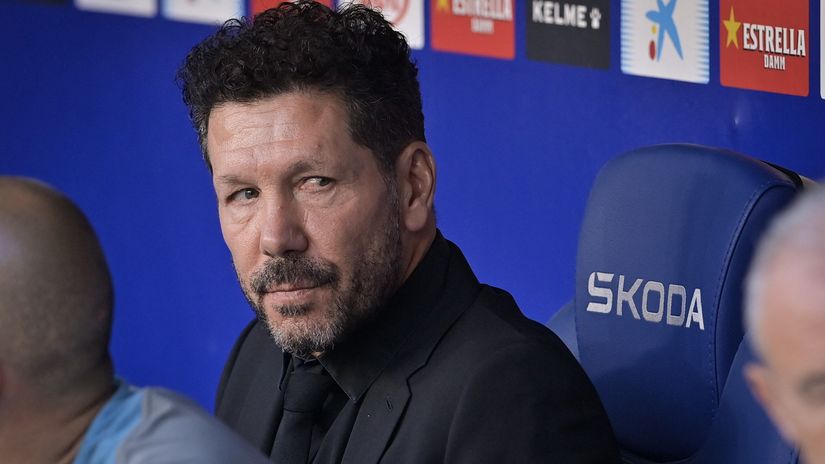
To the question of whether the red-and-whites can become the new Manchester City, the most likely answer is — no. The structure of Spanish football and its regulations have been shaped for decades so that only two untouchable rulers may exist. It was so at the time of the Sports Law of 1990, so it was before, and so it remains today. Intruders survive a season or two and then disappear without a trace. Nevertheless, Diego Simeone’s Atletico is a sort of anomaly in the system, and it is precisely for that reason that Apollo set its sights on it. Now the investment must become profitable, and beyond infrastructure, sporting growth will be essential. It remains to be seen whether the interest of a great white shark is enough to overcome the interests of the smaller sharks that, though less powerful, swim in their home sea. If it is, this whole non-football story could gift Madrid a new football giant.