


.jpg)
Paris 2024: How Kenya's Olympic prize money compares to other countries



.jpg)



Reading Time: 3min | Wed. 14.08.24. | 06:55
While some countries dish out some financial incentives to their athletes, other do not, with others resulting for non-monetary awards
Forming part of the discussions following a rather decent outing by Team Kenya at the recently concluded Paris 2024 Olympic Games, unsurprisingly was the amount of money the athletes took home from the Government.
As per ready public information, all Kenyan athletes who medaled are entitled to a cash reward, which would be distributed based on the medal colour.
Kenyan gold medalists, excluding the Ksh6.5 million from World Athletics that goes to all track winners, ought to receive Ksh3 million, with silver and bronze medals getting Ksh2 and 1 million respectively.
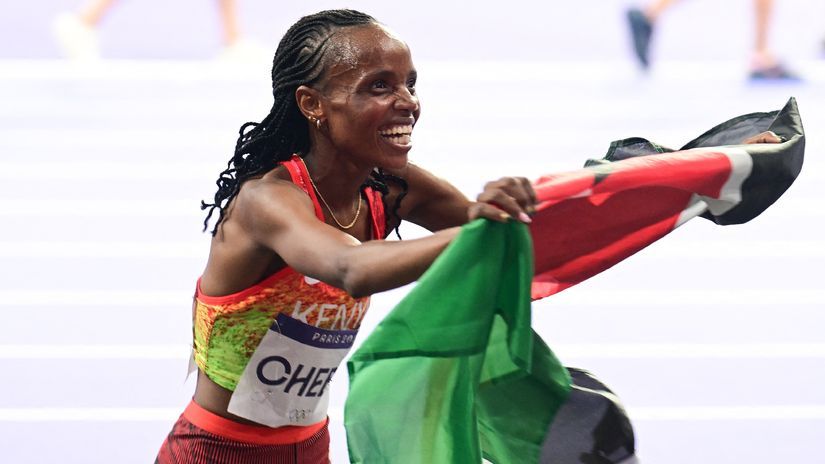
Cumulatively, Mozzart Sport reported that Beatrice Chebet was the highest-earning Kenyan athlete from the Summer Games, earning a cool Ksh19 million courtesy of her two gold medals in the 5000m and 10000m finals.
A look at Kenya’s prize money however pales in comparison with other countries.
Mozzart Sport looks at some of the world leaders in the “art of gifting.”
As per The Economic Times, Hong Kong and Singapore top the list for the highest cash payouts for Olympic victories.
Hong Kong
Hong Kong recently increased its cash rewards by 20% since the Tokyo Summer Olympics, an adjustment that saw their gold medalists earn 6 million Hong Kong dollars (Ksh99,000,000), with silver and bronze medalists earning HK$3 million (Ksh49,000,000) and HK$1.5 million (Ksh24,000,000) respectively.
Singapore
Singapore also offers significant financial incentives.
The country provides 1 million Singapore dollars (Ksh97,000,000) for a gold medal, SG$500,000 (Ksh48,000,000) for a silver, and SG$250,000 (Ksh24,000,000) for a bronze.
Other countries that also offer eight-figure rewards to their gold medalists include Israel, Malaysia, Kazakhstan, and Indonesia.
France
France, the host of the Paris 2024 Olympics, increased its cash incentives so that gold medalists were awarded 80,000 euros (Ksh11 million), which is 15,000 euros (Ksh2 million) more than what was offered at the Tokyo Olympics.
Germany
Germany also rewards its athletes handsomely, with gold medalists receiving 20,000 euros (Ksh2.8 million).
The German Sports Aid Foundation extends financial prizes to athletes finishing up to eighth place.
Crazy awards
Whilst cash rewards are definitely appealing, other countries go the extra mile by giving additional non-monetary awards.
South Korea
One of those is South Korea, which offers a combination of prize money and lifelong pensions. Gold medalists can choose between a lifelong monthly pension of a million won (Ksh94,000) or a lump sum of 67.2 million won (Ksh6,300,000).
Some South Korean athletes also receive gifts like free drinks and transportation.
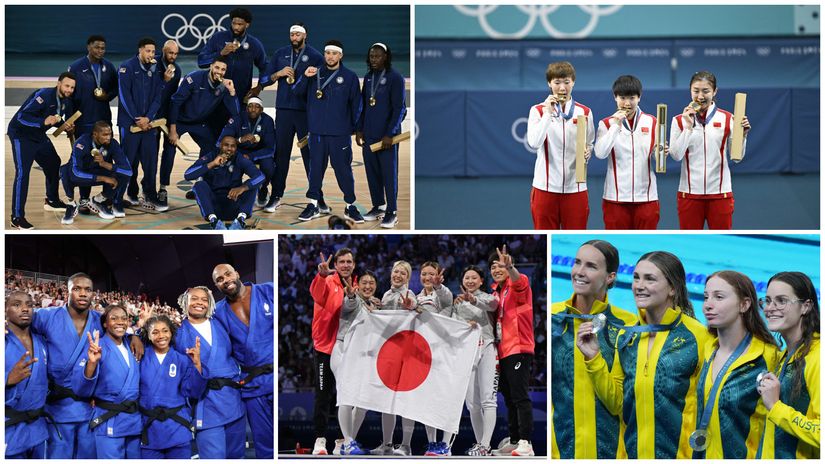
Interestingly, Hong Kong provides athletes free lifetime tickets for public transit, to the city's medalists.
Poland
In Poland, silver medalist Klaudia Zwolińska received 200,000 Polish zloty (Ksh6.4 million) from the Polish Olympic Committee, along with a painting, a holiday voucher, a scholarship, and a diamond for her performance in the women’s canoe slalom K1 competition.
United States
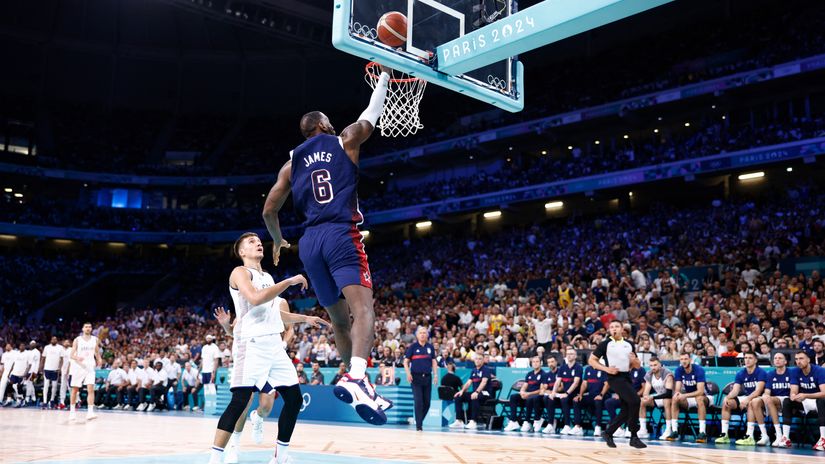
The United States, which topped the medal rankings with a whooping 126 total (40 gold, 44 silver and 42 bronze), are awarded Ksh4.9 million (gold), Ksh2.9 million (silver), and Ksh1.9 million (bronze).
In contrast, athletes from countries like Great Britain and Norway do not receive direct cash bonuses for winning medals.
Despite this, their achievements are celebrated in various other ways, reflecting the diverse approaches to rewarding Olympic success across the world.