


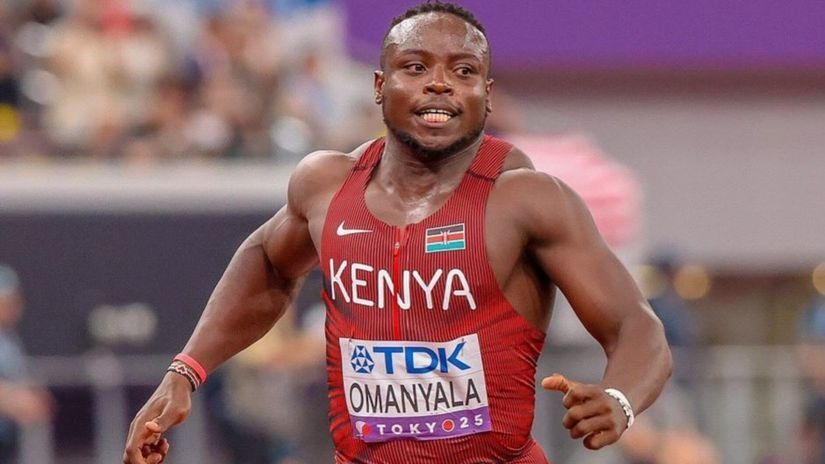
How Africa’s fastest man, Omanyala, is building the next generation of sprinters
.jpg)
.jpg)
.jpg)

Reading Time: 5min | Thu. 30.04.26. | 21:44
He hopes the initiative can eventually develop into a long-term structure capable of producing world-class sprinters from Kenya and across Africa
While he was out of the country chasing records and flying Kenya’s flag on the global stage, back home, Ferdinand Omanyala was already leaving another kind of legacy.
Download our MozzartSport App For More News
Over the recent school holidays, the Africa 100m record holder launched a youth-focused sprint programme through the Omanyala Sprints Club, bringing together young athletes eager to learn the foundations of sprinting from one of the continent’s most accomplished athletes.
The camp was designed not only to improve speed on the track but also to expose participants to the discipline, structure, and mentality required to succeed in elite athletics.
For Omanyala, the initiative is the beginning of a bigger dream of creating a system that will nurture future sprinters from Kenya and eventually grow into an international sprinting hub.
“The idea of the Omanyala Sprints Camp has always been close to my heart. It has long been my dream to create a platform where young athletes can be trained and exposed to proper sprinting knowledge and technique,” Omanyala said.
The programme combined technical sprint training with lessons on nutrition, preparation, recovery, and personal development, areas Omanyala believes are often ignored at the grassroots level.

Having risen to become Africa’s fastest man without access to such structures while growing up, he now wants younger athletes to benefit from opportunities his generation never had.
He admitted that seeing children embrace the sessions reminded him of his journey and the challenges he faced trying to break through in a country traditionally associated with long-distance running.
“Whenever I see young athletes who are passionate about sprinting and willing to take it seriously, it takes me back to my own journey.
Incredible african tour!! pic.twitter.com/NPMN7BFltr
— Ferdinand Omurwa OMANYALA M.B.S,O.G.W (@Ferdiomanyala) April 26, 2026
That is why it means so much to me to start them early, to give them someone they can look up to and a support system to guide them,” he explained.
The training sessions themselves mirrored professional environments used by elite athletes.
According to Omanyala Sprints Club programme manager Rachael Nyokabi, each day begins with light jogging, skipping drills, dynamic stretches, and activation exercises aimed at preparing the body for explosive movement while reducing injury risk.
After warm-ups, athletes move into sprint-focused drills centred on acceleration, running mechanics, and form correction.
Exercises such as 30-metre acceleration runs and controlled tempo sessions allow coaches to closely monitor movement and correct technique in real time.
“The main session would then include things like 4×30m acceleration runs followed by 110m tempo runs. These are really focused on technique since they’re not done at full speed, so coaches can correct form in real time,” Nyokabi explained.
Kipkeino classic 2026.
— Ferdinand Omurwa OMANYALA M.B.S,O.G.W (@Ferdiomanyala) April 26, 2026
A big thank you to team Omanyala. The season of restoration continues.
: @kwalanda_said pic.twitter.com/BHvOKAcxYn
The camp also introduced athletes to the technical side of sprinting by breaking down the different phases of a race, including the start, acceleration, maximum velocity, and deceleration. The goal was to help participants understand not just how to sprint fast, but why technique matters during every stage of a race.
Across the sessions, organisers noticed growing confidence and sharper coordination among the athletes. Nyokabi said one of the most striking aspects of the camp was the hunger shown by the children.
“Honestly, what stood out the most was their hunger. You could see the impact Ferdinand Omanyala has had. He has inspired a whole new generation, and these kids are showing up with so much passion and belief that they can also get there,” she continued.
Beyond speed and technique, the camp placed strong emphasis on discipline and professionalism. Organisers wanted participants to understand that success in athletics is built as much off the track as it is on it.
Omanyala stressed that sprinting at the highest level requires athletes to understand areas such as nutrition, recovery, preparation, and even personal branding.
“We made it clear that success goes beyond the track. Our goal is to nurture not just athletes, but well-rounded individuals who can grow into complete professionals and compete at the international level,” he said.
Behind the scenes, Nyokabi explained that running the programme required extensive planning, from securing training venues and coordinating schedules to managing registrations, logistics, coaches, physiotherapists, and communication with parents.
Like most grassroots programmes, the camp also faced challenges, including varying fitness levels among participants and the need to keep everyone engaged throughout the sessions. However, coaches adapted training where necessary to ensure every athlete benefited regardless of experience level.
Even within a few days, organisers could already see improvements in the children’s understanding of sprinting and overall confidence levels.
“Their confidence has definitely improved, and their understanding of sprinting is much better. You start to see cleaner technique, better coordination, and more intention in how they run,” Nyokabi said.
The broader vision, however, extends far beyond a single holiday programme.
Omanyala hopes the initiative can eventually develop into a long-term structure capable of producing world-class sprinters from Kenya and across Africa.
In many ways, the project reflects the changing face of Kenyan athletics. For decades, the country has dominated middle and long-distance running, but sprinting has rarely received the same investment or attention.
Now, through his own success and projects like the Omanyala Sprints Camp, the Kenyan star is trying to change that narrative.
“Looking ahead, we want both the camp and the club to grow into something bigger. Our vision is to build an international sprinting hub, one that develops as many talented sprinters as possible, not just from this region, but from across the world,” Omanyala concluded.