


 T. Nashipae
The prevalence of gender discrimination in sports in Kenya

.jpg)
.jpg)
.jpg)


Reading Time: 5min | Wed. 01.03.23. | 18:21
Although the situation has improved significantly over the years, discrimination in sports is alive and well.
Welcome to the new month. This year's International Zero Discrimination Day on March 1 gives us the chance to look into the prevalence of gender discrimination in sports and potential solutions to eradicate it.
One requirement for the efficient enjoyment of human rights is that everyone should be free to develop his or her intellectual, physical, and moral faculties. As a result, all people should have access to physical education and sport, which should be given and guaranteed. This implies that participating in sports and other physical activities is acknowledged as a human right, and as a result, both men and women have an equal right to play sports.
Gender discrimination in sports has been a controversial topic due to the inequality regarding wages, viewership, and general opportunities that exist between men and women in the world of competitive sports. Sportswomen continually face discrimination at all levels of play. Although discrimination is still prevalent today, things have steadily changed in the recent past.
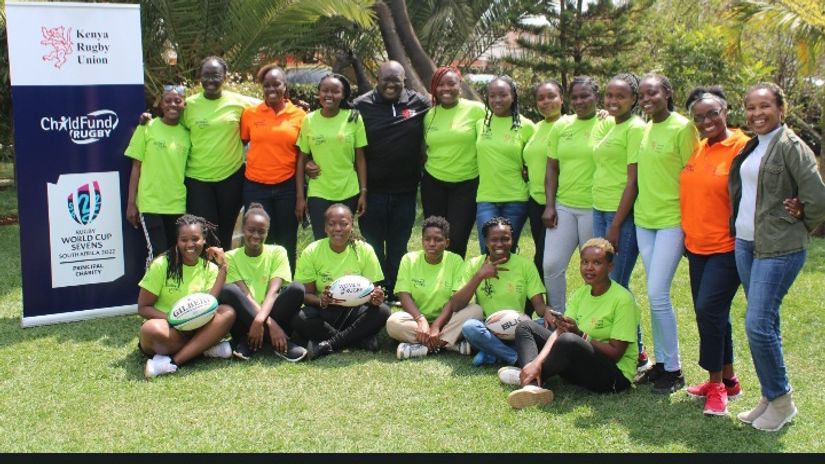
In order to enhance involvement and engagement among fans, audiences, players, and investors in the women's game, World Rugby created the Try and Stop Us global campaign in 2019. The international campaign, which had the backing of national unions and regions, was created utilizing eye-catching imagery and the motivating experiences of 15 women and girls who play rugby at various levels.
While such campaigns are the way to go, gender equality in sports is still a long way off. Three main issues can be used to explain gender prejudice in sports today. The first is the pay gap. In professional sports, men typically earn more money than women do. For instance, in December last year, the union announced that it was to blame for the sorry state of players’ performances. The Kenya Rugby Union, through Chairman Oduor Gangla, disclosed that they had not paid the players, both men, and women, their dues for close to six months.
Happy International Zero Discrimination Day! This year's theme is "Save lives, Decriminalize" At Save the Children, we believe every child deserves to be treated with dignity and respect, regardless of their race, gender, nationality, religion, or ability. #ZeroDiscriminationDay pic.twitter.com/whrVrMzO7q
— Save the Children Tanzania (@scitanzania) March 1, 2023
Later, Sportpesa intervened and assisted with a 126 million sponsorship. While the male players, like Shujaa, were relieved, their female counterparts were left wondering when their allowances would be paid. One of the team members disclosed that they felt discriminated against because the Shujaa had sponsors while the Lionesses had nothing.
"As Lionesses, we have not been paid our five months allowance, and we feel discriminated against because men now have sponsors while Lionesses have nothing. We attempted to contact KRU, but they kept making false promises. They had promised to sort us by mid-month this month (December 2022), but we are past that date. There are no insurances for the injured; right now, one of us has a knee injury and is caring for herself," one Lioness disclosed.
One common defense is that because women's sports do not generate nearly as much revenue as men's sports, there is less money available to pay women. This reasoning brings me to my second issue: the underreporting of women's sports. The insufficient media attention given to women's sports results in lower viewership and a smaller fan base. The encounter between KCB RFC and Kabras RFC on February 18 at the Ruaraka Grounds serves as an illustration of this.
Northern Suburbs and Western Spears played in a women's Kenya Cup match before the ESS game. This was different from the men's matches in that there was no media presence to cover the match as well as the coaches' post-match remarks. Such things lead to fewer sponsors and commercials, which are linked to lower remuneration.
.jpg)
Melody Kamau, the Captain of the UOE Trojanesses, is familiar with this ordeal. "We lack money to honor away fixtures in Nairobi and other places. Ladies’ rugby does not have many sponsors investing, and players lack money."
Kenya Lionesses’ playmaker Knight Otuoma told Mozzart Sport that the ladies all come second after the men have been sorted. "We are not equally supported. Men will always come before us," Knight disclosed.
Sometimes the issue is not just the volume of media coverage but also the story's actual content. The majority of observers frequently pay more attention to a woman's attractiveness than to her abilities and skills. Is the audience demanding that the media focus on appearances rather than talent? Any sportsperson should be judged on their skills, but when it comes to women, the emphasis swings from physical brilliance to remarks like "she has a great booty."
The other problem is typical stereotypes of sportswomen. For sportswomen, being muscular is not seen positively. They are always body shamed, while their male counterparts are held to high standards.
"A lady that plays rugby is seen as a masculine lady. Many do not like this because, honestly, playing rugby does not make you more of a man than a woman. One is still a lady. Rugby is a game just like any other, "Melody Kamau explained.
Marylynne Injehu, a Western Spears player, coach, and aspiring referee, worries that her dream of becoming a referee may be dashed by a lack of exposure to develop her abilities.
"The issue of gender discrimination is not addressed." One day, during the KICOSSA high school semi-finals pitting Koyonzo and Musingu against each other last year, there were no skilled referees. A question was then posed on who will ref the match and I took the challenge," Marylynne revealed.
She adds: "Everyone refused to let me ref the game and insisted I sit at the table and write the scores. Even at the table, some men kept saying that this lady (Marylynne) could not do anything well. So, it was a challenge."
While it takes male referees less time to officiate a match, Marylynne spent more than half of the season as an assistant referee despite having a rugby referee accreditation.
However, there is a silver lining to this. The Kenya Rugby Union and the Grassroots to Global Series entered into a partnership last year to organize a forum that brought together women leading community rugby to form a network that can connect towards achieving equality on and off the pitch. The Union also recently partnered with Alymali Sports for the commercialization and marketing of the Kenya Lionesses.
It is not an easy path to equality. To do this, there are numerous distinct factors to consider. Marketing is a good answer since it immediately refutes the claim that males should be paid more because they generate more income. Eliminating separate sports in primary schools is another crucial step toward equality. By encouraging women to seek jobs as players, journalists, coaches, and trainers, the Ministry should also create gender equity policies and hire more female sports executives to push sports toward gender equity.