


.jpg)
How Blak Blad use charity to attract success on the pitch
.jpg)





.jpg)


Reading Time: 6min | Tue. 31.03.26. | 21:43
espite operating under the same constraints that challenge most university teams, limited resources, high player turnover, and structural instability, Blak Blad continue to hold their ground in the Kenya Cup
It is a quiet afternoon at the Young Life Africa Children’s Home in Ruiru, Kiambu County, far isolated from the noise of the city and the usual collisions and calls that define rugby training sessions.
Download our Mozzart Sport app for more news
Kenyatta University’s Blak Blad players move easily among the children, sharing meals, stories, and moments that, at first glance, seem worlds away from the intensity of the rugby pitch.
But it is here, away from the game, that the foundation of one of Kenya Cup’s most consistent teams is built.
.jpg)
While many sides focus solely on performance metrics, Blak Blad have woven community service into their identity. Their quarterly visits to children’s homes and juvenile facilities are not just acts of charity; they are grounding moments that remind players of a purpose beyond rugby.
.jpg)
There is a biblical principle that says, “Give, and it will be given to you” (Luke 6:38). In many ways, Blak Blad embody this philosophy. Their consistent acts of generosity translate into unity, humility, and resilience, qualities that often separate good teams from great ones.
Their story challenges the conventional idea that success in sport is built purely on physical preparation and tactics. Instead, they offer a different blueprint, one where character, compassion, and community are just as important as skill.
And in a competition as demanding as the Kenya Cup, that balance may well be their greatest strength.
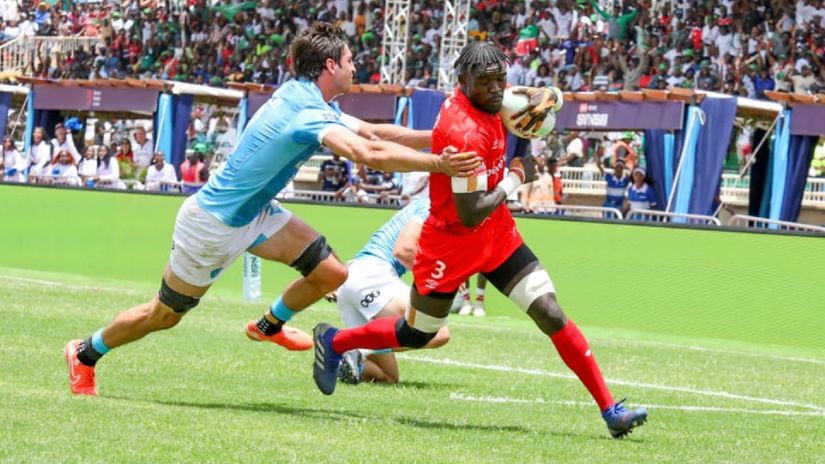
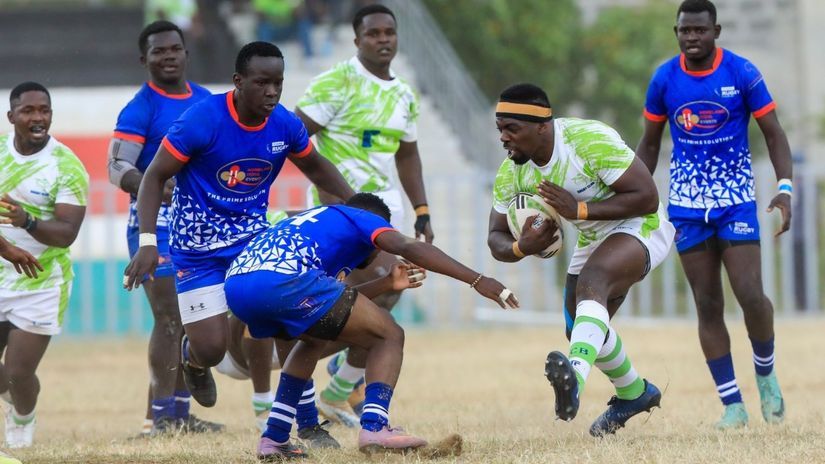
Blak Blad have quietly carved out a reputation as a side that refuses to fade. The university outfit has rarely missed a playoff spot in a league dominated by more established and better-resourced clubs.
Their ability to remain competitive, season after season, raises one key question: What sets them apart?
The answer, it turns out, lies beyond rugby.
I joined the team during their quarterly visit to the children’s home on Sunday, 29 March.
.jpg)
What unfolded was not a symbolic gesture, but a deliberate and deeply rooted culture of giving, one that players and coaches believe directly influences their performance.
“We are here visiting Young Life Children’s Home as part of our quarterly outreach. Giving back to the community is something we have intentionally embedded in Blak Blad.
It helps our players understand that they are privileged, and that there are others who do not have the same opportunities.
That awareness builds gratitude and a spirit of sharing, which in turn strengthens the brotherhood within the team,” head coach Benard Rotich said.
_(1).jpg)
Rotich’s philosophy leans heavily on character in a sport where success is often measured through physicality and tactical precision,
“What I have learned over time is that both on and off the field, it is about people. You have to be a good person first before you become a player or anything else.
When you have values like care, kindness, and empathy, they naturally translate into better performance,” he added.
It is a belief echoed across the squad. Senior players often remind their teammates that what happens behind the scenes is just as important as what fans see on matchday.
.jpg)
“Our story as Blak Blad is built on that foundation. One of our senior players, Trevor, always reminds us that people see us perform, but very few understand what goes into that performance.
He believes that part of the blessings we receive comes from actions like these, spending time here, sharing moments with the children, and receiving their goodwill. Since we started this journey, we have truly seen those blessings,” he continued.
.jpg)
On the field, the results speak for themselves. Despite operating under the same constraints that challenge most university teams, limited resources, high player turnover, and structural instability, Blak Blad continue to hold their ground in the Kenya Cup.
Their edge, however, lies less in resources and more in connection.
“What sets us apart is that we are more of a family than just a team. There is a strong connection between the players, coaches, and management, both on and off the pitch.
Most of our players are young, and that brings energy. Even when they lose, they bounce back quickly, and that resilience makes a big difference,” Rotich continued.
That sense of family is evident during the visit. Players who are fierce competitors on the pitch become mentors, brothers, and role models in this space, roles that deepen their sense of responsibility.
For team captain Kennedy Claude Nyamiro, the impact is both personal and collective.
.jpeg)
“This is not our first time here; we also visited in 2023. These CSR activities really help us bond as a team and also connect with other people. It makes the Blak Blad family bigger than just rugby,” he said.
“When you step away from rugby and share moments like this, you begin to understand each other beyond the pitch, and that strengthens our unity,” he added.
The visits also bring perspective, something Nyamiro believes directly influences performance.
“Interacting with the children makes you realise how much you have. It pushes you to be more grateful and more responsible, not just as a player, but as a person. When you see the joy in them and hear them wish you well, you carry that with you into games.
It becomes bigger than just rugby, it’s about representing something and someone beyond yourself,” the dreadlocked skipper said.
At Young Life Africa Children’s Home, the impact of these visits is equally profound.

“This is a boys’ home. At the time we started, there was a lot of focus on the girl child, which is important, but we felt there was also a need to intentionally support the boy child,” explained founder Bishop Tony Kamau.
Kamau emphasised the importance of mentorship in shaping future leaders.
.jpg)
“It is easier to mentor them at this stage and help them understand that they are the men, leaders, and heads of families of tomorrow. Without guidance, a boy can easily grow up without the skills to handle responsibility, whether in the home or in leadership,” he said.
Visits from teams like Blak Blad, he added, go far beyond charity.
“These interactions mean a lot. They help the boys build relationships and feel that there are people who genuinely care about their lives.
Sometimes visitors are able to connect with them in ways we may not always manage, and the boys open up. They receive advice not just in life, but also in academics and career choices,” he continued.
Even the simplest gestures carry weight.
“Something as simple as sharing a meal has an impact. It brings joy, creates change, and even teaches them small life skills. We are truly grateful and encouraged when teams like this come through,” Kamau said.
Back in the Kenya Cup, where survival often hinges on depth, funding, and structure, Blak Blad’s approach offers a different blueprint.
Their success is not built solely in the gym or on the training field. It is shaped in moments like these, where players learn humility, build trust, and find purpose beyond results.
Up next, they face their arch-rivals, Strathmore Leos, in a quarterfinal clash slated for Saturday, 11 April.