


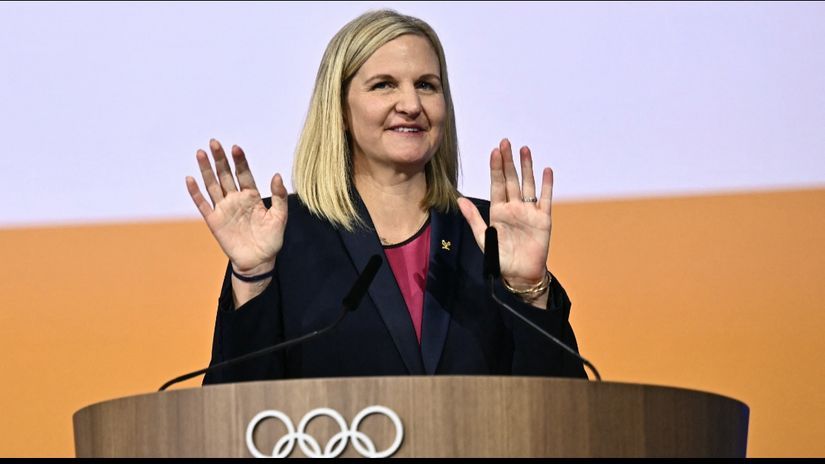
Who is the new International Olympic Committee president?

.jpg)
.jpg)
.jpg)



Reading Time: 3min | Sun. 23.03.25. | 18:56
Her election follows a year after the Paris 2024 Olympics achieved full gender parity, making her appointment a significant moment for women in sports leadership
On Thursday 20 March, Kirsty Coventry made history by becoming the first woman and the first African to be elected as the president of the International Olympic Committee (IOC).
The 41-year-old Zimbabwean, a former sports minister and double Olympic champion, secured an overwhelming majority in a single round of voting at a meeting in Greece, winning 49 out of 97 votes.
Coventry’s victory was unexpected, as many anticipated a tight race among the seven candidates and multiple rounds of voting.
Among the contenders was Lord Sebastian Coe, a prominent figure who oversaw the London 2012 Olympics and currently heads World Athletics, but he only managed eight votes.
Her election follows a year after the Paris 2024 Olympics achieved full gender parity, making her appointment a significant moment for women in sports leadership.
The IOC, which did not have any female members until 1981, has now seen only its second woman run for the presidency, with Coventry breaking new ground in the organization’s history.
Championing women's sports
While Coventry’s election signals progress in gender and regional representation, it has not been short of hiccups.
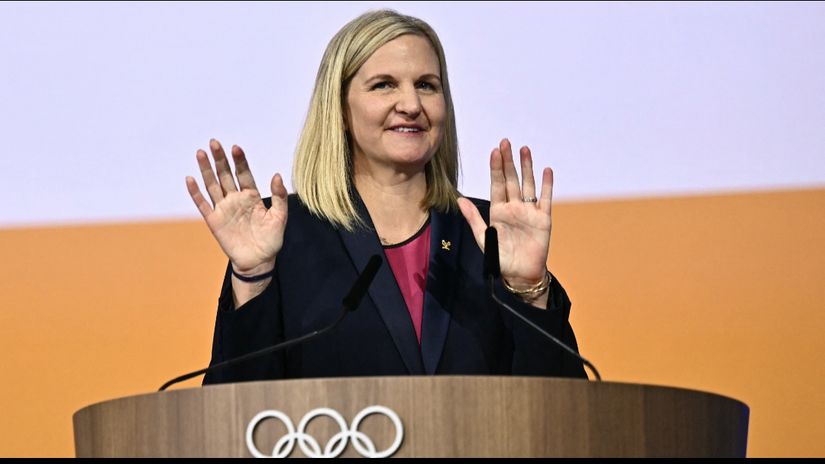
One of her key policies includes a proposed blanket ban on transgender women competing in female Olympic events, a move she insists is meant to protect fairness and safety in women’s sports.
However, her stance has been met with criticism, especially given her involvement in a previous IOC decision that allowed two boxers who reportedly failed gender eligibility tests to compete at Paris 2024.
Political entanglements
Coventry's career has long been intertwined with politics.
In 2008, she accepted a $100,000 reward from then-President Robert Mugabe for her Olympic success, at a time when Zimbabwe was struggling with economic turmoil and food shortages.
Although she pledged to donate part of the money to charity, her association with Mugabe drew scrutiny.

Her political ties deepened in 2018 when she was appointed as Zimbabwe’s sports minister under President Emmerson Mnangagwa.
Challenges ahead
Coventry takes over at a pivotal time for the Olympic movement. She will need to navigate complex geopolitical issues, including the potential reintegration of Russia, which remains banned following its 2022 invasion of Ukraine.
Additionally, she will have to establish a working relationship with U.S. President Donald Trump ahead of the Los Angeles 2028 Games.
More immediate challenges include overseeing the Winter Olympics in northern Italy in just eight months and determining the host for the 2036 Games.
Africa, which has never hosted an Olympics, will be watching closely, especially after the IOC recently welcomed South Africa’s interest in bidding for 2036.
Long-term concerns such as gender eligibility, climate change, doping, and the evolving media landscape also loom large over Coventry’s tenure.
Her leadership will be tested as she seeks to balance tradition and progress while ensuring the Games remain relevant to younger generations.