


.jpg)
Weighing Down Potential: How heavy school bags hinder children's sports participation






Reading Time: 4min | Sun. 30.06.24. | 21:01
While textbooks and notebooks are essential for learning, the sheer weight of these bags can have a negative impact on a crucial aspect of a child's development: sports participation
Did you know that children carrying heavy school bags could hinder their participation in sports?
You’ve all seen the image of a little school child with a backpack bigger than them?
Have you ever picked up your child’s school bag and almost dislocated your shoulder, as you feel like you just attempted to pick up a bag filled with bricks?
If it’s too heavy for you, how do you think your child carries it around? The weight of these school bags can have a detrimental effect on young children.
Can someone please explain this?
— Josty (@josty_t) April 5, 2024
Kids carry bags these heavy everyday to school. Bags full of books that they don't use on a daily basis 🥺. Why? pic.twitter.com/PahzrH75SU
As a general rule, your child’s backpack should not weigh any more than 10% of their body weight. This is because their skeletal structure is still developing. A weight greater than that, has the ability to cause injury, fatigue, pain, and postural conditions.
It is not only the weight alone that causes the problem, but it is also the ill-fitting backpacks some students have, the bag shape, size and the amount of time carrying the bag are all contributors.
A study performed in Dublin found out that “The mean load carried was 18% of body weight.”
That’s almost twice the recommended amount!
“It is of some concern that throughout the school week, a total of 68% of schoolbags weighed greater than the approximate guideline of 10% bodyweight with the maximum schoolbag weight, on one occasion, found to be 30% of the carrier’s bodyweight.”
While textbooks and notebooks are essential for learning, the sheer weight of these bags can have a negative impact on a crucial aspect of a child's development: sports participation.
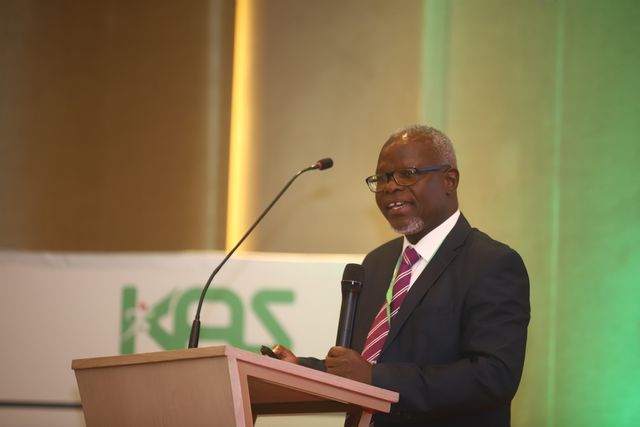
Professor Vincent O. Onywera of KCA University argues that there is a strong link between heavy school bags and musculoskeletal problems in children.
Carrying a heavy backpack can affect the spine shape, cause muscle strain, back pain, and poor posture, which in turn, reduces a child's physical performance and endurance.
“A lot of our children are suffering from S-and N-shaped spines. These conditions impact the child’s growth and development because the spine is not as it should be. It also leads to imbalances because when the spine is not normal, the agility and flexibility disappears, affecting participation in sports and physical activities,” he argued.
Onywera who is the Pioneer Deputy Vice Chancellor of Research, Innovation, and Outreach at the University further argued that there is a significant correlation between thoracic spine posture and lung volumes.
A curved spine, particularly excessive rounding in the thoracic region, can restrict the expansion of the rib cage. This limitation in chest movement directly impacts the lungs' ability to inflate fully, potentially leading to reduced lung volumes.
Sports people rely heavily on efficient oxygen intake and expulsion to perform at their peak. Reduced lung volume throws a wrench into this system.
With less space for air to enter and leave the lungs, they struggle to meet the increased oxygen demands of physical exertion. This can lead to quicker fatigue, shortness of breath, and a decreased ability to sustain intense exercise.
“1/10 adolescents in Africa have elevated heart pressure. The heavy bags constrict the size of the lungs and the breathing system is affected. They cannot participate in sports because they run out of breath,” he explained.
The impact, according to Professor Onywera goes beyond physical health.
Sports participation offers a multitude of benefits, promoting not just physical fitness but also teamwork, discipline, and mental resilience. Hindering participation can hinder a child's holistic development, forcing them to dangerous sedentary lifestyles.
“This then leads to a sedentary lifestyle causing heart problems, mental health, lack of sleep, insomnia, and lots of health challenges,” he offered.
.jpg)
So, what can be done?
Schools, parents, and policymakers all have a role to play. Schools can implement strategies like digital learning resources or locker systems to reduce the number of physical materials students need to carry.
Parents can work with teachers to ensure their child's bag isn't overloaded with unnecessary items. Policymakers can explore guidelines for appropriate school bag weight based on a child's age and size.
A lighter school bag not only benefits a child's physical health but also opens doors to a world of possibilities.
Recognizing the importance of this link, the Professor is determined to spread this knowledge throughout the sports industry.
To achieve this, he plans to collaborate with various stakeholders to ensure this crucial information reaches those who can benefit from it the most, ultimately optimizing athletic performance and promoting well-being within the sports community.
About Professor Onywera
Professor Vincent O. Onywera is the Pioneer Deputy Vice Chancellor Research, Innovation and Outreach at KCA University, Kenya.
He is a Professor of Exercise and Sports Science with over twenty-two (22) years of teaching and research experience, twelve (12) of which he has served at senior level in University Management.
He holds a PhD (Exercise and Sports Science) where his research focus was on the role of genetics, nutrition and sociocultural factors in explaining the phenomenon performance of Kenyan middle and distance runners, M.Ed. in Physical and Health Education and a Bachelor of Education (First Class Honors) in Physical and Health Education from Kenyatta University.
He is a Physical Activity and Active Transport Researcher with extensive national and international research networks.
Onywera has worked as the Director of the Center for International Programs and Collaboration at Kenyatta University.