


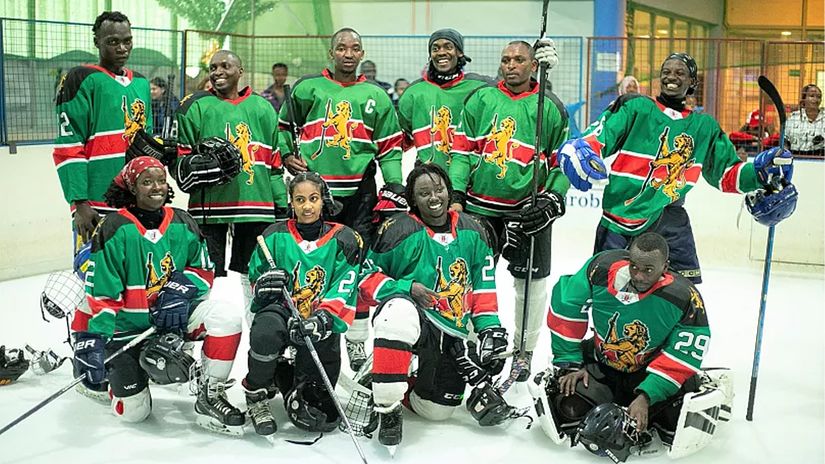
The evolution of fast-rising ice hockey in Kenya




.jpg)



Reading Time: 7min | Mon. 24.11.25. | 21:08
This is the journey of the Kenya Ice Lions, the young Kenya Ice Hockey Federation (KEFIS), and the women players carving out a niche in a sport that few imagined could exist in the tropics
Just beside Nairobi’s Mombasa Road, tucked inside Panari Hotel, far from the snow and winter sports culture associated with Canada, Russia, or Scandinavia, lies one of Africa’s most unusual sporting homes: the Solar Ice Rink.
Follow our WhatsApp channel for more news
It is here on a sheet of ice the size of a basketball court that Kenya’s improbable ice hockey story began.
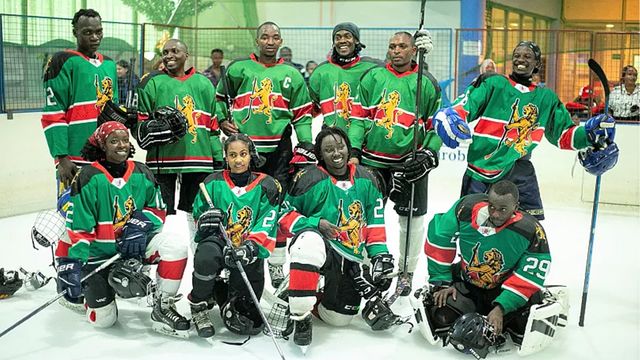
And today, nearly two decades later, it is from this same ice that a new chapter is emerging - the rise of Kenyan women’s ice hockey.
This is the journey of the Kenya Ice Lions, the young Kenya Ice Hockey Federation (KEFIS), and the women players carving out a niche in a sport that few imagined could exist in the tropics.
.JPG)
A dream on ice: The early days of the Ice Lions
Opened in July 2006, the first game was played a year later, a friendly match involving expatriates and just three Kenyan-born players who were rink marshals.
From then on, curiosity grew. A handful of Kenyans borrowed skates, tried sticks, crashed into the boards, and kept coming back. Expatriates joined, left, and returned. And slowly, a community formed.
By 2014, the players organised the first Mashujaa Cup, an exhibition tournament that has since become one of the cornerstones of the local calendar.
“It became a regular occurrence,” recalls Robert Opiyo, the KEFIS chairman. “More and more players generated interest, until eventually we had a group playing hockey consistently.”
Today, the Solar Ice Rink is more than a venue; it is the beating heart of the sport across East and Central Africa. It is where government officials, ambassadors, celebrities, and visiting international athletes have dropped ceremonial pucks.
It is also where the Ice Lions forged a partnership with Panari that allows subsidised ice sessions, the only reason ice hockey is even possible in Kenya.
As Opiyo puts it, “It is truly the birthplace and home ground of ice hockey in the region.”
Founding Kefis and the struggle of building a sport
The Kenya Federation of Ice Sports (KEFIS) was formally registered in 2019. But barely a year into its establishment, the pandemic hit, the momentum slowed, and internal restructuring followed, making the dream look fragile.
This season is set to be one of our greatest.
— Kenya Ice Hockey (@ken_icehockey) October 31, 2025
Ice lions Pride Vs Frozen Fames#hockey #kenyaicelions #Nairobi #moyasa #3on3hockey @ThePanariHotel pic.twitter.com/17TXW5mWRV
Yet a committed group kept going, all volunteers, all driven by passion rather than pay.
“Everyone is a volunteer,” Opiyo emphasises. “From executives to scorekeepers. We all just want to see the sport grow.”
The federation’s ambitions were bold: to join the International Ice Hockey Federation (IIHF), align with the National Olympic Committee of Kenya, build a grassroots youth programme and compete internationally - one day even at the Winter Olympics
And in 2024, the first major breakthrough arrived when Kenya gained IIHF associate membership. While the status does not allow Kenya to vote at congress or compete in major IIHF championships, it opens the door to development programs, coaching and referee training, and access to sanctioned development tournaments.
.jpg)
“It means we are moving in the right direction, it’s progress for future generations,” says Opiyo.
How Kenya trains on a mini-rink
The Solar Ice Rink is not a standard-size hockey rink. At just 15,000 square feet with sharp corners, much smaller than the curved 16,800–19,400 square-foot IIHF rink, training looks different in Kenya.
They tried 5-on-5 once. It was chaos. Now they focus on 3-on-3 hockey, a fast-paced version perfect for tight spaces. Coaches create skill stations, run small-area drills, and divide the rink depending on numbers.
Altitude adds an unexpected advantage, and this often makes visiting international players struggle to keep up.
Their typical training week involves Thursday nights when the senior team (men & women) and Saturday mornings when they have a youth programme (juniors and intermediates).
Most off-ice conditioning is done independently. A few players meet on weekends for street hockey at Aga Khan Walk to stay sharp.
Coaching is a blended model, with expatriate head coaches (Canada’s Tim Colby and Erin Das) alongside an emerging group of 14 Kenyan youth coaches recently supported by Hockey Canada.
Competing without a league
Kenya’s domestic ice hockey scene is still informal, though fast evolving. There are currently two senior teams: Frozen Flames and Pride, with plans for a third. Frozen Flames won the inaugural season last year.

Most events are internal tournaments such as the Mashujaa Day Cup, Jamhuri Cup, Madaraka Cup and the Juniors Cup. The Ice Lions also compete regularly against Team Mzungu, a mixed side of expatriates and tourists.
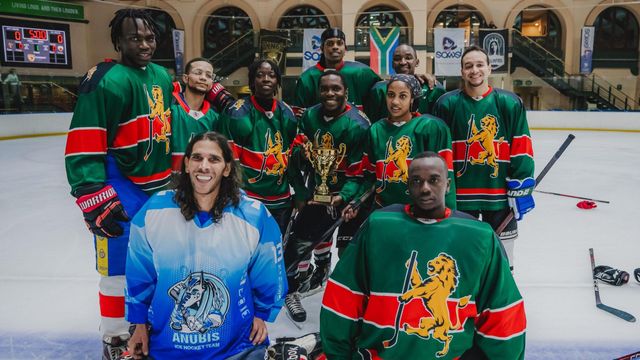
Internationally, Kenya has played exhibition games against teams from Russia, Canada, and the United States. The Ice Lions also travelled to South Africa for the Friendship League, winning the Division Cup.
Invitations continue to arrive, including the Dream Nations Cup, the LATAM Cup, and the new African Nations Cup.
But participation requires funding, and Kenya has had to decline several opportunities. A full campaign for the African Cup was budgeted at Ksh15 million, which is unattainable for now.
The rise of women’s Ice Hockey in Kenya
While the men’s story is well known, popularised after the Ice Lions went viral training with NHL stars, the women’s programme is the country’s most exciting new growth area.
Tasha Otieno, Faith Wambui, Alexcy Wambui, and Faith Sihoho were the earliest pioneers who began skating around 2018. Their path was identical to the men’s. They shared ice time, drills, and games. There was never a gender divide but just a common love for a rare sport.
Today, Kenya has over 40 female players across senior and youth categories, roughly half the men’s number. But their influence is growing rapidly, fueled by international exposure and a changing local narrative about women in sport.
One major catalyst was the Black Girl Hockey Club partnership, which allowed four Kenyan players to attend an international camp and earned them a season sponsorship.
Head coach Erin Das also plays a key role in guiding the youth programme and helping transition more girls into senior hockey. The main challenges remain equipment shortages, inconsistent participation due to costs, and the struggle to retain players when gear arrives late.
“There was a time we identified many potential female players but had no equipment,” Opiyo recalls. “By the time donations arrived, many had moved on.”
Still, optimism is high. The pipeline is clearer now, with Saturday youth hockey feeding into the senior programme, and intermediates joining senior sessions based on merit.
Building the future: funding, equipment & ice access
Everything in Kenyan hockey depends on money, and currently KEFIS survives on donor support, GoFundMe campaigns, Player membership fees, subsidised rink time and merchandise sales
Panari’s subsidised rates make the sport accessible, but rink operations are expensive and vulnerable to machine breakdowns. When the ice requires maintenance, the entire sport shuts down temporarily.
Meanwhile, all equipment is donor-driven, players share gear from a communal pool; nothing belongs to individuals. The federation is now actively seeking Government support, long-term corporate partnerships, grants to sustain youth programmes and funding to participate in African and global tournaments.
There is progress. Discussions with government agencies are ongoing, and several private partners have already expressed interest.
What’s next: An African ice hockey future
Our senior players are passing the torch. Coaching the youth & building Kenya's hockey future.
— Kenya Ice Hockey (@ken_icehockey) July 17, 2025
Greatness is what you give back.#CommunityDevelopment #youthhockey #kenya #sports #kenyaicelions #Hockey #community pic.twitter.com/YdccC1agMn
With IIHF membership secured, KEFIS is targeting participation in more international development tournaments, and the goal is modest yet historic: to play sanctioned continental and global matches by 2027.
Kenya is also open to hosting visiting teams, though the small rink limits the scale of events; still, the federation believes growth is inevitable. The sport may be new, niche, and geographically unlikely, but the passion is undeniable.
The women’s programme is now the heart of KEFIS’s long-term vision. The goal is not just participation, but creating a generation of Kenyan girls who see ice hockey as a realistic sport to pursue.
Grassroots work is ongoing, coaching capacity is growing, international partners are taking notice, and the pioneers are becoming role models for a generation that never imagined playing ice hockey in Africa.
One day, Kenya hopes to field a national women’s team that competes at the African Cup, the LATAM Cup, and eventually in IIHF competitions, but for now, the ice at Panari, as small and fragile as it is, remains the stage for dreams that are slowly turning into reality.
From the Ice Lions to the rising Ice Queens, Kenya’s hockey story is just beginning, and the women might be the ones who take it further than anyone imagined.