


TACTICAL ANALYSIS: Why Harambee Stars got it horribly wrong in the first half against Gambia




Reading Time: 5min | Sat. 06.09.25. | 07:45
For Kenya, the path forward lies in improving ball retention under pressure, refining set-piece routines, and finding greater creativity in midfield
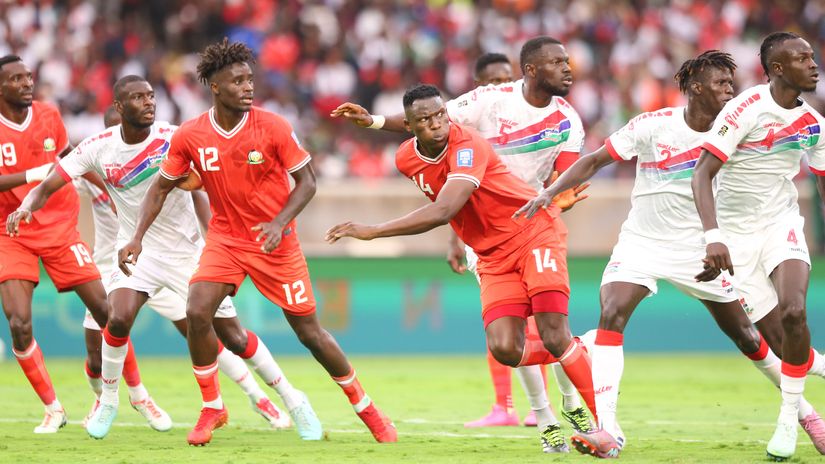
When Kenya faced Gambia in a World Cup qualifier that ended 3–1 in favor of the Scorpions, the encounter revealed more than just the gulf in finishing between the two sides.
It was a match defined by Kenya’s structural ambition versus Gambia’s ruthlessness in exploiting turnovers and set-piece situations.
Follow our WhatsApp channel for more news
While Kenya showed flashes of fluid attacking play and resilience in the second half, defensive lapses and a lack of midfield creativity ultimately cost them.
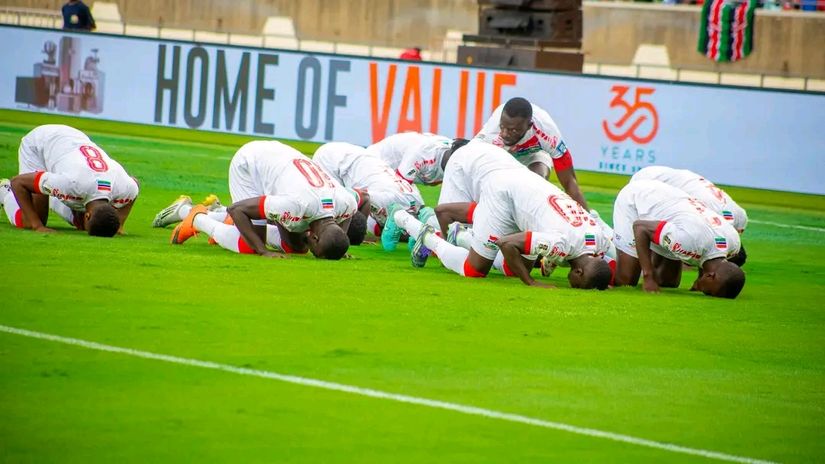
First Half: Kenya’s Build-Up Structure and Gambia’s Ruthless Transitions
Kenya started in a 4-2-3-1 shape in possession, which shifted into a 3-2-5 during their attacking phase.
Byrne Omondi was in goal, Abud Omar at left back, Rooney Onyango on the right, and the central defensive partnership of Sylvester Owino and Collins Sichenje provided the base.
In midfield, Richard Odada and Timothy Ouma formed a double pivot, with Duke Abuya as the slightly advanced midfielder.
Emmanuel Osoro and William Lenkupae operated wide, while Michael Olunga led the line.
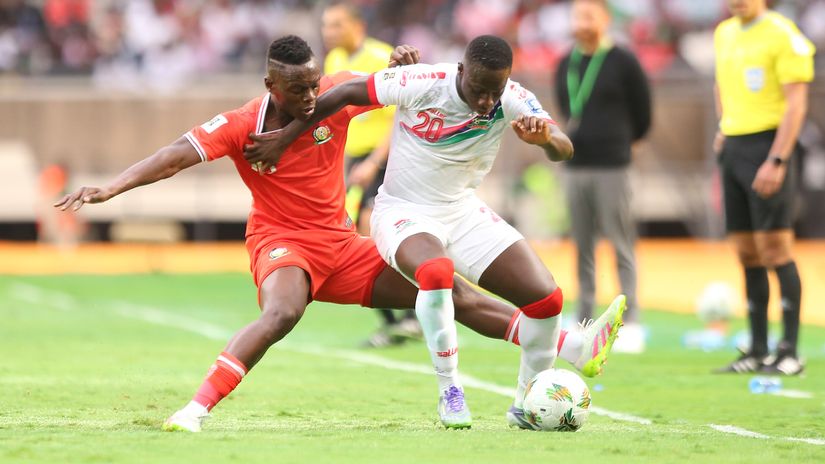
Sichenje, one of the more progressive defenders, sought to bypass Gambia’s pressing lines with direct balls into midfield, particularly toward Lenkupae.
Rooney’s advanced positioning on the right gave Kenya width, and his ability to deliver early crosses was a constant weapon. Out of possession, Kenya reverted to a 4-4-2, with Olunga and Abuya forming the first line of pressure.
Kenya’s build-up frequently funneled toward the right side, where Rooney and Lenkupae combined.
When Rooney advanced high, the team morphed into a 3-2-5, with Abud staying deep to complete the back three alongside Sylvester and Sichenje, Odada and Ouma anchoring midfield, and Olunga spearheading the attack. This system allowed them to generate overloads in wide areas earlier in the match.
How we line up 💪#HarambeeStars pic.twitter.com/qJ2Nz1bPF1
— Harambee Stars (@Harambee__Stars) September 5, 2025
Gambia, however, rarely indulged in short build-up.
Instead, they favored long balls, seeking aerial duels and second balls in advanced zones. Their in-possession shape alternated between a 3-2-5 and 3-4-2-1, with their left back pushing aggressively forward. Out of possession, they were disciplined in a 5-3-2, compacting central spaces and forcing Kenya to build down the flanks.
The opening goal exposed Kenya’s high line and questionable set-piece marking. In the 12th minute, Gambia combined effectively, while Kenya’s hybrid approach faltered in a defensive corner scenario. Sheriff Sinyan escaped his marker and headed home unchallenged from Yankuba Minteh’s corner delivery.
Kenya reacted positively, winning turnovers high up the pitch, especially by pressing Gambia’s left back Sainey Sanyang.
This pressing created moments where Rooney’s right-sided crosses were switched to Abud on the left, who delivered a dangerous ball that found Olunga in the 21st minute—his effort forcing a save.
But the story of the half was Kenya’s carelessness in midfield.
On 26 minutes, a turnover allowed Minteh to punish Kenya with a composed finish after being set up by Musa Barrow.
Later, on 38 minutes, another giveaway from Timothy Ouma triggered a devastating counter.
Adama Sidibeh crossed from the right, and Barrow executed a brilliant half-volley finish before the ball even touched the ground.
By halftime, Gambia were 3–0 up, having scored once from a set piece and twice from punishing turnovers. Kenya’s attacking shape looked promising, but their defensive rest defense and sloppy ball retention cost them dearly.
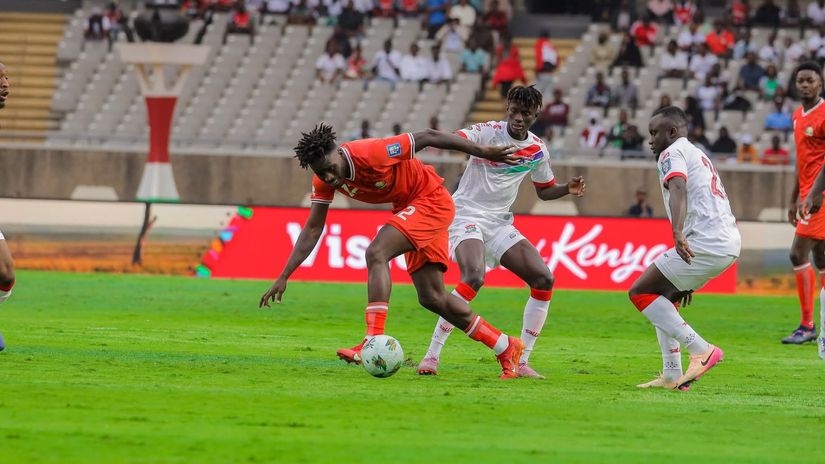
Second Half: Kenya’s Adjustments and Tactical Fluidity
Coach Benni McCarthy made bold changes at the break, introducing Alpha Onyango and Manzur Okwaro for Richard Odada and Timothy Ouma.
This restructured the midfield, with Alpha taking the anchoring role and Manzur linking defense and attack alongside Duke Abuya by positioning himself between the lines.
The adjustments brought immediate improvement, as Kenya began the half aggressively and won a series of corners. Alpha offered defensive balance, while Manzur improved ball circulation from defense into advanced areas. Defensively, Kenya left Alpha, the fullbacks, and Manzur behind when committing numbers forward at set pieces, reducing their vulnerability to counters compared to the first half.
Gambia, however, stuck to their pragmatic strategy—going long from restarts, targeting aerial duels, and using a compact defensive shape to block central channels. This forced Kenya to build through the flanks and limited Olunga’s influence.
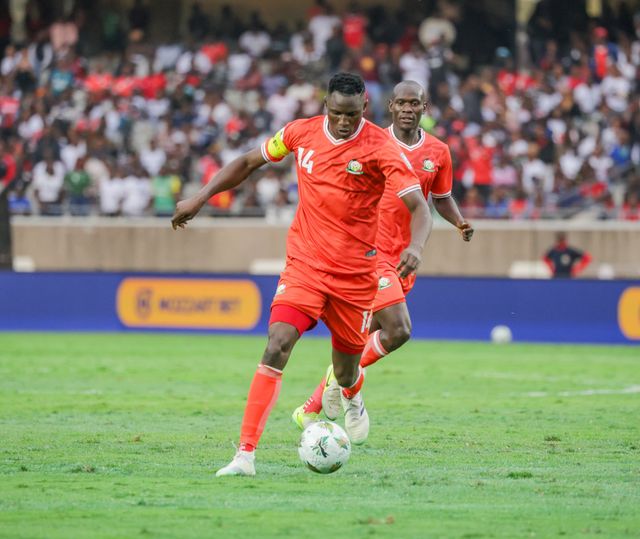
On 65 minutes, Osoro was replaced by Ryan Ogam, prompting a shift to a twin-striker system with Olunga and Ogam up front while Manzur moved to the left wing.
This gave Kenya more vertical threat. Further tactical reshaping came when Rooney made way for Job Ochieng on 73 minutes.
Kenya then adopted a 3-5-2 / 3-3-4 hybrid, with Job and Lenkupae stretching the width, Duke, Alpha, and Manzur occupying midfield, and the two strikers spearheading the attack.
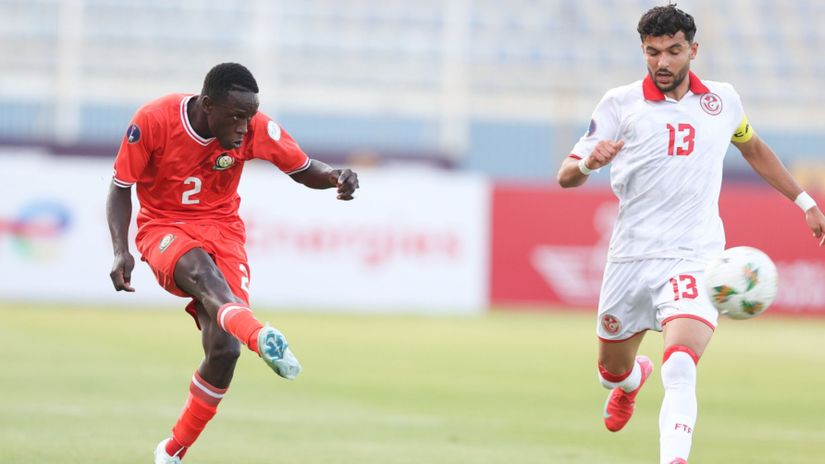
Kenya’s persistence paid off in the 81st minute.
From deep, Owino launched a diagonal over Gambia’s high line, and Ogam timed his run perfectly before finishing calmly to make it 3–1.
The substitutions continued, with Boniface Muchiri introduced in the 84th minute. His sharpness on the right wing injected energy, as he combined effectively with Lenkupae and threatened from corners.
In the closing stages, the twin-striker system stretched Gambia further, but Kenya’s finishing let them down a bit.
Conclusion
Kenya’s 3–1 defeat to Gambia was a lesson in the brutal economy of international football: structure and ambition count for little without precision and security in transitions.
Kenya showed tactical versatility, especially in the second half, with their twin-striker system and fluid wing play. But lapses in concentration, midfield creativity gaps, and ineffective set pieces remain major obstacles.
FT
— Harambee Stars (@Harambee__Stars) September 5, 2025
Kenya 🇰🇪 1-3 🇬🇲 Gambia
⚽ Ryan Ogam#HarambeeStars pic.twitter.com/Cysh0siJS0
For Kenya, the path forward lies in improving ball retention under pressure, refining set-piece routines, and finding greater creativity in midfield.
Against a clinical side like Gambia, every mistake was punished. Yet, the second half offered a glimpse of resilience and adaptability - qualities Kenya can build on ahead of future competitive fixtures.