


TACTICAL ANALYSIS: Senegal's shift of gears that saw them accelerate into AFCON round of 16

Reading Time: 6min | Sun. 04.01.26. | 17:30
While the scoreline suggests control, the contest was defined by sharp momentum swings, contrasting approaches out of possession, and Senegal’s growing authority as the game wore on
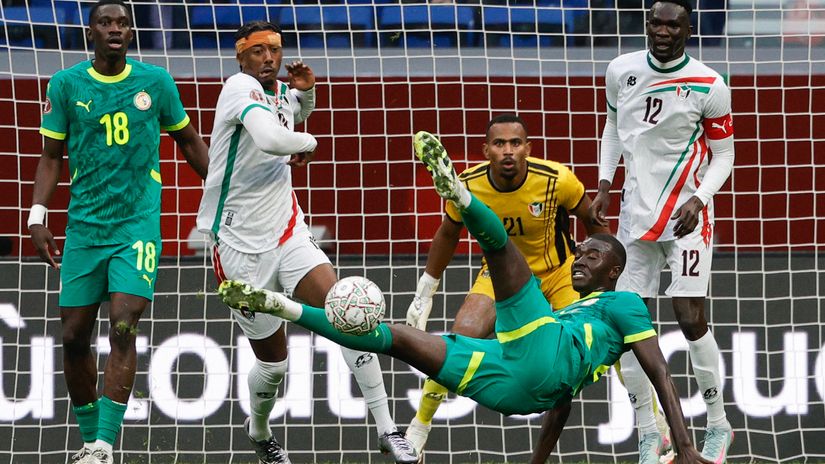
Senegal sealed their place in the 2025 Africa Cup of Nations quarter-finals with a commanding 3-1 victory over Sudan in a match that evolved from an early shock into a clear demonstration of tactical superiority, depth, and in-game intelligence.
While the scoreline suggests control, the contest was defined by sharp momentum swings, contrasting approaches out of possession, and Senegal’s growing authority as the game wore on.
From Sudan’s brave opening press to Senegal’s composed dominance in the final third, the encounter offered a rich tactical narrative shaped by structure, spacing, and individual quality.
Follow our WhatsApp channel for more news
Senegal began the match in a familiar 4-3-3 structure, prioritising a low build-up phase through goalkeeper Edouard Mendy and a composed central pairing of Moussa Niakhaté and Abdoulaye Seck.
Niakhaté in particular set the rhythm, completing a game-high 66 passes as Senegal patiently circulated possession to draw Sudan out.
Full-backs Krépin Diatta and Ismail Jakobs initially held conservative positions, allowing Idrissa Gueye to operate as the single pivot with Pape Gueye and Habib Diarra slightly higher, forming interior passing triangles.
Ahead of them, Sadio Mané started wide on the left but frequently dropped into midfield pockets, while Ismaïla Sarr held width on the right and Nicolas Jackson led the line with constant vertical runs.
Sudan, meanwhile, showed no intention of sitting back early. They started with a proactive, aggressive approach, pressing Senegal high in a 4-4-2 shape that aimed to disrupt build-up lanes and force rushed decisions.
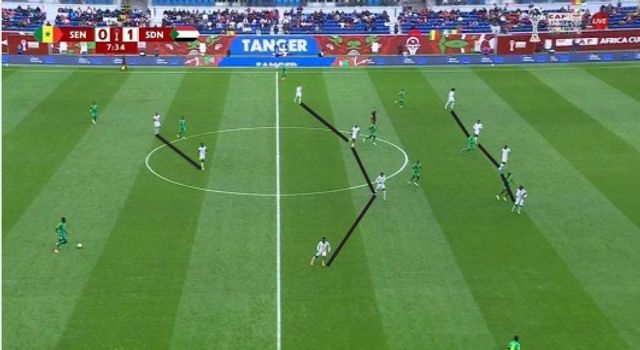
Sudan’s compact 4-4-2 out-of-possession block closed interior channels, denying Senegal central progression and forcing play wide.
Monged El Neel marshalled his backline confidently, while midfielders Abuaagla Abdallah and Taifour Ammar screened central access with intensity.
Walieldin Khidir played a key hybrid role as an advanced midfielder, floating between the lines to link play but also dropping deep to clog Senegal’s passing corridors.
Up front, Mohamed Eisa anchored the attack, supported by wide forwards Aamir Abdallah and Abdelrahman Mohamed, who immediately targeted transitional moments.
That early bravery paid off inside six minutes. Sudan’s right flank became the focal point of their attacking plan, exploiting the space between Senegal’s left full-back and centre-back.
Khidir’s sharp forward pass found Aamir Abdallah, who drove inside from the right and unleashed a fierce finish into the roof of the net.
The goal was a textbook example of Sudan’s transition strategy: direct, vertical, and decisive, catching Senegal momentarily unbalanced in rest defence.
For a brief spell, Sudan looked energised and confident, pressing high and then retreating into a compact 5-4-1 or 5-3-2 low block when Senegal settled on the ball.
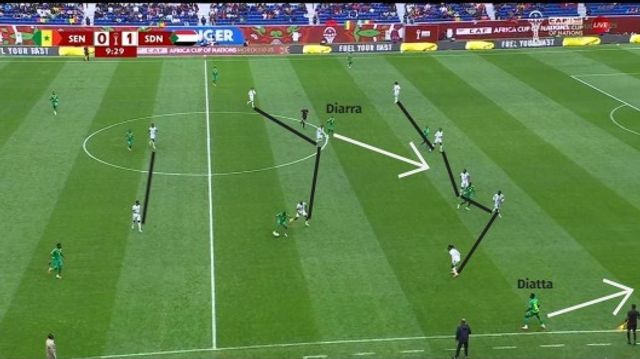
Sudan dropped into a 5-3-2, with the left winger tracking Diatta’s advanced runs as Diarra or the left-back joined to create numerical overloads in the Senegalese attacking zone.
Senegal’s response was measured rather than frantic.
They gradually increased the tempo of circulation, using positional rotations forward to destabilise Sudan’s defensive shape.
Diatta began pushing higher from right-back, effectively creating a five-man attacking line alongside Sarr, Jackson, Mané, and an advancing Diarra.
Sudan defended deep with discipline, shifting into a compact 5-4-1 block and dealing well with Senegal’s corner routines, particularly at the back post where markers were tracked diligently.
Long restarts from El Neel allowed Sudan to reset and avoid sustained pressure, while Eisa occasionally drifted right to combine with Abdallah, creating overloads that forced Senegal to remain cautious.
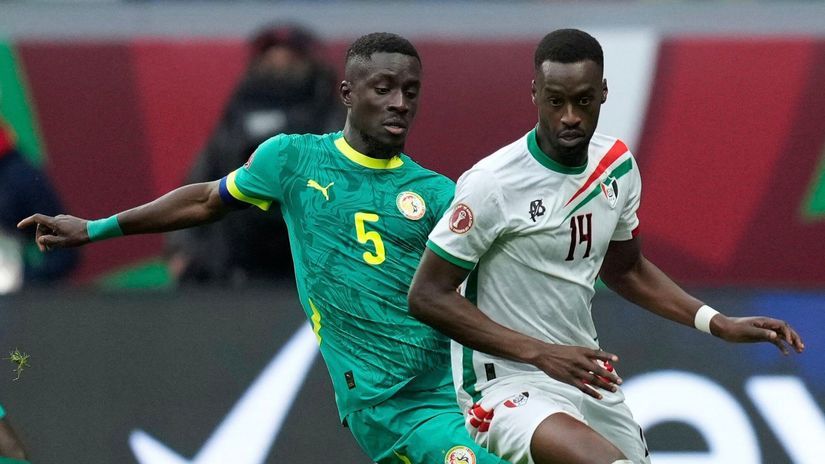
A key turning point arrived midway through the first half when El Neel produced an outstanding save to deny Jackson from point-blank range following a sharp right-sided exchange and early cross.
That moment underlined Senegal’s growing threat and foreshadowed the equaliser that followed minutes later.
In the 29th minute, Senegal finally broke Sudan’s resistance through Idrissa Gueye, who struck a precise low shot from outside the box. The move was crafted through a series of positional interchanges, with Mané dropping deep before delivering an early cutback that disrupted Sudan’s defensive line.
The goal shifted momentum decisively, forcing Sudan to retreat even deeper.
From that point, Senegal played with increasing confidence. Their passing became quicker, combinations sharper, and rotations more frequent, particularly between Mané, Diarra, and Jackson.
Although a penalty appeal was overturned for offside and a Sarr goal disallowed shortly after, the warning signs were clear. Sudan responded by sinking into an even deeper 5-3-2 block, with the left winger dropping into the backline to protect central spaces.
However, Senegal’s pressure finally told again in first-half stoppage time when Pape Gueye struck superbly from the edge of the box.
Once more, Mané’s ability to drop in midfield and link play proved decisive, drawing defenders out before Jackson laid the ball back for the midfielder to finish clinically.
The second half opened with Sudan adjusting their approach.
They attempted a more patient 3-2-5 build-up shape, prioritising controlled progression from the back rather than immediate transitions while also pressing high in a more man-oriented press momentarily.
This brought early reward in terms of territory, and Sheddy Barglan nearly equalised with a close-range effort that forced a strong save from Mendy. Senegal, however, were now far more comfortable managing the game, dropping into a 4-1-4-1 out-of-possession shape that denied central penetration while remaining compact.
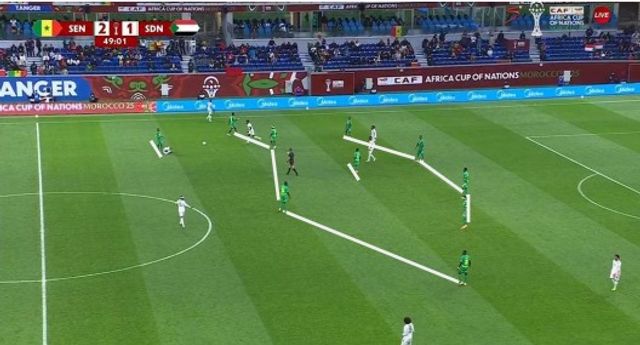
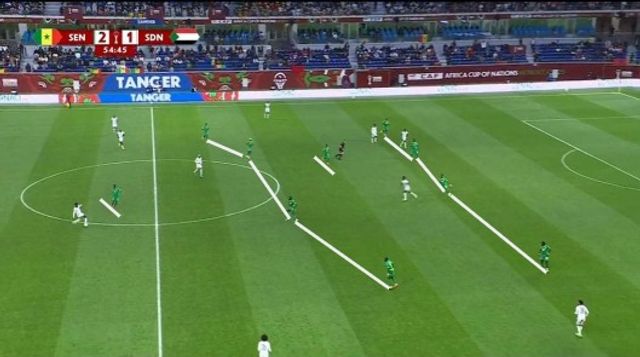
Senegal’s 4-1-4-1 out-of-possession shape occasionally left gaps on the right flank, allowing Sudan’s right winger Aamir to exploit space and progress attacks.
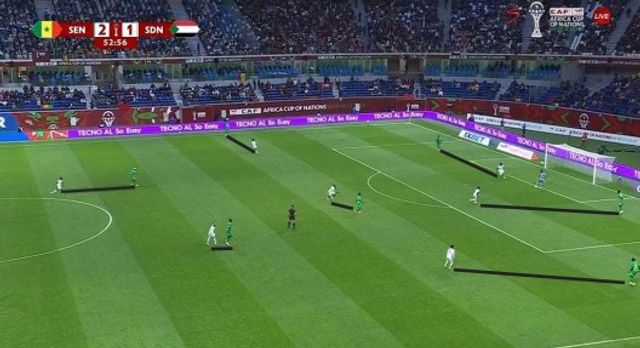
Sudan adopted an aggressive man-to-man approach with intense high pressing early in the second half.
Key substitutions further tilted the balance. El Hadj Malick Diouf replaced Jakobs at left-back, adding fresh legs and more aggressive overlapping runs, while Boulaye Dia came on for Jackson to offer improved hold-up play and box presence.
On the right, Senegal began to apply third-man principles more consistently, using quick wall passes and underlapping runs to bypass Sudan’s midfield line.
Diouf’s advanced positioning on the left created numerical superiority, stretching Sudan horizontally and opening interior channels.
Sudan continued to search for openings, with Eisa dropping deeper to link play and support overloads, but their defensive structure began to fray as fatigue set in.
Senegal increasingly dominated the middle third, circulating possession with composure and drawing Sudan out before releasing runners into wide areas.
That control was reflected in the third goal in the 77th minute, when Mbaye capitalised on a pass from Mané in midfield and finished confidently to make it 3-1.
Mbaye’s intelligent movement behind the defence, combined with Diouf’s accurate deliveries from the left, caused persistent problems in the closing stages.
As the match wound down, Sudan showed commendable spirit but lacked the precision to threaten consistently.
Senegal, by contrast, managed the final minutes expertly, holding possession, slowing the tempo, and waiting for the right moments to advance. Their calm game management ensured there was no late drama, underlining their maturity at this stage of the tournament.
Individually, Sadio Mané was one of the standout performers, creating five chances and registering two assists through intelligent movement, vision, and unselfish link-up play. Idrissa Gueye was equally influential, recording four shots with perfect accuracy and anchoring midfield transitions effectively.
Senegal’s dominance was also clear in the numbers: 68% possession, nine shots on target, and an xG of 1.59 compared to Sudan’s 0.49 from just three shots on target.
While Sudan deserve credit for their organisation and early ambition, Senegal’s superior structure, depth, and tactical adaptability ultimately defined the contest and reinforced their status as serious AFCON contenders.