


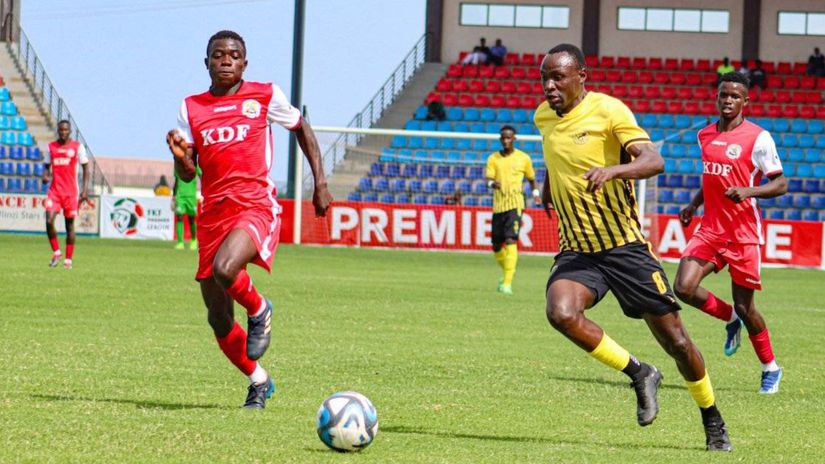
TACTICAL ANALYSIS: How Sofapaka deepened Ulinzi Stars woes



Reading Time: 4min | Mon. 07.04.25. | 17:38
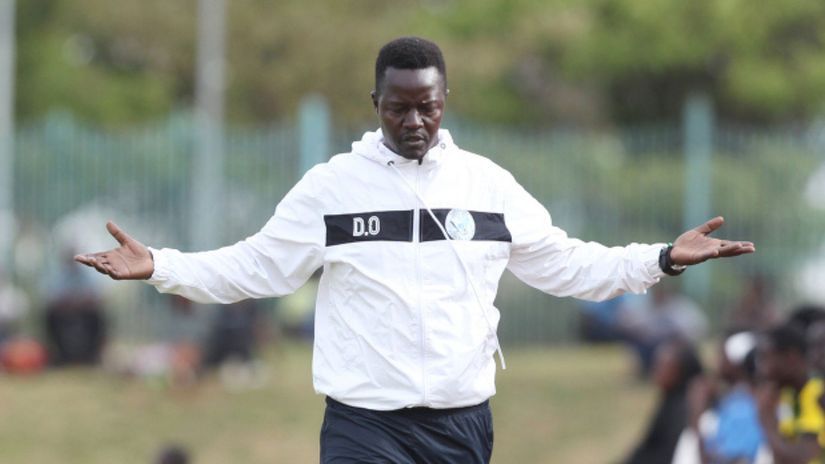
Akwana, popularly known as Sachi, has been at the helm of Sofapaka since Robert Matano’s departure to Tanzanian side Fountain Gate FC
"Kama hunijui jina, achana na ball (If you don't know me, you have no business in football!" That was coach Ezekiel Akwana’s sharp retort when a journalist asked him to introduce himself after Sofapaka’s 3-0 loss to FC Talanta back in 2023.
Follow our WhatsApp channel for more news
Akwana, popularly known as Sachi, has been at the helm of Sofapaka since Robert Matano’s departure to Tanzanian side Fountain Gate FC.
Determined to bounce back from a 2-0 defeat to FC Talanta, he devised a clever tactical setup that exploited Ulinzi Stars' apparent off-field struggles—reports suggesting that the club’s non-military players had gone unpaid.
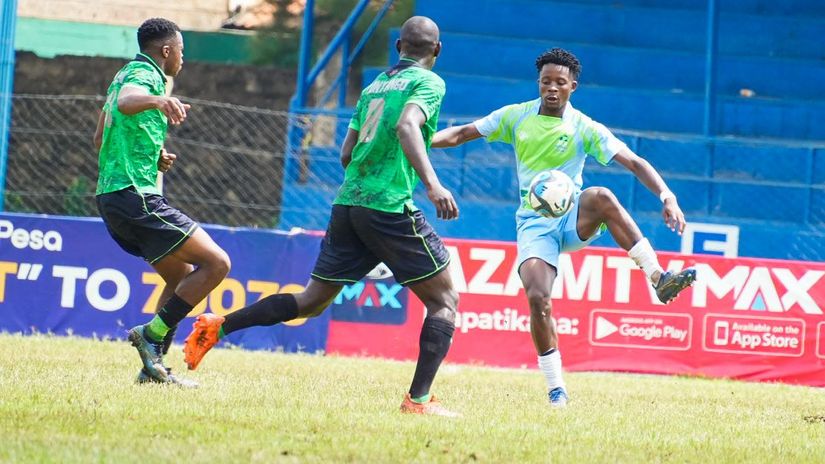
This psychological advantage, combined with a masterstroke positional tweak involving Jack Ong'aya, saw Sofapaka secure all three points courtesy of Bramwel Simiyu’s first-half strike.
Tactical Setup and Execution
Sofapaka lined up in a nominal 4-3-3 formation, with Edward Olak between the sticks. Baron Ochieng and Deric Mwanzi operated as fullbacks, while Charles Ouma and Victor Okello marshaled the central defense.
The midfield trio featured Donato Okello, the experienced Humphrey Mieno, and Jack Ong’aya—who, despite being a natural central midfielder and Mieno’s usual partner in the engine room, was deployed in an auxiliary winger role.
Up front, Wayne Otieno, Rodgers Kipkemoi, and Bramwel Simiyu formed the attacking trident.
However, on the pitch, Sofapaka’s structure constantly morphed, alternating between a defensive 4-4-2 and an offensive variation of the same shape. Ong’aya’s role was pivotal in this tactical flexibility—whenever Sofapaka had possession, he made inside-out runs to provide width while Mieno and Okello held the midfield base.
His presence on the right flank allowed Kipkemoi to tuck inside, forming a fluid twin-striker partnership with Simiyu.
This attacking strategy posed significant problems for Ulinzi’s defense. The two forwards, Kipkemoi and Simiyu, played between the lines, constantly exploiting spaces between the fullbacks and center-backs.
Their intelligent movement disrupted Ulinzi’s defensive structure, forcing them into uncomfortable situations throughout the match.
Defensive Strategy: Stifling Ulinzi’s Build-Up
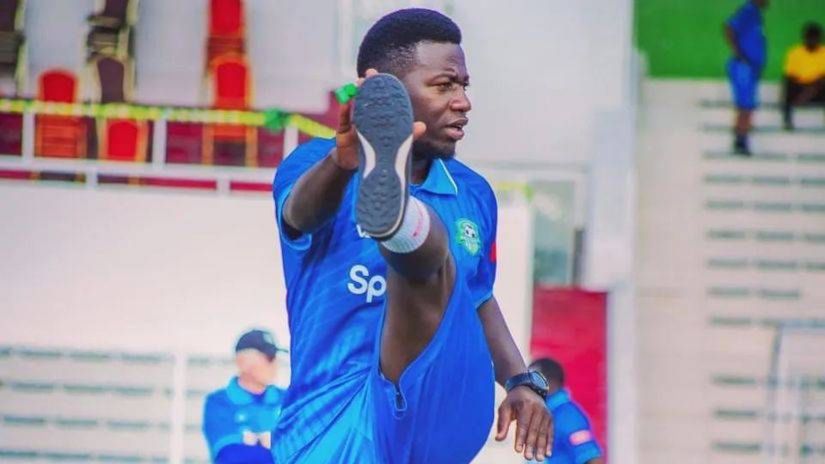
Without the ball, Sofapaka pressed aggressively in a 4-4-2 setup. Ong’aya harried Ulinzi’s left-back Tellena Ochieng, while Simiyu and Kipkemoi pressed center-backs Brian Abong’a and Alex Masinde.
Wayne Otieno, on the right flank, nullified Felix Otieno, preventing him from advancing into dangerous areas.
Despite these pressing triggers, Ulinzi largely bypassed Sofapaka’s press by resorting to long balls, rendering the high press somewhat ineffective.
However, Akwana’s side adapted by dropping Kipkemoi into midfield during defensive phases, creating a compact 4-5-1 shape. This additional body in midfield ensured numerical superiority against Ulinzi’s trio of Issa Lumumba, Brian Emilio, and Joseph Ochieng, effectively suffocating any attempts at central progression.
The tactical setup also neutralized Ulinzi’s main attacking threat, Javan Omondi. A highly skilled dribbler with a knack for cutting inside and shooting, Omondi found himself double-teamed every time he received possession—one player closing down the outside space while another blocked his path inward. Starved of options, Omondi was rendered ineffective and was eventually substituted in the second half.
Attacking Avenues: Direct Play and Quick Restarts
Sofapaka largely avoided building from the back, instead relying on long balls directed toward Simiyu and Kipkemoi. While Ulinzi’s center-backs, Abong’a and Masinde, dominated aerial duels, they struggled on the ground, where Sofapaka’s forwards had the upper hand in speed and reaction time.
Beyond long balls, Akwana’s side maximized two other attacking avenues: quick restarts and long throws. Baron Ochieng, renowned for his dangerous long throws, was a key weapon in Sofapaka’s attacking arsenal.
Simiyu’s decisive goal was a product of this approach, combining all three attacking strategies. Baron Ochieng took a quick throw-in, targeting Simiyu in the box. Although the striker initially missed the ball, Abong’a failed to react quickly, allowing Simiyu to recover possession and slot home the match-winner.
The goal was a textbook execution of Akwana’s tactical blueprint—fast restarts, long throws, and exploiting speed mismatches.
Akwana’s Tactical Masterclass
Sofapaka’s victory was a triumph of tactical adaptability and smart positional tweaks. Akwana’s decision to push Jack Ong’aya into an auxiliary winger role provided both defensive stability and attacking fluidity, while his strategic emphasis on quick transitions and set-piece threats proved decisive.
For Ulinzi Stars, this defeat extended their winless streak to five matches, leaving them in 13th place with 28 points—just four points above the relegation playoff spot occupied by Murang’a Seal, who have a game in hand. Coach Danstun Nyaudo will need to find solutions quickly as the pressure mounts.
For Sofapaka, this result not only secured a crucial three points but also completed a league double over their military opponents, having previously dismantled them 4-1 in the reverse fixture. If Akwana can continue refining his tactical setups, Sofapaka could yet turn their season around.