


TACTICAL ANALYSIS: How Muyoti's Nairobi United created history against Étoile du Sahel


.jpg)

Reading Time: 5min | Mon. 27.10.25. | 19:44
This match displayed a high-level tactical contrast: Étoile’s structured possession, wide overloads, and positional stretching versus Nairobi United’s disciplined compactness, transitional efficiency, and psychological resilience
The CAF Confederation Cup second preliminary round return leg clash between Étoile du Sahel and Nairobi United brought together two contrasting footballing identities - one shaped by decades of continental experience and technical refinement, and the other built on disciplined structure, tactical efficiency, and a commitment to transitional play.
Follow our WhatsApp channel for more news
With Nairobi United having won 2-0 in the first leg, the tie carried high stakes, and the tactical battle unfolded as a story of territorial control versus strategic counterattacking, ultimately culminating in a dramatic penalty shootout that sent the Mozzart Bet Cup champions into the group stages.
First Half: Structural Control vs Transitional Threat
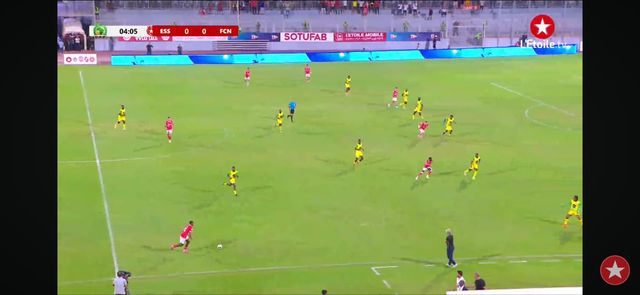
Étoile du Sahel began in a 4-2-3-1 structure, which, in possession, regularly morphed into a 3-2-5/3-3-4 depending on the positioning of the fullbacks.
Sabri Ben Hassen started in goal, with Salah Ghedamsi initially at right back - though he was quickly pushed higher to act almost as a right wing-back - while Najeh Ferjani held the left-back position.
The central defensive pairing of Alphonce Omija and Nassim Hnid served as the foundation for circulation and first-phase buildup.
In midfield, Ahmed Ben Amor and Chaker Gbo formed a double pivot tasked with dictating tempo and ensuring quick ball recycling.
Ahead of them, Nader Al Glaieb acted as the advanced playmaker, constantly floating into half-spaces to connect midfield with the forward line.
On the wings, Rami Anen on the left and Mohamed Senghor on the right provided attacking width.
Though Senghor frequently tucked inside, occasionally interchanging with striker Rami Aouani, whose movement away from the defensive line was a key feature in Etoile’s buildup.
As Etoile entered the final third, the structure stretched into a 3-2-5, with both fullbacks pushing high, allowing the wingers to operate in narrow inside channels.
From here, Etoile relied heavily on wing-oriented progression, particularly down the right flank.
Repeated overloads involving Ghedamsi, Senghor, and Al Glaieb created 3v2 situations against Nairobi’s wide defensive units.
Crosses into the box became the primary route to goal, supported by third-man runs triggered when Aouani dropped deep to link play before releasing Anen into 1v1 duels on the left.
Nairobi United responded with a 4-4-2 compact midblock structure that morphed into a 5-3-2 whenever Etoile entered sustained attacking zones with the left winger tracking the right fullback.
Kevin Oduor commanded the goal behind a back four of Kevin Otiende, John Otieno, Lennox Ogutu, and Yusuf Mainge.
The midfield pairing of Brian Omondi and Lesley Owino maintained compact distances to screen passes into Etoile’s central creators.
Enock Machaka played just behind striker Michael Karamor, while Dancan Omala and Ovella Ochieng rotated fluidly across the wings, offering dynamism in transitions.
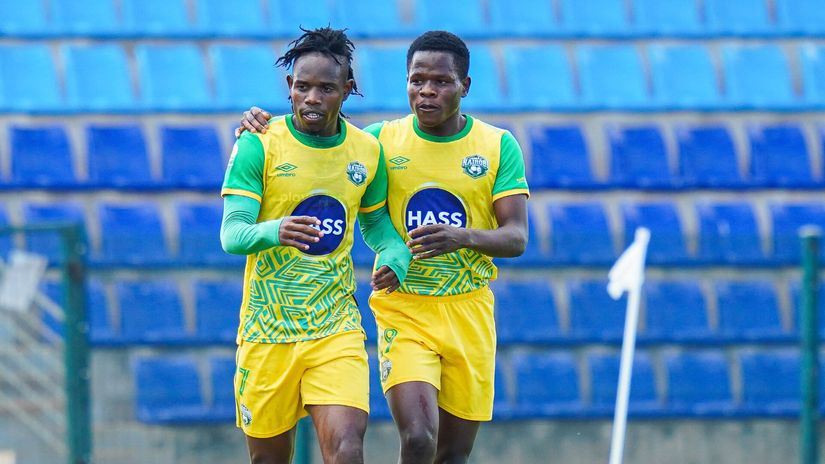
Nairobi’s attacking strategy leaned heavily on counterattacks.
Quick vertical progressions following recoveries were key, particularly sequences involving Machaka threading forward passes to Karamor, who then released Omala or Ochieng Ovella into space.
Nairobi produced some of the best chances of the half using this model - chief among them the 11th-minute chance where Omala, after a sharp combination through Machaka and Karamor, missed a clear goal with only the goalkeeper to beat.

As Etoile pushed numbers forward, Nairobi targeted open spaces behind the advancing fullbacks. Ovella, in particular, was central to these moments.
In the 32nd minute, a long ball over the top sent him racing into the right channel, where he forced Ben Hassen into a save.
Before halftime, another break saw Ovella square for Omala, but again the chance was missed.
The half ended goalless, but tactically, the game was clear: Etoile controlled territory, Nairobi controlled the danger.
Second Half: Pressure, Breakthroughs, and Escalation
The breakthrough for Étoile came early in the second half. In the 50th minute, Chaker Gbo dropped between the centre-backs to aid progression before releasing a vertical pass into the right half-space.
Ghedamsi arrived high and free due to the earlier structural commitment to wing overloads.
His cut-back found Rami Anen arriving late into the box, who finished to hand his side a 1-0 lead.

The goal reflected Etoile's insistence on developing play through wide overloads and third-man runs into the box.
Following the opener, Etoile increased pressure, especially from set pieces.
Their aerial structure in corners and wide free kicks became more aggressive, yet Nairobi’s defensive organisation - using six man-markers in the six-yard area and three zonal defenders ahead - held strong.
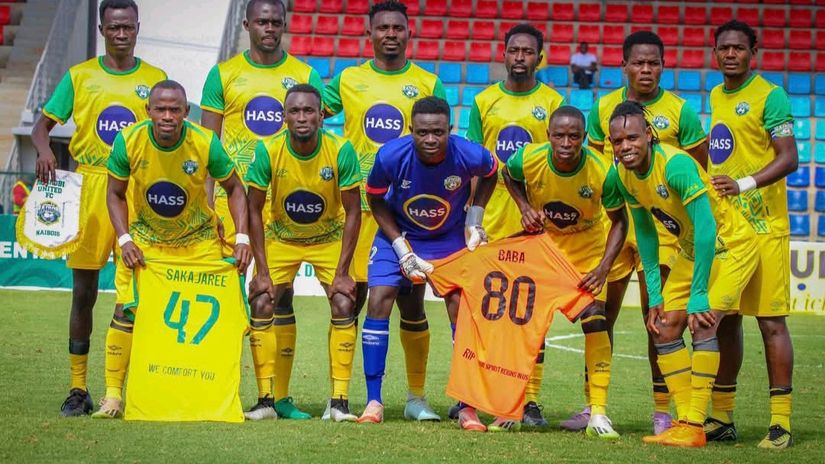
Nairobi continued to rely on counterattacks. Ovella and Omala attempted to break on the wings, with Karamor offering wall passes to sustain attacks.
Fatigue, improved Etoile counter-pressing, and tighter rest-defense structures limited the effectiveness of these transitions as the half progressed.
As the match entered added time, Etoile pushed the game into a siege phase.
With Nairobi pushed deeper, Etoile launched repeated deliveries into the penalty area.
In the second last minute of stoppage time, a long aerial ball into the box found Etoile’s defender rising above the defense, sending a looping header past the advancing goalkeeper. The match finished 2–0 on the night, 2–2 on aggregate, forcing penalties.
The shootout encapsulated the emotional stakes of the match.
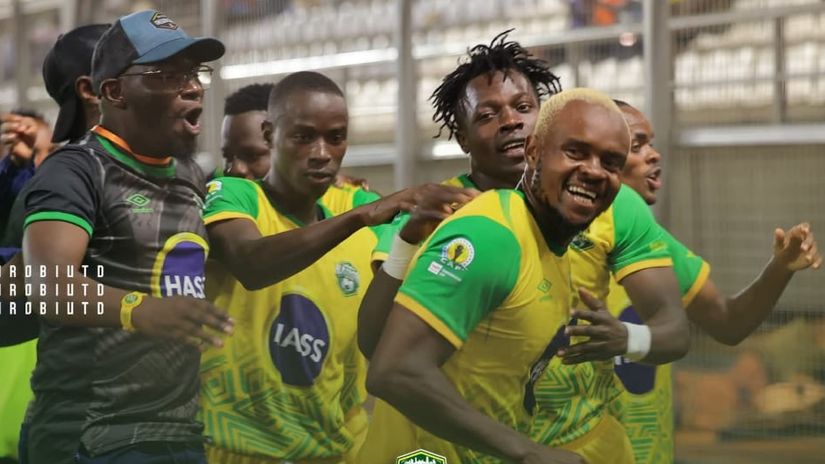
Nairobi goalkeeper Kevin Oduor became the hero, saving two penalties and converting the decisive final kick. With a 7–6 shootout victory, Nairobi United secured qualification to the CAF Confederation Cup group stages.
This match displayed a high-level tactical contrast: Étoile’s structured possession, wide overloads, and positional stretching versus Nairobi United’s disciplined compactness, transitional efficiency, and psychological resilience.
In the end, Nairobi United’s ability to withstand territorial dominance and capitalise on key moments - culminating in their composure during penalties - earned them a historic progression into the group stages.