


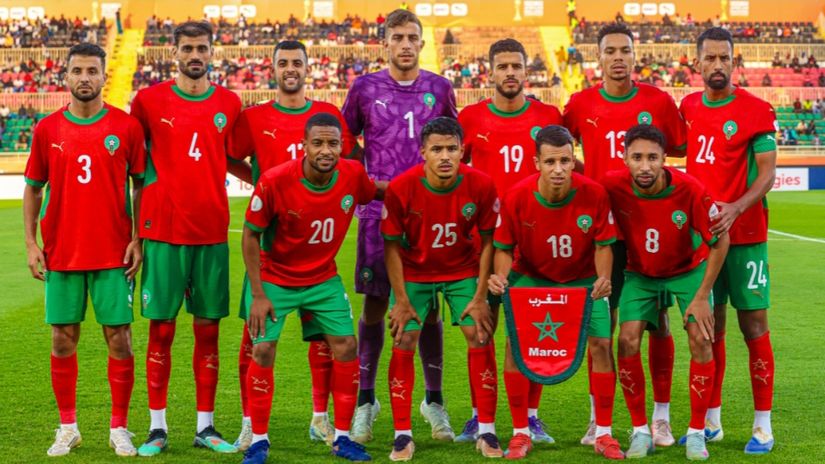
TACTICAL ANALYSIS: How Morocco’s bravery against Senegal secured third CHAN final in four editions

Reading Time: 3min | Fri. 29.08.25. | 19:43
Standing between Morocco and their third CHAN title are Madagascar who have defied all odds to reach the final
Morocco booked another CHAN final spot after edging defending champions Senegal 5-3 on penalties following a tense 1-1 draw at full time and after extra time.
Follow our WhatsApp channel for more news
The semifinal brought together the champions of the last three CHAN editions, Morocco (2018, 2020) and Senegal (2022), and lived up to its billing as a clash of contrasting tactical approaches.
Morocco’s tactical setup
Both teams started in a 4-2-3-1 base formation, but Morocco’s approach was inclined towards possession and control.
The Atlas Lions looked to build patiently from the back, taking risks by pushing their fullbacks high up the pitch to stretch the play.
This created situations where the wingers tucked inside, often drifting into the half-spaces alongside the attacking midfielder, who continually looked to receive in advanced zones and play cutbacks into the box.
This offensive structure aimed to create wide overloads.
The ball-side winger would dribble aggressively, drawing in markers before releasing a teammate making a diagonal run into the half-space.
However, despite regularly breaking Senegal’s first defensive line, Morocco were often guilty of hesitating in front of goal.

The lack of late runners into the penalty area meant that many of their promising attacks fizzled out without a decisive end product.
Senegal’s tactical setup
Senegal, in contrast, were far more direct. They sought to exploit Morocco’s advanced positioning by hitting quickly on the break, particularly through their pacey wingers Libasse Guèye and Oumar Ba.
In possession, they aimed to isolate Morocco’s centre-backs by targeting the channels, while out of possession they dropped into a compact defensive block.
When defending Morocco’s wide overloads, Senegal often shifted into a back five, alternating between 5-3-2 and 5-4-1.
One winger would drop into the defensive line while the other bolstered the midfield, ensuring numerical parity in wide zones.
This strategy limited Morocco’s ability to create simple overloads, often forcing them into recycling possession or attempting low-percentage shots from distance.
Defensive battle and transitional play
The tactical contrast produced a balanced game where both teams had strengths but also vulnerabilities.
_(1).jpg)
Morocco’s aggressive attacking posture left them exposed in transition, with only two players holding the rest defense.
Senegal sought to capitalize on this by sending Guèye and Ba into space at every turnover.
However, Morocco’s recovery runs were excellent, and their defenders consistently tracked back to nullify the danger before it could fully develop.
Senegal’s goal in the 16th minute highlighted another dimension of their approach: set-pieces.
Against a well-structured Morocco side in open play, they used dead-ball situations as a weapon to break the deadlock.
Yet Morocco responded only seven minutes later, equalizing with a powerful long-range strike after finding no way through Senegal’s compact block.
The remainder of the match was characterized by Morocco’s probing possession and Senegal’s swift counterattacks, but both defenses stood firm.
With neither side able to find a winner, the game stretched into extra time and eventually penalties, where Morocco’s composure carried them through 5-3.
This semifinal was a fascinating clash of philosophies.
Morocco prioritized possession, positional rotations, and wide overloads, but their inefficiency in front of goal cost them a more straightforward victory.
Senegal, meanwhile, leaned on compact defending, direct counterattacks, and set-piece strength, strategies that nearly carried them into another final.
In the end, Morocco’s patient buildup and tactical bravery were rewarded.
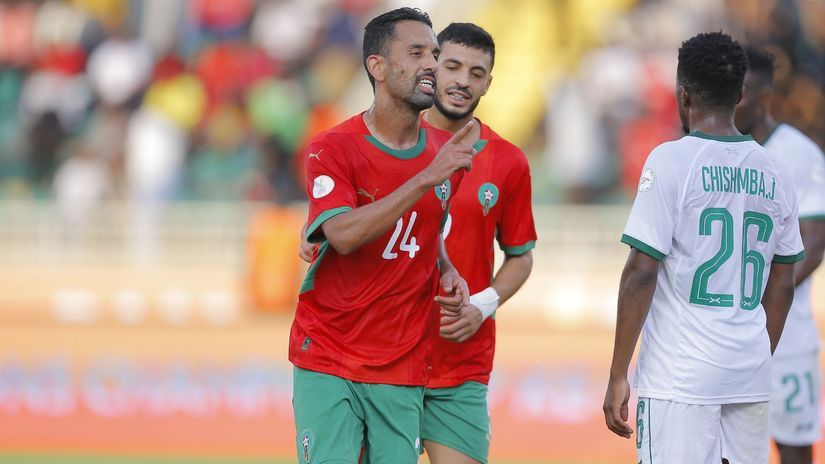
Their willingness to commit numbers forward and persist with their wide overload strategy eventually earned them the opportunities they needed to stay level and then prevail on penalties.
The match reaffirmed the Atlas Lions’ identity as a possession-heavy side that imposes its rhythm, even against defensively astute opponents like Senegal.