



TACTICAL ANALYSIS: Harambee Starlets' bold attacking variations that destroyed Gambia





Reading Time: 5min | Sat. 25.10.25. | 13:00
The 3–1 result sets up a strategic advantage heading into the return leg in Senegal scheduled on Monday, where game management and maintaining attacking identity will be key for the Starlets.
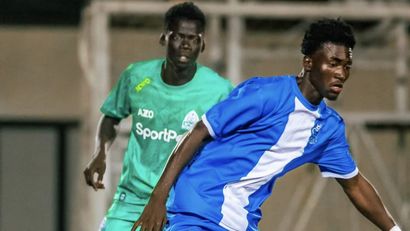
The WAFCON qualifier match between Harambee Starlets and The Gambia presented a contrast in systems, game rhythms, and phases of play, with both teams approaching the contest with distinct tactical identities.
The match played at Nyayo Stadium provided a perfect backdrop to how far the women's game has come in this Kenya.
Follow our WhatsApp channel for more news
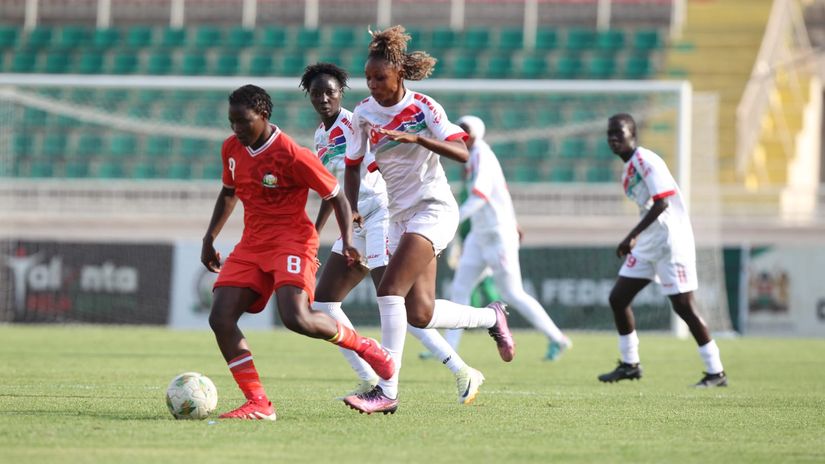
Gambia began in a 4-4-2, attempting to control width and maintain horizontal compactness, while Kenya operated in a flexible 4-2-3-1 / 3-3-4 that evolved depending on the phase of play.
Ultimately, Kenya’s superior verticality, pressing principles, and adaptive positional rotations proved decisive, securing a 3–1 victory.
Gambia’s Initial Shape and Structural Principles
The Gambia Queen Scorpions set up in a typical 4-4-2, aiming for balance out of possession and direct attacking transitions.
Aminata Gaye started in goal, supported by a back four of Juana Volley at left back, Jarra Jambang on the right, with Manyima Stevelemans and Bintou Ceesay as the central defensive pairing.
The fullbacks’ roles were conservative early on, staying compact rather than advancing, which suggested a cautionary approach to Kenya’s pace in wide areas.
In midfield, Olu Buwaro played on the left side, but frequently advanced into higher wing positions during possession, creating a temporary 4-3-3 structure.
Mariama Cham and Penda Bah worked centrally, with Isatou Jallow drifting between midfield and the attacking line, at times forming a triangle in the half spaces.
The forward pair of Fatou I Cham Kanteh and Fatou Sonko acted as pressing triggers and transition outlets.
The primary idea was to create short passing connections in midfield, then release the forwards behind Kenya’s defensive line. However, this plan relied heavily on Kenya making errors rather than Gambia constructing structured attacks.
FT
— Harambee Starlets (@StarletsKE) October 24, 2025
🇰🇪 3 -1 🇬🇲
Ni God#HarambeeStarlets #RoadToWAFCON pic.twitter.com/wdKCEmEzYt
Kenya’s System: Fluidity in Build-Up and Positional Rotations
Kenya started with Lilian Awuor in goal, and a back four of Elizabeth Muteshi, Enez Mango, and the central defensive pairing of Ilavonga Llorine and Ruth Ingosi.
The midfield double pivot consisted of Martha Amunyolete and Lavender Akinyi, who played a key role in controlling central zones. Mwanalima Adam functioned as the advanced playmaker, drifting between the midfield and forward line, constantly disrupting Gambia’s marking assignments.
Up front, Wambui operated on the right, Fasila Adhiambo on the left, and Shaylene Opisa led the line, forming a 4-2-3-1 that morphed into a 3-3-4 in attacking phases.
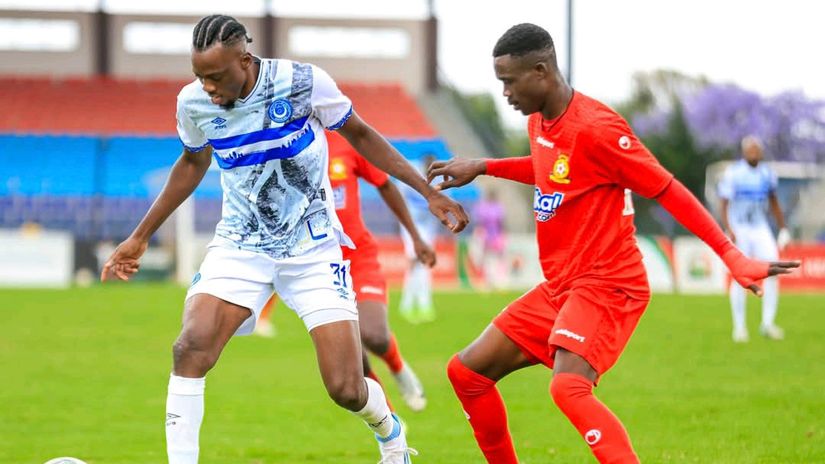
Lavender dropped deep centrally between the central defenders to create numerical superiority in build-up, allowing the fullbacks to advance and providing angles for progression.
Kenya’s attacking pattern heavily prioritized direct balls over the top, targeting the space behind Gambia’s high defensive line.
The wingers and fullbacks made complementary runs, forcing Gambia’s back four to constantly turn and defend facing their own goal.

Early Game Turning Point
The match’s opening phases was heavily influenced by an isolated defensive error.
In the fourth minute, Ilavonga, receiving with her back to goal and under pressure from Kanteh, miscontrolled the ball.
Kanteh pressed aggressively, dispossessed her, and scored - putting Gambia ahead 1–0.
This goal highlighted Gambia’s reliance on press-induced turnovers rather than structured possession.
Kenya’s response was immediate and tactically driven.
They avoided risky short central build-up under pressure, and began deploying long diagonals, bypassing midfield to exploit Gambia’s defensive gaps.
This led to the play in the 10th minute where Akinyi released Opisa over the top, forcing Bintou Ceesay into a late challenge in the box.
The resulting penalty was calmly converted by Mwanalima in the 11th minute, restoring parity at 1–1.

Kenya’s Pressing Strategy
Kenya did not retreat after equalising. Instead, they intensified their counter-press, especially after backward passes by Gambia, and when the ball was shifted laterally across Gambia’s defensive line.
These actions acted as pressing triggers, activating multiple Kenyan players to close space collectively, forcing rushed long balls from Gambia.
It was from this sustained pressure that Adhiambo scored Kenya’s second goal.
After dribbling past two markers, she created separation and finished clinically, making it 2–1.
The goal demonstrated Kenya’s advantage in 1v1 isolation scenarios, where Kenyan attackers consistently outperformed their Gambian counterparts.
Progression and Opisa’s Goal
Just before halftime, Kenya executed their best move of the match.
Mwanahalima dropped into midfield, drawing a defender with her.
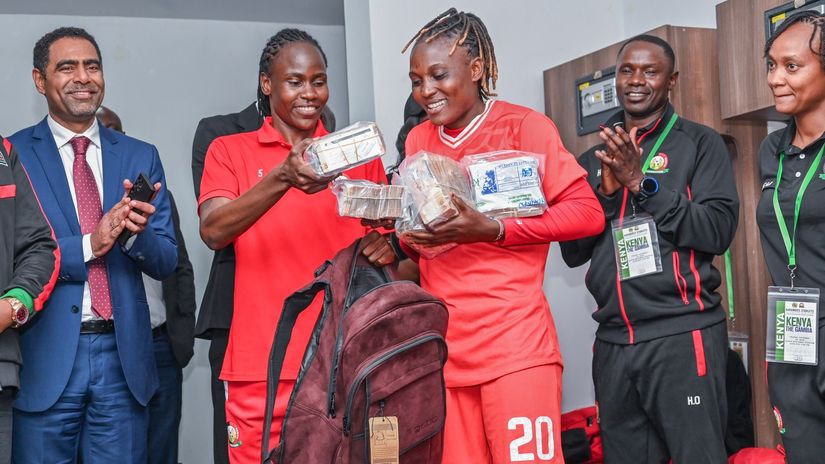
Ingosi, exploiting space infont, released a forward diagonal pass to Amunyolete, who played a first-time vertical pass to Opisa. Opisa accelerated past the defender and scored in a composed one-on-one finish to make it 3–1.
This sequence reflected structured positional play: Dogo as the dummy connector- Martha as the second-phase link - Opisa as the final third executor.
Second Half Adjustments
The second half saw Wambui subbed off, with Tumaini Waliaula coming on.
Opisa shifted to the right wing, while Dogo moved to the left half-space, working closely with Fasila.
Kenya became more direct in wide switching, often using long diagonals to isolate fullbacks.

Later, the introduction of Corazone Aquino shifted Kenya’s approach again.
With Corazone, Kenya transitioned to central overload progression, emphasizing short passing combinations through the middle, rather than always going wide.
This ability to change attacking reference points - from flanks to central corridors - kept Gambia unable to settle defensively.
Kenya’s victory was rooted in: Superior positional fluidity, having more advanced pressing traps, better exploitation of depth (runs in behind), and adaptive midfield control.
Gambia began sharply and capitalized on an early mistake, but were eventually overwhelmed by Kenya’s layered attacking mechanisms and pressing intensity.
The 3–1 result sets up a strategic advantage heading into the return leg in Senegal scheduled on Tuesday, 28 October, where game management and maintaining attacking identity will be key for the Starlets.