

.jpg)
TACTICAL ANALYSIS: DR Congo's strategy that earned Harambee Stars quarters ticket






Reading Time: 3min | Fri. 15.08.25. | 15:07
Otis N'goma combined targeted marking and positional play on set-pieces to give the Leopards a chance to make the knockout rounds
The Democratic Republic of Congo booked an important 2-0 victory over Angola at the Benjamin Mkapa Stadium, a result that ended Angola’s CHAN campaign while keeping DRC’s qualification hopes alive.
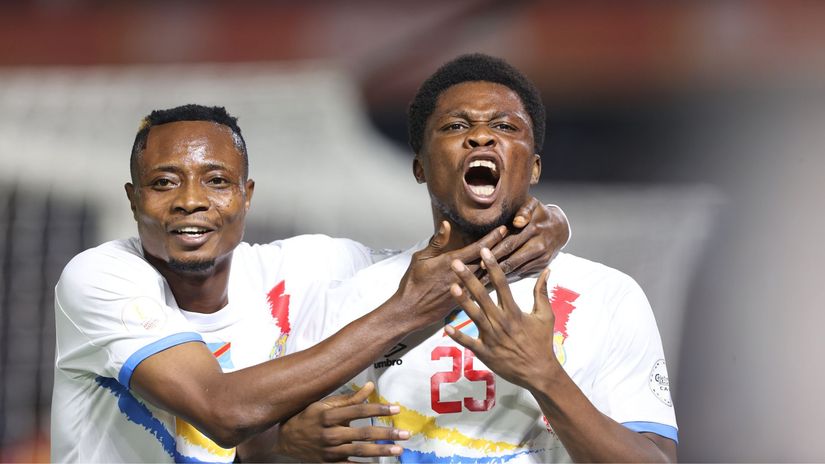
Goals from Jephte Kitambala and Mokonzi Katumbwe sealed the win in a match where Otis Ngoma’s men executed a game plan built on defensive organisation, rapid transitions, and clinical set-piece execution.
Follow our WhatsApp channel for more news
Ngoma’s Plan: Percentage Football and Rotational Forwards
DRC lined up in a base 4-2-3-1 shape but approached the game with what can be termed percentage football — absorbing pressure in their own half before striking quickly on the counterattack.
Ngoma’s attacking trio of Oscar Tsikomb, Agee Basiala, and Ibrahim Mabalu constantly rotated positions during transitions, making it difficult for the Angolan backline to maintain marking assignments.
These rotations often created mismatches, as fullbacks were dragged inside and centre-backs pulled wide, opening pockets of space for quick vertical runs.
Defensive Shape and Targeted Marking
Out of possession, DRC alternated between a disciplined 4-4-2 block and a man-to-man pressing system in selected zones.
The focus of this defensive plan was to neutralise Angola’s most dangerous outlet, Miguel Viera, whose 1v1 ability and progressive carries had been a threat in previous matches. By restricting his touches and closing his dribbling lanes, DRC cut off a major supply route to Angola’s attack.
Angola, on the other hand, pressed aggressively and overloaded central midfield to prevent DRC from playing through the middle.
This forced both teams to avoid risky build-up in congested areas, leading to a cautious first half where open-play chances were scarce. Angola resorted to speculative long-range efforts, while DRC looked for quick breakouts that rarely found a clean final pass.
Switch to Set-Piece Threat in the Second Half
With the deadlock unbroken, DRC adjusted their approach in the second half, shifting their attacking emphasis toward set-pieces.
Basiala became the key figure, trusted for his pinpoint deliveries into the penalty area.
The attackers positioned themselves centrally, just inside the box, ready to attack the ball with forward momentum — a tactic designed to generate maximum power and accuracy when heading or striking.

The breakthrough came when Basiala’s precise corner delivery found Kitambala, who outjumped his marker and headed home.
Not long after, another Basiala delivery created chaos in the box, with Katumbwe reacting quickest to double the lead.
Game Management and Compactness
After securing the two-goal cushion, DRC shifted fully into a compact defensive mode.
The midfield double pivot dropped deeper to shield the centre-backs, while the wingers worked tirelessly to track back and close down the flanks.
Angola’s attempts to claw back into the match were met with disciplined defensive positioning and well-timed clearances, ensuring DRC held firm until the final whistle.

This was a victory forged in discipline, adaptability, and set-piece quality. Ngoma’s decision to keep the game tight in open play and exploit dead-ball situations proved decisive.
The rotation of forwards kept Angola guessing in transition, while Basiala’s deliveries turned half-chances into goals. DRC now face Morocco in a decisive group clash, knowing that a similar blend of defensive structure and attacking efficiency could secure their place in the quarter-finals.