


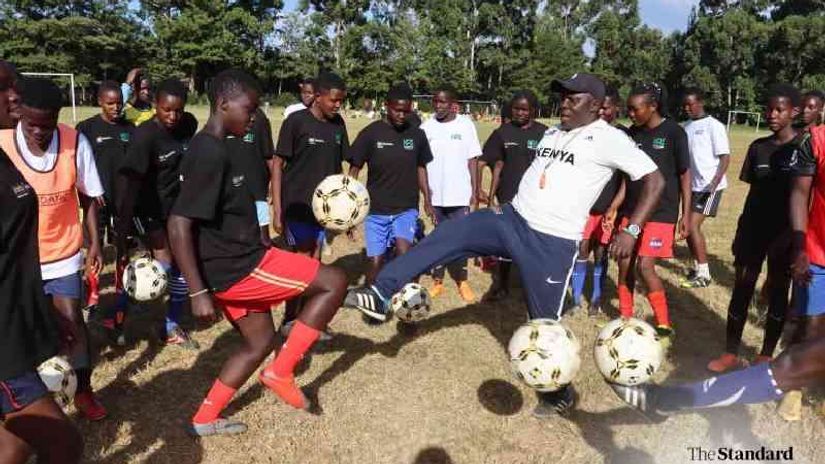
School Games: How harsh climate hinders North Eastern team's performance at nationals

.jpg)

.jpg)
.jpg)




Reading Time: 2min | Tue. 29.07.25. | 21:03
As a semi-arid region, North Eastern experiences scorching temperatures ranging between 20 to 40 degrees Celsius daily
North Eastern Kenya has long carried the underdog tag at the Kenya Secondary Schools Sports Association (KSSSA) national games.
Follow Our WhatsApp Channel For More News
Since the inception of the competition in the early 1970s, no school from the region has made it past the semi-final stage in any discipline.
So frequent have their early exits become that some fans have openly called for the abolition of the region’s automatic qualification slot, urging KSSSA to reassign it to traditionally stronger regions like Western, Nyanza, and Rift Valley.
But one of the region’s coaches, Dennis Simiyu of Moi Boarding Masalani Junior School, believes there is more to the story.
Simiyu, who has previously coached in Western Kenya, spoke exclusively to Mozzart Sport and offered a compelling reason behind the region’s continued struggles, the unforgiving climate.
“Climate is one of the biggest problems hindering sports development in this region,” Simiyu said.

As a semi-arid region, North Eastern experiences scorching temperatures ranging between 20 to 40 degrees Celsius daily.
According to Simiyu, such conditions severely limit training sessions.
“During the day, the sun is simply too hot. Players can only train early in the morning or very late in the evening.
That is hardly enough preparation time compared to teams from areas like Western and Nyanza,” he explained.
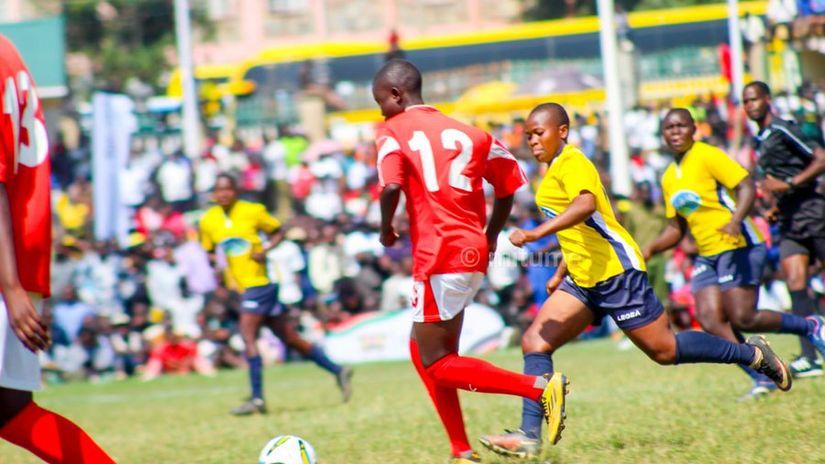
Simiyu noted that schools like Musingu High, Butere Boys, and Highway Secondary routinely hold training camps even after regular class hours.
According to him, this is a luxury not afforded to schools in the North due to the difficult conditions.
Despite the challenges, Simiyu remains upbeat.
He pointed out that the region does boast a competitive grassroots football culture, particularly in the boys’ and girls’ categories, even though no team has managed back-to-back appearances at the national stage.
“The competition here is real. Teams that lose do not give up; they go back to the drawing board. But the ones that win tend to relax, and they get shocked the following year,” he said.
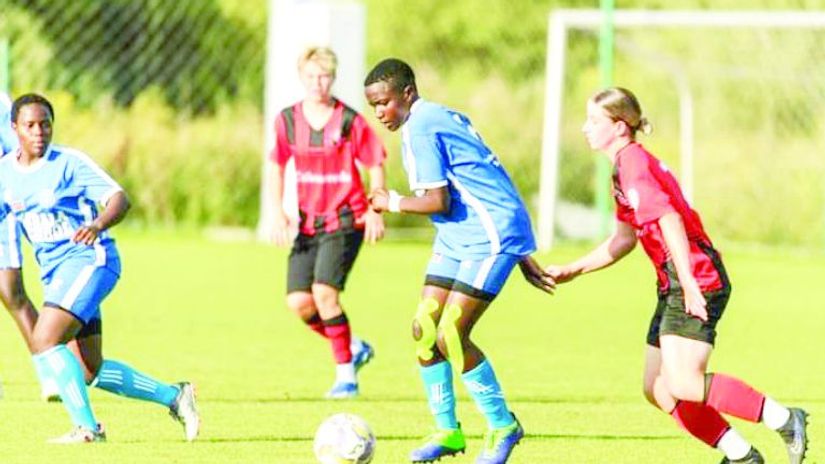
In addition to climate, Simiyu lamented the persistent lack of resources, which he said continues to derail progress.
“We are under-resourced. Teams representing the region at nationals often lack even basic equipment like football boots or proper training kits,” he added, calling on the government to intervene.
“If the government can provide adequate equipment and invest in sports infrastructure in the region, these boys and girls will compete better.
They have the talent, they just need the support.”
With Moi Boarding Masalani Junior School making its debut at the national games, Simiyu hopes to inspire change, not just for his team, but for the entire region.