

Power struggle at FKF intensifies as CEO challenges Hussein Mohammed's affidavit


.jpg)





Reading Time: 3min | Wed. 28.01.26. | 20:04
In a formal letter to Ndege, FKF accused him of several failures, including responsibility for the poor performance of the national Under-17 team at the CECAFA Championships in Ethiopia, citing inadequate preparation and lack of clear structures
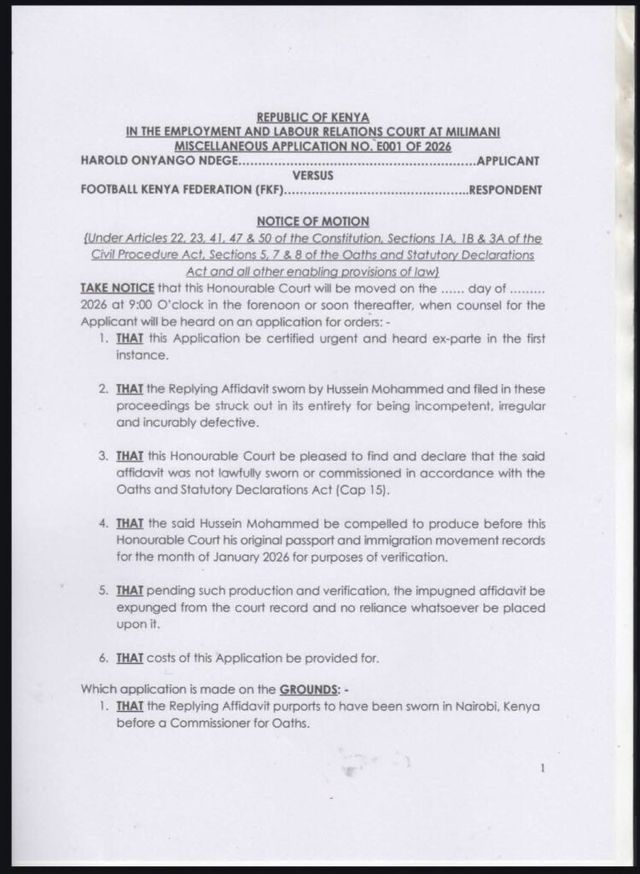
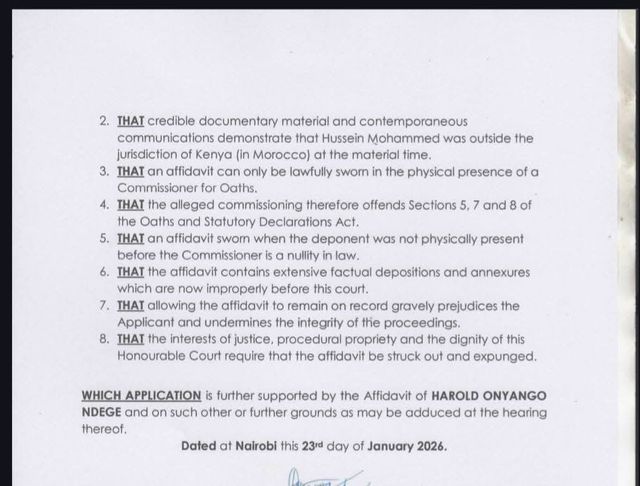
The legal standoff between Football Kenya Federation (FKF) Chief Executive Officer Harold Ndege and President Hussein Mohammed has taken a new twist, with the embattled CEO asking the court to strike out an affidavit sworn by the federation boss in a case challenging his removal from office.
Follow Our WhatsApp Channel For More News
Through his lawyers, Ndege argues that the affidavit is irregular and legally defective, claiming it was sworn at a time when Mohammed was out of the country attending the Africa Cup of Nations (Afcon) in Morocco.
The application questions the procedural validity of FKF’s defense under the Oaths and Statutory Declarations Act, with Ndege’s legal team insisting that an affidavit cannot be commissioned in the absence of the deponent.
They contend that the document is therefore a nullity in law.
In a further escalation, Ndege wants the court to compel Mohammed to produce his original passport and immigration movement records for January to verify his whereabouts at the time the affidavit was sworn.
The court filing marks the latest chapter in a bitter fallout between the two officials, a power struggle that has increasingly spilled into the public domain and exposed deep divisions at Kandanda House.
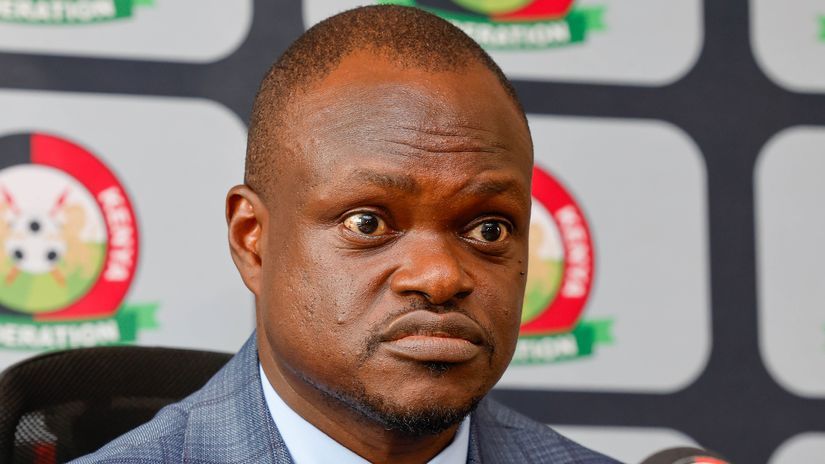
Sources close to the federation indicate that Mohammed has lost confidence in Ndege’s leadership, privately questioning his competence and ability to effectively run the secretariat.
The tension came to the public eye earlier this month when a National Executive Committee (NEC) meeting convened on 15 January to deliberate on Ndege’s fate failed to resolve, despite the matter being discussed.
The meeting was chaired by Vice President MacDonald Mariga.
Ndege had earlier obtained court orders from the Employment and Labour Relations Court barring FKF from discussing or taking disciplinary action against him at the NEC meeting.
The standoff turned ugly last week when Ndege claimed, in a Facebook post, that he had been attacked by unknown goons at Kandanda House, the federation’s headquarters, an incident that further heightened the drama surrounding the dispute.
In a formal letter to Ndege, FKF accused him of several failures, including responsibility for the poor performance of the national Under-17 team at the CECAFA Championships in Ethiopia, citing inadequate preparation and lack of clear structures.

The letter also faulted him for allegedly failing to inform or consult the president over a Parliamentary summons dated 28 October, 2025, which required Mohammed to appear before the Parliamentary Departmental Committee on Sports and Culture.
Additionally, Ndege was blamed for the handling of litigation involving Nyamira and Homa Bay, which FKF said was characterised by delays, poor coordination and a lack of strategic oversight, exposing the federation to unnecessary legal and reputational risks.
Further accusations include persistent absenteeism from the secretariat, routinely working from home without authorisation, and, most controversially, signing federation cheques from his residence, a practice FKF claims undermines internal controls and accountability.