


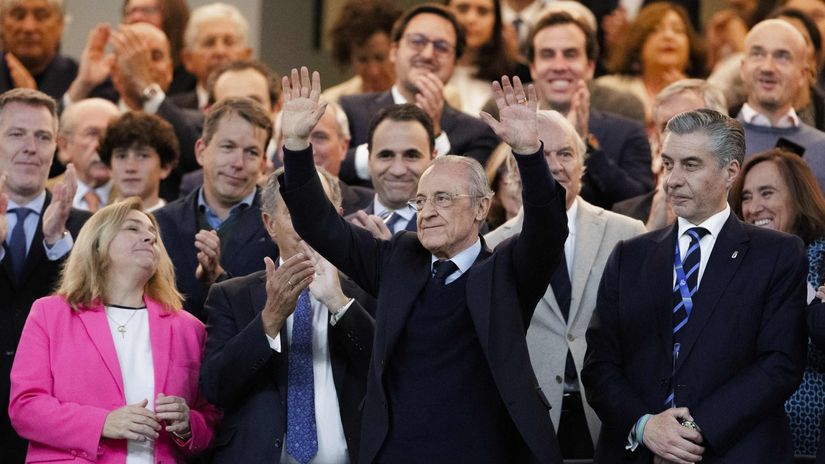
Perez will finally get a challenger for Real's presidency





Reading Time: 5min | Sat. 23.05.26. | 18:45
Young Enrique Riquelme should worry Florentino
The last elections at Real Madrid were held in 2006, and since returning to the club in 2009, Florentino Perez has never had any opposition. This time, however, the president of the Royal Club will have a challenger — and not just any challenger. In fact, when looking at the bigger picture, one could conclude that the reason for calling early elections was less about two disappointing seasons and more about disarming a political rival. Enrique Riquelme should not be underestimated because of his 37 years of age or his “Mexican” accent — two details Perez himself mentioned during his press conference. Ever since 2021, when Riquelme first announced his intention to challenge for the presidency, it was clear he would not give up easily. Back then, he was pushed out of the race because elections were scheduled at an inconvenient time — near the end of the season, when the sporting results were still uncertain. Now, after a couple of problematic years, Florentino realized he needed to confront his rival immediately, before he became stronger, and, if possible, catch him off guard.
🚨 CONFIRMED: Enrique Riquelme will personally come to Real Madrid offices this afternoon to finalize the paperwork to become an official Real Madrid presidential candidate.
— Madrid Zone (@theMadridZone) May 23, 2026
If the Electoral Board certifies his candidacy as valid and fulfilling all conditions, the first Real… pic.twitter.com/hGTs363JcV
As a young, capable global businessman who developed outside the Bernabeu ecosystem, Riquelme represents the perfect profile for someone promising change. He built an exceptional business by investing in renewable energy during a period when the sector generated enormous profits, and there is no doubt he is a very serious player. But none of that alone would be enough to frighten Real Madrid’s current ruler. The issue runs much deeper and reaches into the highest spheres of Spanish economic power. Florentino believes — not without reason — that behind Riquelme stands his arch-enemy Ignacio Sanchez Galan, president of Iberdrola, the energy giant and one of the three most powerful companies on the Spanish stock exchange. David Mesonero, the other “child” Perez alluded to during the press conference when challenging them to compete against him, is Galan’s son-in-law and a senior executive within the company. It was Mesonero who recently signed the multimillion-euro sale of Iberdrola’s Mexican branch to Riquelme’s Cox group, and he will almost certainly be part of Riquelme’s presidential campaign.
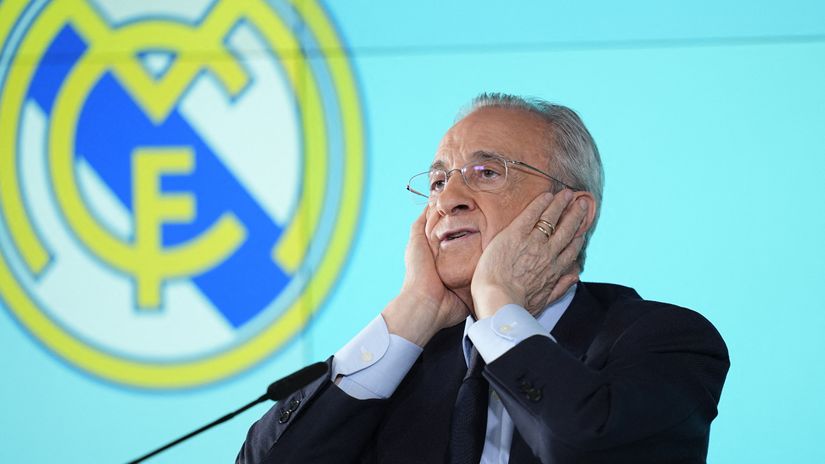
The business newspaper El Economista described the upcoming elections as “Florentino’s second war against the energy companies.” The first took place 20 years ago, when Perez himself, coming from the construction sector, tried to enter the growing energy business by acquiring 20% of Iberdrola’s shares. At the time, Galan prevented him from entering the shareholders’ assembly, considering him a competitor, which triggered a lengthy legal battle that Perez ultimately lost badly. Now it is evident that the ghosts of the past still haunt him. He is convinced that Galan stands behind Riquelme — and that the Iberdrola president possesses enough money and influence to shake even the all-powerful head of Real Madrid. Even the campaign arguments in this entrepreneurial battle revolve around economics.
“It is very important that we run, because these may be the last elections in the club’s history,” Riquelme said a few days ago, publicly introducing another explosive word: “privatization.”
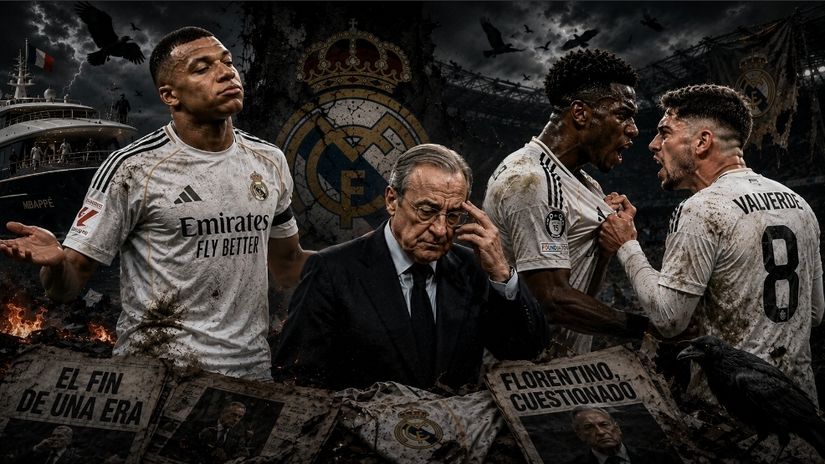
Before this season, Florentino Perez cautiously floated the idea that he wanted to leave the club members a tangible legacy — while also testing the market to determine Real Madrid’s true value. He spoke about the possibility of the members jointly creating a subsidiary company tied to the club, with 5% of it then offered for sale. Perez even hinted that each future share could be worth around 100,000, valuing the entire club at roughly 10 billion euros.
Many members of the board disliked the plan, although some club members were dazzled by the potential profits they could pocket. Due both to internal resistance and the team’s disappointing season, the idea was never fully developed, the details remained vague, and Riquelme realized this was his strongest argument against the current regime. The economic war escalated further when major Spanish banks refused to provide Riquelme with the 187 million euros bank guarantee required for his candidacy, forcing him to seek it in Andorra. Specifically, he turned to Andbank, a financial institution not widely known to the general public, but very familiar to Spain’s wealthiest citizens, many of whom keep their millions there — sometimes for questionable reasons.
Conspiracy theorists on both sides have interpreted this differently. Some claim it proves the candidate is neither entirely clean nor as financially powerful as he wants people to believe. Others argue that Florentino Perez has always maintained exceptional relationships and massive credit lines with Spanish banks, and that he pressured his partners into blocking Riquelme. In the end, when everything is taken into account, it becomes clear why football itself — coaching changes, dressing-room conflicts, or the team’s poor results — was barely discussed at Florentino’s press conference. Yet the footballing side of the project may be an even greater weakness for his challenger, simply because there is not enough time. It is known that Riquelme has support from “important people” close to Real Madrid, but the question is who among them would dare to publicly back him at this moment. He would need something truly spectacular — something like Luís Figo once was — to stage a coup. Assuming football is even the most important thing in this story at all.