


Heri Milongo: The unsung hero transforming lives through football at the Kakuma Refugee Camp

Reading Time: 15min | Fri. 27.10.23. | 12:56
The Kakuma Refugee Camp has produced exciting football players who have won titles in Kenya and abroad, and Heri Milongo has been at the centre of it all, nurturing the youngsters into responsible men
Imagine going about life for more than two decades oblivious of the whereabouts and welfare of your dear family members.
Picture this: a teenager separating from his motherland and loved ones involuntarily, abandoning childhood friends, dreams, and spending the better part of his life in foreign lands as a refugee where rights and freedom are limited.
This may solidly sound odd and scary, but these are the realities Kakuma United coach Heri Milongo has lived to confront for the last 27 years, and he is always bold enough to speak about them without shedding a tear.
Just like any other ambitious child across the world, Milongo had sky-high dreams of making a career out of football and thriving academically when he was a young boy deep in Kasenga village in Uvira, the capital city of the South Kivu Province in the Democratic Republic of the Congo, formerly known as Zaire.
He had placed a bet on either academic success, or his lethal right foot and speed,to ultimately pull his family out of poverty and chart a clear path for them to dignity and opulence—a reserve of the lucky few in his village back then.
Those dreams, however, came crashing down due to the deathly conflict that erupted in South Kivu, DRC, in 1996, at a time when he was barely 15 years old.
The full-scale civil war, that flared up in the wake of the 1994 Rwandan Genocide,was fueled by a number of factors, including violent clashes between migrant and indigenous communities.
Tufts University reported that the late President Joseph Desire Mobutu’s kleptocratic rule and a failed transition to multiparty democracy had devastated the country’s economy, setting up the stage for civil unrest as well.
Further, the institution reported that, the mass influx of Hutu refugees as well as former Rwandan Armed Forces (ex-FAR), and militia from Rwanda in the immediate aftermath of the Rwandan Genocide exacerbated existing local tensions in Kivu.

Thousands were left dead, maimed, and displaced, with Milongo being part of the statistics of those who were forcibly ousted.
The search for peace came with its costs for Milongo, as, against his will, he despondently split with his family and joined thousands in fleeing to Burundi by foot.
The strained diplomatic relations between Kigali and Kinshasa made Burundi a haven for Milongo and the other refugees.
Distance Calculator estimates that 96.51 kilometers, an equivalent of 59.97 miles, lie between Uvira and the Burundian border.
And this was one of the many sacrifices Milongo, other children, the elderly, harmless men, and women had to painfully make to enjoy tranquility again.
The day he bit the bullet, and crossed the border after getting enough of the fierce gunfire, in his admission, was the last day he set sights on his family members, which consisted of his parents and nine siblings.
The 43-year-old profoundly misses the warmth of his father, Milongo Malenga Simon, and the motherly love of Fitina Sindano.
The playful nature of his siblings, Fred Milongo Malenga, Gatson Milongo, Radjabu Milongo, Ally Milongo, Jean Petit Milongo, Lyly Mawazo Milongo, Lalia Brigit Milongo, Johari Milongo and Neema Milongo, is one he craves for once again.
One thing he ponders without an answer is, whether they later fled or elected to remain rooted and, whether violence consumed them or they were lucky to survive.
27 years later, the eighth-born hopes the proverbial saying, Men may meet, but mountains never will, will one day come true, and his prayer of reuniting with his family gets an answer.
"I honestly don't know whether my parents and siblings are alive or dead. Before I fled home, my parents and six siblings were alive and healthy. Unfortunately, war separated us as we took different directions when it became apparent that home and the surrounding area were no longer safe."
While fighting back emotions, Milongo goes on to lift the lid on how frustrating it has been after attempts to establish touch with his loved one through various channels have been agonizingly unsuccessful.
The thought of whether they, were caught in between the combatants and, paid the ultimate price in the process or whether natural or other causes may have contributed is one that he keeps on resisting at the back of his mind.
But he concedes that it is not a simple task to keep such thoughts at bay.
"I don't know whether they made it out safely or not. I have tried my best to trace them without success. Reuniting with my family remains my biggest prayer. I would like our paths to meet again and pick up where we left off 27 years ago. If that is not the case, I would appreciate to know whether they passed on and visit their final resting places."
Milongo's story easily casts a picture of a lonely man bearing grave mental battles, given the fact that he is yet to be blessed with a family of his own and remains segregated from the people he once knew as blood relatives.
However, in the midst of all these, the beautiful game of football has and continues to give him comfort, hope, a home, company, happiness, family, and, most importantly, keeps him going.
The civil war back in his country, and an ankle injury suffered later might have grimly cut short his dream of becoming a professional footballer and denied him fundamental human rights, but all didn't go down the drain as Milongo took the path to coaching while in Burundi.
Upon setting foot in Burundi, Milongo found refuge at the Musasa Refugee Camp located in the Northern Province of Ngozi and would launch his coaching career with Solidarity FC an outfit made up by refugee players.
Milongo who played as a winger during his teenage days, took a basic coaching course offered by the Confederation of African Football (CAF) in conjunction with the world's governing body, FIFA, between 2007 and 2008.
Before enrolling in the coaching course, he had volunteered to impart knowledge to players in the camp but lacked the requisite, and basic coaching knowledge to handle the players the professional way.
The skills tapped from the instructor, whom he recalls was of Belgian origin, during the training offered by the world's governing body helped nurture talented refugee players in Burundi and laid a solid foundation for him to venture into coaching, a perfect consolation to his punctured ambition of becoming a football star.
He gathered experience in coaching throughout the three years, he was tasked with handling various refugee football teams, in the Burundi camp soon after graduating.
But one thing he was longing for as an upcoming tactician was a breakthrough and producing players who would break the glass ceiling.
A chance to garner more knowledge placed his way in 2009 after FIFA organized a coaching course within the camp, which he embraced with both hands.
For the 16 years he spent in Burundi, Milongo wasn't fully occupied with coaching and football, as attempting to backtrack home in search of his loved ones consumed much of his free time.
One thing he never missed was drawing closer to the radio on top of every hour as he sought to keep in touch with the situation back home and optimistically hear the mention of a person or the village he used to call.
The continued violence, he says, fought him back from time to time, unfortunately.
"Starting life as a refugee in Burundi wasn’t easy at all. Life in the camp was difficult. We were literally living from hand to mouth and at the mercy of donations. I had to painfully abandon my studies and learn how to live without my family, whom I tried my best to reconnect with. The chance to play football in the camp made it better. Years later, I enrolled in coaching after picking up an ankle injury."
With the search for the route back home not bearing fruit, Milongo decided to leave everything to chance and answered the resettlement call, placing him on the move.
Legally, refugees can be transferred from one point to another through the United Nations High Commissioner for Refugees (UNHCR), who are mandated by UN General Assembly Resolutions to undertake resettlements.
Living in Burundi had its fair share of challenges, and when the chance to relocate to Kenya came Milongo's way in 2010, he didn't hesitate to take it, given Nairobi's open arms towards refugees.
Milongo arrived in Nairobi in October 2010, with the UNHCR office located in Westland Nairobi transferring him to the Kakuma Refugee Camp the following month.
Leaving behind the friends he had made in Burundi through football and starting life hundreds of miles away in Kenya was yet another source of heartbreak for Milongo, but sometimes a man has to surrender to fate.
The transfer from Burundi to Kakuma drifted Milongo farther from his homeland, but he understood that risk-takers are rewarded the most.
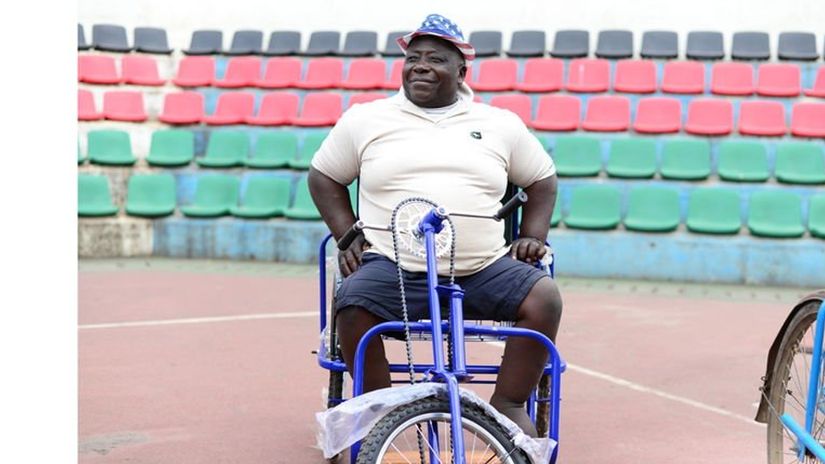
Life at the expansive camp located in North Western Kenya didn't take off as well for Milongo as anticipated, as he was separated from the love of his life, coaching for a while.
According to a UNCHR report published in July 2020, the camp that was established in 1992 has 196,666 registered refugees and asylum-seekers.
With nothing else to repulse the thoughts over the well-being of his family apart from football, Milongo had to bout the deep thoughts again.
Another opportunity in coaching
To his relief, the separation from coaching didn't last long as he was introduced to one of the many football teams at the camp, where he revived his passion for teaching the game.
Slow but sure, Milongo made himself a name as a tactician with an eye for football talent with his products, marketing him better through the inter-team competitions that are always held in the camp.
Six years later, Lady Luck visited him as he was tasked with the responsibility of handling the overall team, Kakuma United, an outfit made up of the best players in the camp and a couple of invitees from the neighborhoods.
"When I got a chance to resettle in Kenya, I took it with both hands. A friend in Kenya whom we had fled home together had informed me of the environment in Kenyan refugee camps and the football opportunities therein. It was an easy choice for me to make considering that Kenya is relatively safer and thrives on many fronts than Burundi."
Australia national team forward Awer Mabil, who currently plies trade with Swiss Super League side Grasshoppers FC, is among the success stories of Kakuma United.
Mabil was born and grew up in the camp, where he honed his football skills on rough surfaces and, at the same time, came face-to-face with other life challenges.
Despite resettling in Australia in 2006, he occasionally returns to the camp for noble charity work and to motivate players domiciled therein.
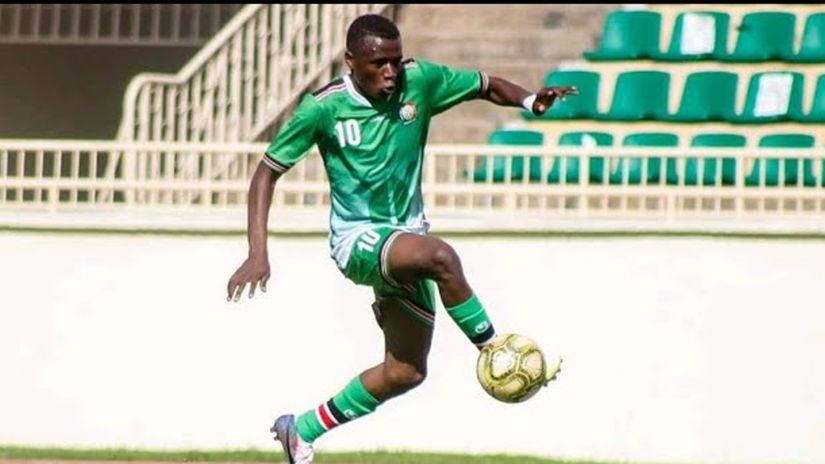
For starters, Kakuma United is comprised of the best players from the sixteen teams that participate in the Kakuma Premier League.
The fully-fledged amateur competition that runs annually is bankrolled by the United Nations, with the winner pocketing at least Ksh.200,000 (approximately 1,330 USD on current exchange rates), with awards also being reserved and dished to the best individual performers.
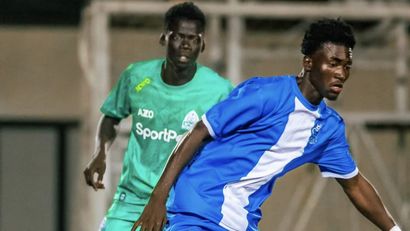
Players drawn from the U20 teams and the other age group categories also get slots in the senior team that plies trade in the Football Kenya Federation Division 2 Zone B league.
"I began coaching the Kakuma United team in 2016 as an assistant coach before being promoted to the rank of head coach the following year. It has been an absolute honour to lead the team since then,"

For Milongo, coaching enables him to fight the mental torture of thinking of the whereabouts of his family and gives him the satisfaction of holding the hands of footballers whose lives and progress has been disrupted by war.
"Coaching the talented players at this camp keeps me going. I always consider the team my family, as the players and everyone around it makes the environment good and friendly. It is a noble job that offers comfort as well."
Seeing young players whose backgrounds hardly inspire any confidence pass through his hands and change their stories through playing football is the greatest source of joy for Milongo.
"What else can I ask apart from success for my players? When I see players whom I have coached making it in life, I get satisfaction as well as the motivation to carry on with what I do best."
The success of a coach can arguably be determined by how he handles and develops talent and helps players realize their full potential or, at best, make careers out of playing the beautiful game.
Milongo's products are a true testament to his coaching acumen, ability to spot raw talent, and ability to groom players who come from humble backgrounds to make it in life through football.
Besides Mabil, who at some point was heavily linked with a move to English Premier League side Newcastle, South Sudan national U20 center-back Daniel Bichiok is a player who owes his success in football to Milongo.
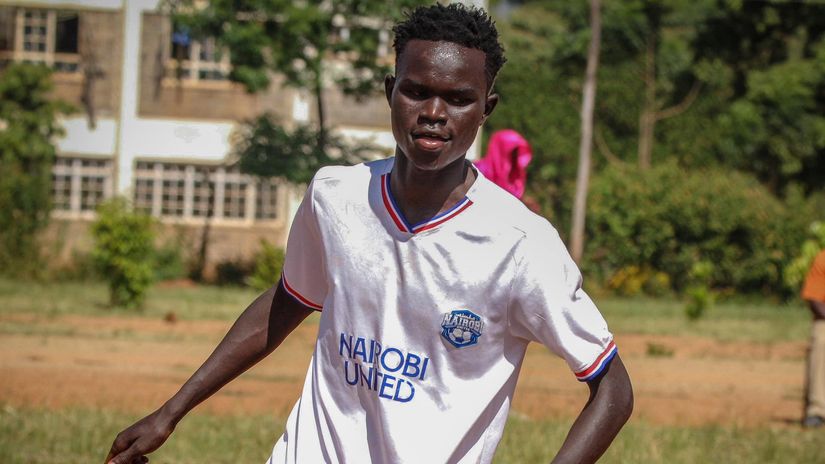
Bichiok and his family arrived at the refugee camp in 2008 and fell into the hands of Milongo in 2017 when he was 13 years old and had never played football before.
"Were it not for him, I would still be living in the refugee camp. He invited me to train with the team in 2017 and was seemingly impressed with the potential I had. He introduced me to football, as I had never played it back at home. Today, my family and I can afford a decent lifestyle thanks to football. I am happy to play for my country as well," said Bichiok, who was part of the South Sudan U20 team that featured in the 2023 Africa Cup of Nations held in Egypt between February 19 and March 11.
Bichiok, who plays for Nairobi United in the Kenya second-tier league, attended trials with Turkish giants Antalyaspor in July and could join the club once he turns 18 in 2025.
Congolese winger Felicien Okanda avers that his football talent would have gone to waste if Milongo hadn't offered him a chance at Kakuma United in 2017.
Okanda, his six siblings, and his dear mother fled South Kivu in the DR Congo in 2016 for Nairobi.

The winger is considered one of the success stories of Kakuma United, as his talent saw him join Kenyan Premier League side Nzoia Sugar in 2020.
Before joining the elite league in Kenya, Okanda was the Most Valuable Player (MVP) and top scorer in the Kakuma Refugee Camp Premier League in the 2017 season.
"I arrived in Kenya as a 'big boy' who wasn't new to football. The war back at home had threatened to cut my football career short. However, when I arrived at Kakuma, coach Heri invited me to train with the team and gave me a chance. Through his assistance, I managed to get a chance to play in the Kenyan top league," offered Okanda.
Okanda, who is currently attached to Kakamega Homeboyz, won the domestic cup with the club in the 2022–2023 season.
Gaetan Masha, another Congolese player who graduated from Kakuma United, was part of the Homeboyz team that won the cup last season.
Homeboyz beat Tusker 1-0 in the final staged at the Moi International Sports Centre Kasarani and went on to represent Kenya in the CAF Confederation Cup by virtue of their victory over the twelve-time league winners.
The gifted hands of Milongo haven't been solely handling players drawn from the camp as he extends his expertise past its borders, scouting talented boys from the neighboring towns, and integrating them into the Kakuma United team.
One of the non-refugee players who got a chance to train and play for the team is Alfred Emoni Tanui, who was born and bred in Turkana, a place known for many reasons, including cattle rustling.
The forward, who is currently attached to top-flight side FC Talanta, has previously earned call-ups to the Kenyan national U23 team.
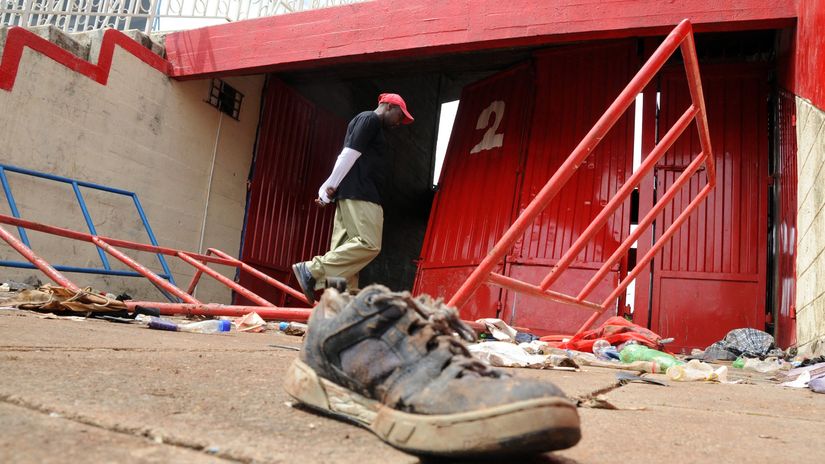
He attributes his rise from Turkana to the highest inter-club football competition in the land to the values Milongo instilled in him when he was young.
“Coach Milongo helped me discover my talent in football. He scouted me and invited me to train with the team. Through playing for Kakuma United, I attracted the attention of bigger clubs. My life has since changed for the better through playing football and since leaving Kakuma,” said the player, who has the intention of enrolling in theological studies once he hangs up his boots.
Last season, the team was skippered by one Joseph Lado, who was born at the camp in 1995, two years after his parents arrived at the camp from South Sudan.
The midfielder says Milongo helped him lay a solid foundation for him even as he works to land a place in professional leagues.
“He is a kind-hearted coach who is not only tactically good but also a good man generally. He helped me discover my talent and continues to encourage me to keep on pursuing my dreams,” praised the defensive midfielder.
His job over the years has been one that pleases his bosses at the camp.
Elias Ciza, the Kakuma United team manager, reserved praise for Milongo, whom he described as a pillar of hope to the hopeless.
"I have known him for close to seven years. He is a kind man who loves football and supporting young talents. He has been doing a great job with the teams he has coached in the camp, and the main one."
Daniel Mateyi, the person in charge of sporting activities, hailed Milongo and his colleagues for the job they continue to do in not only nurturing talents but also, instilling discipline and values.
"We are pleased with the excellent work they have been doing in the camp and beyond," said Mateyi.
These are not isolated cases, as tens if not hundreds of ex-Kakuma United players who were coached by Milongo are scattered in the Kenyan lower tiers and outside the borders.
Future plans and wishes
Coaching Kakuma United is a job that seldom attracts financial gains, unlike handling teams in established leagues with more than multiple commercial partners pumping in money in exchange for brand visibility.
However, Milongo is not about to stop extending a helping hand pro bono to talented players who continue to influx the camp from neighboring countries as well as the talented ones from the neighboring hoods of the camp.
Gathering more knowledge on the trade to effectively coach and teach other life skills tops his to-do list next year.
"I consider it a privilege to coach these boys. I am hoping to enroll in more coaching courses to be effective. Football continues to evolve, and therefore, I can't turn a blind eye to education and technology,"

The biggest of all of his wishes and prayers is a ceasefire in the motherland and other parts of the world that have been experiencing civil wars.
In this day and age, the topic on mental health and wellness, as well as climate change, cannot be ignored in a discourse worth the salt.
In this context, Milongo desires that football can be used to combat mental health issues, depression, and stigma, having himself benefited immensely.
"The world deserves peace. No one should be forced out of his country in this day and age. We shouldn't be having forced displacements and people living in refugee camps. I wish everyone would embrace peace, love, and tolerance. I pray that the world can figure out how football and sports at large can be used as a tool to fight mental health."