


Foreign coaches have never won the World Cup



Reading Time: 4min | Fri. 05.06.26. | 11:30
At the 2026 World Cup, there will be 27 teams led by a foreign manager
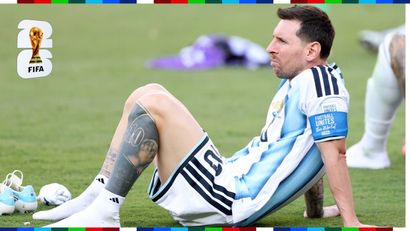
Records are made to be broken. And don’t doubt for a second that at least some of them will fall at the upcoming World Cup. Many records will be broken simply because of the tournament’s expanded format, which introduces a Round of 32 for the first time in World Cup history. Perhaps Lionel Messi or Kylian Mbappe will become the all-time leading scorer in the competition—they are only three and four goals, respectively, behind current record-holder Miroslav Klose (16). Messi will certainly extend his own record for most World Cup appearances, currently standing at 26 matches. And with so many perceived “underdogs” among the participants, would you really bet against the possibility of the record for biggest World Cup victories being threatened?
Yet there is one statistic that stands firm like a monument, untouched by storms, careless passersby, or the passage of time. Since the very first World Cup in Montevideo in 1930, no nation has ever won the tournament with a foreign coach in charge. Why did your mind immediately go to Thomas Tuchel and England, or Carlo Ancelotti and Brazil? Those are certainly the most eye-catching partnerships heading into the tournament in the United States, Canada, and Mexico, but they are just two of an astonishing 27 cases in which participating nations will be led by foreign managers.

In fact, it is easier to list the teams whose coaches are not foreigners, simply because there are fewer of them:
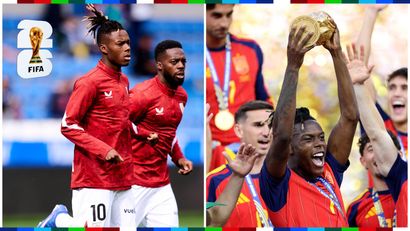
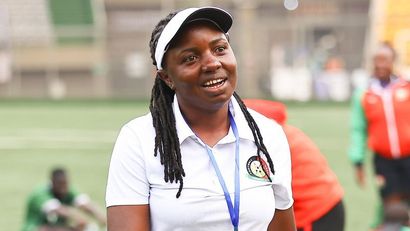
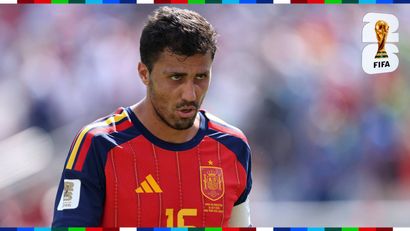
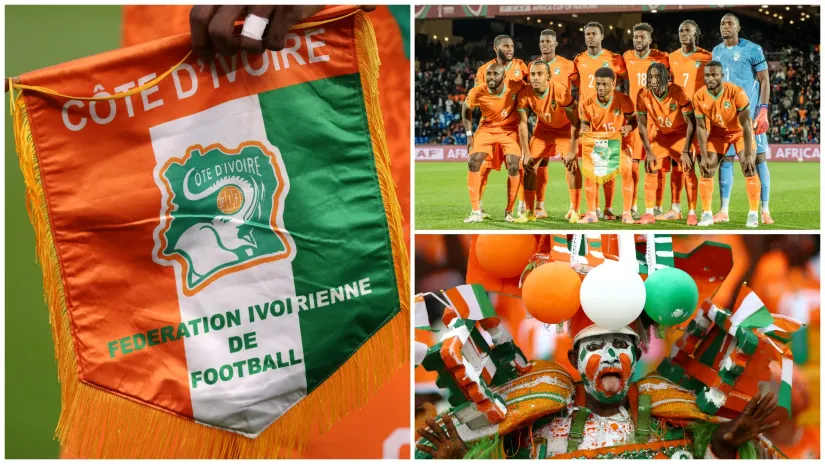
Argentina (Lionel Scaloni), France (Didier Deschamps), Spain (Luis de la Fuente), Germany (Julian Nagelsmann), Switzerland (Murat Yakin), Morocco (Mohamed Ouahbi), Australia (Tony Popovic), Netherlands (Ronald Koeman), Mexico (Javier Aguirre), South Korea (Hong Myung-bo), Czech Republic (Miroslav Koubek), Bosnia and Herzegovina (Sergej Barbarez), Scotland (Steve Clarke), Ivory Coast (Emerse Fae), Japan (Hajime Moriyasu), Egypt (Hossam Hassan), Iran (Amir Ghalenoei), Cape Verde (Pedro Brito), Senegal (Pape Thiaw), Norway (Stale Solbakken), and Croatia (Zlatko Dalić).
Whether it is due to their success at the last World Cup or historical and geographical ties, the two nations that contested the final in Qatar account for a remarkable 11 coaches at this World Cup—six Argentines and five Frenchmen. In addition to Scaloni, Argentine coaches will lead Paraguay (Gustavo Alfaro), the United States (Mauricio Pochettino), Ecuador (Sebastian Beccacece), Uruguay (Marcelo Bielsa), and Colombia (Nestor Lorenzo). French coaches include Sebastien Migne (Haiti), Sabri Lamouchi (Tunisia), Rudi Garcia (Belgium), and Sebastien Desabre (DR Congo), alongside Deschamps.
Spain provides four coaches: De la Fuente, Julen Lopetegui (Qatar), Roberto Martínez (Portugal), and Thomas Christiansen (Panama)—born in Denmark but a former Spanish international who still primarily identifies with Spain. Italy may have missed a third consecutive World Cup as a nation, but Italian coaches will still be present through Carlo Ancelotti (Brazil), Vincenzo Montella (Turkey), and Fabio Cannavaro (Uzbekistan). Germany also contributes three coaches: Nagelsmann, Ralf Rangnick (Austria), and Thomas Tuchel (England). England itself will have a foreign manager, but two English coaches will be at the tournament: Graham Potter with Sweden and Darren Bazeley with New Zealand.
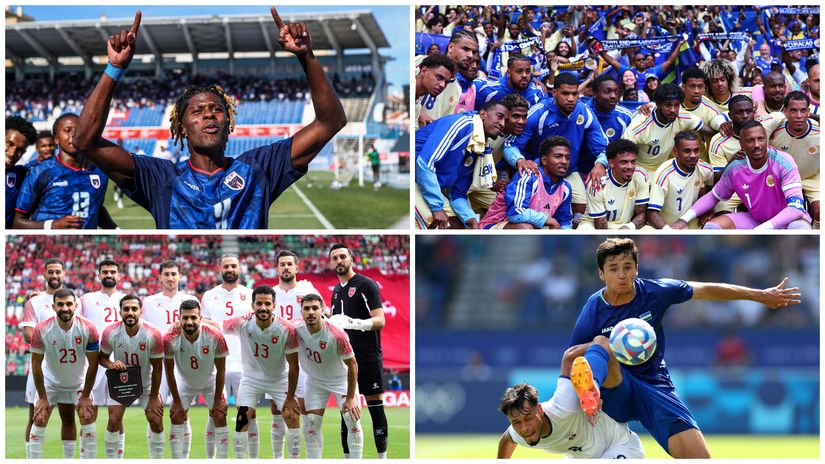
Two coaches each come from Bosnia and Herzegovina—Barbarez and Sarajevo-born Vladimir Petković, who manages Algeria despite formally being Swiss; from Morocco—Ouahbi and Jamal Sellami, coach of Jordan; from Australia—Popovic and Graham Arnold, who now leads Iraq; and from the Netherlands—Koeman and Dick Advocaat, manager of Curaçao. The list is completed by Belgian coach Hugo Broos (South Africa), American Jesse Marsch (Canada), Greek coach Giorgos Donis (Saudi Arabia), and Portuguese veteran Carlos Queiroz, who was appointed by Ghana. Didier Deschamps has already secured his place in history as one of only three men to win the World Cup as both a player and a coach, alongside Franz Beckenbauer and Mario Zagallo. Now, together with Lionel Scaloni—who denied him a second title in Qatar—he has the opportunity to become the first coach since Vittorio Pozzo to win two World Cups as a manager.
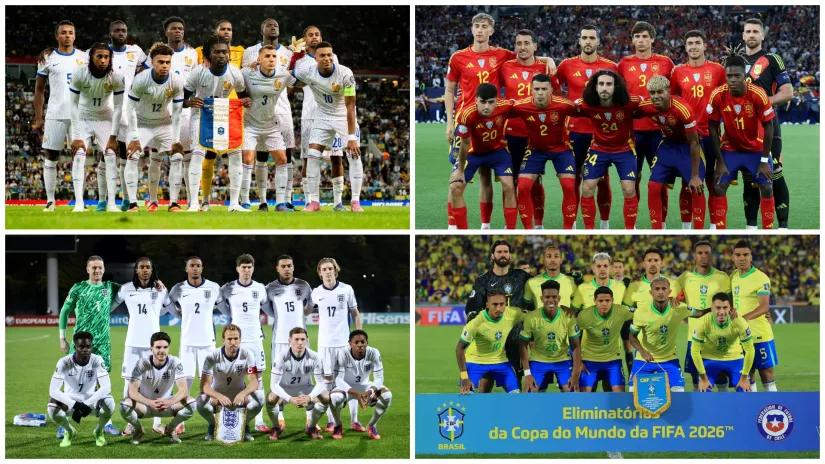
Should France make another deep run, Deschamps could also take over first place for most World Cup matches managed. That record has long belonged to Helmut Schon, who led West Germany in 25 World Cup matches between 1966 and 1978. Deschamps currently stands on 19. Carlos Alberto Parreira’s record of six World Cup appearances as a coach remains safe, but the Serb Bora Milutinović will gain company in second place, as this tournament will mark Carlos Queiroz’s fifth World Cup. The oldest coach at this World Cup—and indeed the oldest in World Cup history—will be Dick Advocaat, who turns 79 in September. The youngest, just as he was at the European Championship two years ago, is Julian Nagelsmann, who will celebrate his 39th birthday only a few days after the final.
WORLD CUP - GROUP STAGE
First round
Thursday, 11.06.
22.00: (1.50) Mexico (4.00) S.Africa (7.25)
Friday, 12. 06.
05.00: (2.70) S.Korea (3.10) Czech R. (2.75)
22.00: (1.85) Canada (3.70) B&H (4.25)
Saturday, 13.06.
04.00: (2.05) USA (3.35) Paraguay (3.80)
22.00: (12.0) Qatar (5.40) Switzerland (1.28)
Sunday, 14.06.
01.00: (1.62) Brazil (3.80) Morocco (5.80)
04.00: (6.80) Haiti (4.45) Scotland (1.47)
07.00: (4.50) Australia (3.50) Turkey (1.83)
20.00: (1.03) Germany (15.0) Curacao (50.0)
02.00: (2.10) Netherlands (3.45) Japan (3.50)
***odds are subject to change***