


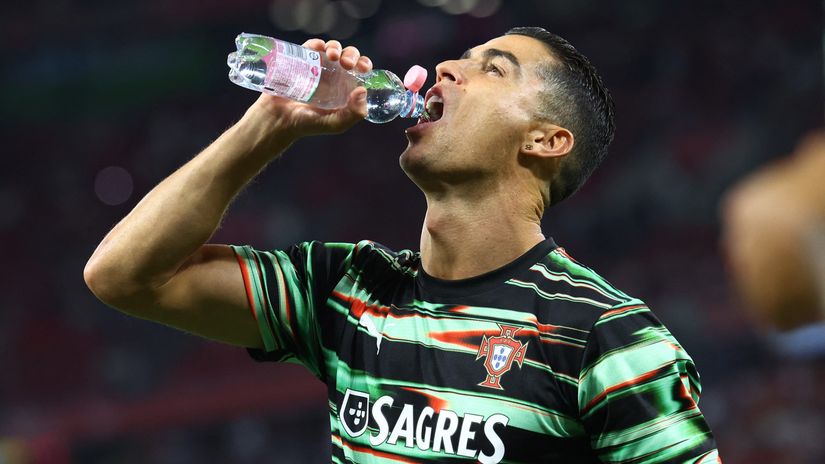
Basketball rules at the 2026 WC — match divided into quarters




Reading Time: 2min | Wed. 10.12.25. | 23:48
Everything is framed as if the breaks are due to weather conditions, but it’s certain that there’s also a need for brands to get advertised
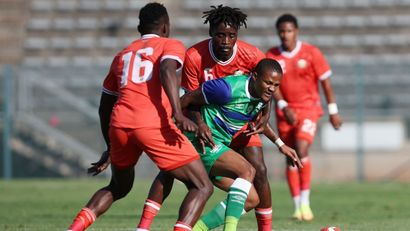
Water breaks are not some new football invention. Quite simply, when playing in high temperatures or in conditions of high humidity — situations that significantly contribute to dehydration — it is normal to take a pause to refresh. However, FIFA has decided that at the next World Cup in the USA, Canada, and Mexico, a mandatory “hydration break” will be introduced, regardless of weather conditions or temperature.
FIFA has confirmed there will be three-minute hydration breaks in each half of every game at next year's World Cup ⌚️ pic.twitter.com/0rvo2GyOHS
— Sky Sports Football (@SkyFootball) December 8, 2025
The world’s football governing body opted for this move in an effort to follow its player-welfare policy during a tournament that will be held across the North American continent and in the largest country of Central America. Throughout the entire World Cup (from June 11 to July 19), referees will be obligated to signal a three-minute break exactly in the 22nd minute of each half, during which players can freshen up.
Naturally, this decision will raise many public questions about its purpose and logic, considering the expected temperatures in the host countries next summer. Summer temperatures in Canada are around 20°C, Mexico is expected to see ranges from 13°C to 24°C, while in the United States the estimated maximum will be around 32°C. That is indeed a challenging temperature to play in — but Canada and Mexico offer, objectively, ideal conditions if considering air temperature alone.
The 2026 World Cup will have “hydration breaks” in each half that will essentially turn the soccer matches into quarters.
— Front Office Sports (@FOS) December 10, 2025
Fox, the World Cup broadcaster, declined to comment on whether it will air commercials during these game breaks.
This leads to the main question: are these truly “water breaks” or “advertising/commercial breaks,” set to bring enormous profit from ad slots? If we add up 72 group-stage matches and another 32 in the knockout rounds, the World Cup will, for the first time in history, feature 104 matches. Each will include a mandatory six minutes of stoppage time for hydration breaks — totaling 624 minutes, or roughly 10 and a half hours of pauses.
In any case, World Cup matches will start to resemble basketball games, as they will effectively be divided into four equal segments. It’s clear that national teams will essentially gain a type of timeout for tactical adjustments, fine-tuning, and coaching corrections.