


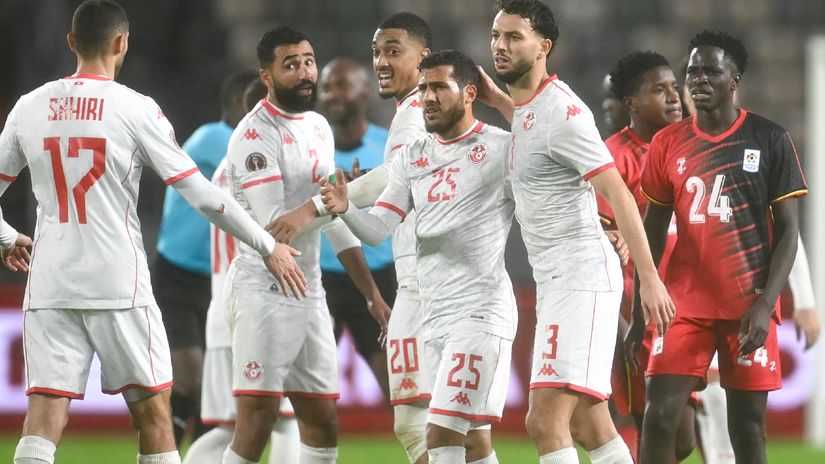
AFCON TACTICAL ANALYSIS: Tunisia's calculated game plan that dismantled Uganda







Reading Time: 4min | Wed. 24.12.25. | 15:36
Tunisia's victory marked their first AFCON opener win since 2013, a statement of intent built on tactical superiority and clinical exploitation by Sami Trabelsi’s men
Tunisia delivered an authoritative performance to dismantle Uganda 3-1 in their 2025 Africa Cup of Nations opener, exposing the Cranes' structural frailties with ruthless efficiency in transitions while Sami Trabelsi's side showcased the kind of tactical discipline and quality that separates contenders from this stage.
Follow our WhatsApp channel for more news
Trabelsi deployed a base 4-3-1-2 that fluidly morphed into a 3-2-5 or even 2-3-5/2-2-6 in advanced phases, overwhelming Uganda's territory with numerical superiority in the final third.
Aymen Dahmen anchored the goal, protected by Yan Valery at right-back, a central pairing of Montassar Talbi and Dylan Bronn, and Ali Abdi pushing high on the left.
Ellyes Skhiri sat as the deep pivot, progressing play relentlessly alongside Elias Saad and Hannibal Mejbri in connecting roles, with Ferjani Sassi advanced and the striker duo of Jazem Mastouri and Elias Achouri providing mobility and finishing threat.

Uganda, under Paul Put, lined up in a nominal 4-3-3 with Salim Magoola in goal, Toby Sibbick at right-back, Azizi Kayondo left-back, and central defenders Rodgers Torach and Jordan Obita.
Khalid Aucho anchored midfield with Kenneth Semakula, Melvyn Lorenzen was more advanced in the midfield department, Jude Semugabi slotted on the right wing, Rodgers Mato left, and Steven Mukwala lined up as the central striker.
From the onset, Tunisia seized control with ferocious intent, flooding Uganda's half in the opening minutes and forcing errors through an aggressive 4-4-2 press out of possession.
The breakthrough arrived in the ninth minute via a corner - Hannibal's delivery targeted the far post, where Skhiri ghosted unmarked for a powerful header, punishing Uganda's zonal marking lapse and poor tracking of runners.
This set-piece execution was no fluke; Tunisia's routines were meticulously rehearsed, with timed movements and varied deliveries that repeatedly exploited Uganda's aerial vulnerability.
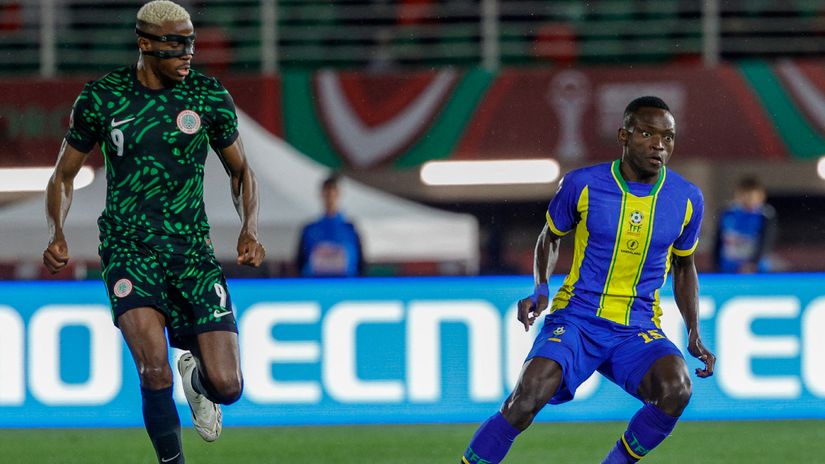
Uganda responded with sporadic counters, relying on speed and long diagonals to wide areas, but their lack of compactness invited pressure - Tunisia's high press pinned them deep, forcing long balls and denying progressive outlets.
Uganda showed fleeting promise around the 23rd minute with neat passing triangles on the left flank, exploiting third-man runs, but these moments were isolated amid Tunisia's dominance.
Valery's high-positioning role proved crucial, allowing immediate transitions upon recovery.
Aucho occasionally dropped between centre-backs to launch switches to Sibbick high on the right, but Uganda's structure lacked cohesion, leaving gaps that Tunisia probed relentlessly.
The second goal in the 40th minute was a damning indictment of Uganda's defensive uncompactness: Sassi won midfield possession, passing to Abdi, who overlapped and delivered a cutback that Achouri converted in a one-touch finish fashion - Uganda's midfield failed to track, and the backline was pulled apart by simple combination play.
The second half saw substitutions inject fresh legs - Travis Mutyaba and Dennis Omedi came on for Lorenzen and Semugabi, then Firas Chawat for Mastouri in Tunisia - but the patterns persisted.
Magoola, the Ugandan goalkeeper, dropped between centre-backs for a patient build-up.
Uganda's press, on the other hand, congested wide areas effectively only in spells, suffocating Tunisia momentarily before overloads on the left (Kayondo joining Mato) fizzled without an end product.
Tunisia's third in the 64th minute was transitional brutality: Uganda's rest defense caught napping on a counter from the left, Ben Romdhane setting Ali Abdi whose blocked shot fell kindly for Achouri to tap into an empty net on the rebound - blind-side awareness absent, positioning catastrophic.
As the game wore on, Tunisia shifted to possession management, circulating slowly through the right flank around the 79th minute, with Romdhane operating in half-spaces to control tempo and wait for pounce moments.
Uganda's late consolation in the 90+2 minute - Omedi finishing from Sibbick's cutback after Okello capitalised on a quality constructed attack, offering mere cosmetic relief, highlighting occasional threat from set plays or errors, but underscoring their overall bluntness.
Tunisia's 38 touches in the opposition penalty box spoke volumes: relentless occupation of dangerous areas, contrasted with Uganda's inability to sustain pressure or convert half-chances.
Trabelsi's side was unforgiving in punishing lapses - set pieces accounted for the opener, transitions the third, and midfield recovery the second - while Uganda's in-possession structure promised lane occupation but delivered little cohesion against Tunisia's balanced 4-3-3 high press dropping to 4-4-2 mid-block.
Sassi's midfield mastery dictated rhythm, Skhiri's progression was impeccable, and Achouri's brace underlined individual quality trumping collective effort. Uganda's energy waned, their counters lacked precision, and defensive uncompactness proved fatal against a side this drilled.
Tunisia's victory marked their first AFCON opener win since 2013, a statement of intent built on tactical superiority and clinical exploitation by Sami Trabelsi’s men.
Uganda, returning after six years of absence, fought sporadically but were schooled in the harsh realities of technical yet elite continental football - discipline, execution, and compactness win tournaments, not mere intent. Tunisia has a platform; Put has stark lessons for the Cranes ahead.