


Why Kip Keino Classic organizers are introducing wave light technology





.jpg)

.jpg)
Reading Time: 4min | Fri. 03.04.26. | 14:58
Kenya’s Beatrice Chebet used it when she clocked a stunning 28:54.14 to break the women’s 10,000m world record at the 2024 Prefontaine Classic in Oregon
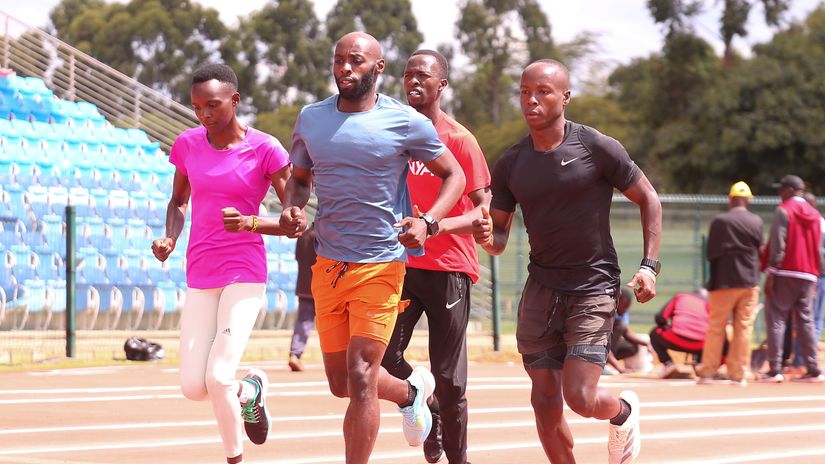
Kenya is set to break new ground in African athletics, as the seventh edition of the Kip Keino Classic will see the introduction of wave light technology at the Nyayo National Stadium on Friday, 24 April.
The innovation, which has transformed elite track competitions globally, will debut at the World Continental Tour Gold meeting as organizers aim to elevate performance standards and enhance the fan experience.
Download our Mozzart Sport App for more news
Speaking during the event launch on Thursday, 2 April, Meet Director Barnaba Korir confirmed that preparations are already underway, with a team from Washington, D.C., in the country to install the system.
“This time, we will introduce new technology as the event shifts to the evening. We have finalized discussions with a company from Washington, D.C., and their team is already in Kenya. Preparations are underway, including the installation of the Wavelight system,” Korir said.
He explained that the technology is designed to complement, rather than replace, traditional pacemakers.
Athletes will follow moving LED lights along the track, with each colour representing a specific target pace.
“The Wavelight is being introduced to complement the role traditionally played by pacemakers, who help athletes maintain fast tempos during races. With this system, athletes will be able to follow moving lights along the track, each colour indicating a specific pace,” he added.
“For instance, athletes targeting a world record will have a designated light reflecting the required speed. This allows them to clearly track their position and understand what they need to achieve at every stage of the race. Ultimately, the Wavelight will serve as a key aid in helping athletes optimize their performance," he explained.
What is wavelight technology?
Though its origins date back to 1976, wavelight technology made its competitive debut in 2018 at the FBK Games in Hengelo, Netherlands, before gaining prominence at elite meets such as the Diamond League in 2020.

The system consists of LED lights installed along the inside rail of the track, acting as an automated pacemaker.
The lights are programmed to move at a pre-set speed, guiding athletes toward targets such as world records, personal bests, or meeting records.
Different colours—green, blue, red, and white—represent varying performance goals and are spaced at intervals of 100 metres, allowing athletes to instantly gauge whether they are ahead or behind pace.
Several top athletes have already benefited from the technology.

Kenya’s Beatrice Chebet used it when she clocked a stunning 28:54.14 to break the women’s 10,000m world record at the 2024 Prefontaine Classic in Oregon.
Other global stars who have thrived with the system include Uganda’s Joshua Cheptegei, Kenya’s Faith Kipyegon, who shattered the mile and 5000m world records in 2023 and Ethiopia’s Letesenbet Gidey.
Not the end of pacemakers
Despite fears in some quarters that wavelight technology could render human pacemakers obsolete, organisers insist it will instead enhance their role.
According to its manufacturers, the system helps pacemakers maintain a consistent rhythm, ensuring they are aligned with the targeted pace throughout the race.

This eliminates the uncertainty often associated with manual pacing, where a pacemaker may struggle to judge whether they are on track.
For fans, the technology adds a new layer of excitement, making it easier to follow record attempts in real time by simply watching the moving lights.
Mixed reactions
However, the adoption of wavelight technology has not been without controversy.
In 2020, two-time Olympic silver medallist Hellen Obiri raised concerns over fairness, arguing that access to such technology could create an uneven playing field—particularly disadvantaging athletes from regions where it is not widely available.
A game-changer for Africa
Its introduction at the Kip Keino Classic is therefore expected to help bridge that gap, offering more athletes, especially on home soil, the opportunity to chase historic performances.
The meet has already built a reputation as a stage for standout performances.

At the 2021 edition, Ferdinand Omanyala became Africa’s fastest man after clocking 9.77 seconds in the 100m at Kasarani.
Other athletes such as Wiseman Were, Mary Moraa, and Mercy Oketch have also recorded personal bests at the event.
With a history of fast times and breakthrough performances, the addition of wavelight technology is expected to push the boundaries even further.