


.png)
“We blame the athletes, but it is all of us” – Kipchoge weighs in on Kenya's doping crisis

.jpg)

.jpg)
.jpg)



Reading Time: 3min | Thu. 22.01.26. | 08:40
The two-time Olympic marathon champion argued that the scourge is a result of collective failure, rather than individual wrongdoing
Marathon great Eliud Kipchoge has urged Kenyan athletics stakeholders to take collective responsibility for the country’s ongoing doping crisis, insisting that the issue goes beyond individual athletes and points to deeper systemic failures.
Follow our WhatsApp channel for more news
The two-time Olympic marathon champion was speaking on Tuesday, 20 January during the launch of the Sirikwa World Cross Country Championships in Eldoret, where he challenged administrators, policymakers, and support structures to confront uncomfortable truths about the sport.
Eliud Kipchoge lectured Athletics Kenya officials! pic.twitter.com/QHbnPBRVPt
— The Kenyan Vigilante (@KenyanSays) January 21, 2026
If you have followed distance running over the past five years, a pattern has emerged: a steady rise in doping cases involving Kenyan athletes. This has come despite the country’s sustained dominance on the global stage.
Since 2000, Kenyan runners have won more than 100 Abbott World Marathon Major titles, with standout performances from the late marathon world record holder Kelvin Kiptum and former world champion Ruth Chepngetich placing the nation at the forefront of the sport.
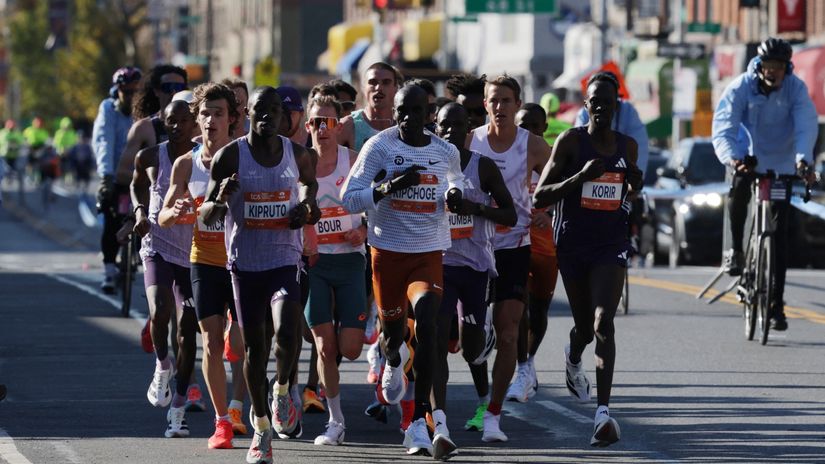
However, beneath the elite level lies a vast pool of ambitious athletes chasing limited opportunities.
Kenya’s depth in the marathon is unmatched, with 196 men having run under 2:07, a figure that dwarfs many nations, including the United States, which has produced just five such athletes in history.
While this depth reflects Kenya’s extraordinary talent, it also presents a significant challenge for anti-doping efforts.
Unlike countries such as the United States, whose anti-doping agency (USADA) benefits from substantial annual funding from the government and the U.S. Olympic and Paralympic Committee, Kenya’s testing capacity has historically been constrained by limited resources.
Kenya has been classified under Category A, the highest risk level, by World Athletics and the World Anti-Doping Agency (WADA) since 2016, alongside Belarus, Ethiopia, Morocco and Ukraine. The designation reflects the scale of the challenge across the wider athlete population, not just among top elites.
Kipchoge argued that the situation is the result of collective failure rather than individual wrongdoing.
“As we build these pathways, let us also be honest beyond the track. Many athletes face challenges, it’s not because they lack talent, but it’s because they lack the right structure and support,” he said.
Although progress has been made, including increased collaboration between the Athletics Integrity Unit (AIU) and the Kenyan government, Kipchoge stressed that funding alone will not fix the problem. He called for open and intentional conversations around doping, urging stakeholders to address the issue honestly and without fear.
“Doping has been a great challenge to all of us, but sometimes I ask myself, ‘Why is doping a great challenge?’ We have great minds who are here,” he offered.
He questioned whether the country has ever meaningfully confronted the issue at a national level.
“Have you ever sat down and discussed doping? Make sure you have the right day, and sit down and discuss doping in Kenya,” he said.
For Kipchoge, Kenya’s Category A status reflects shared responsibility.
“We are in Category A, not because of athletes but because of all of us in Kenya. When the children are misbehaving, we blame the parents. Let us be genuine, sit down and share these things, the right roadmap, and what we can do to stop doping,” he averred.
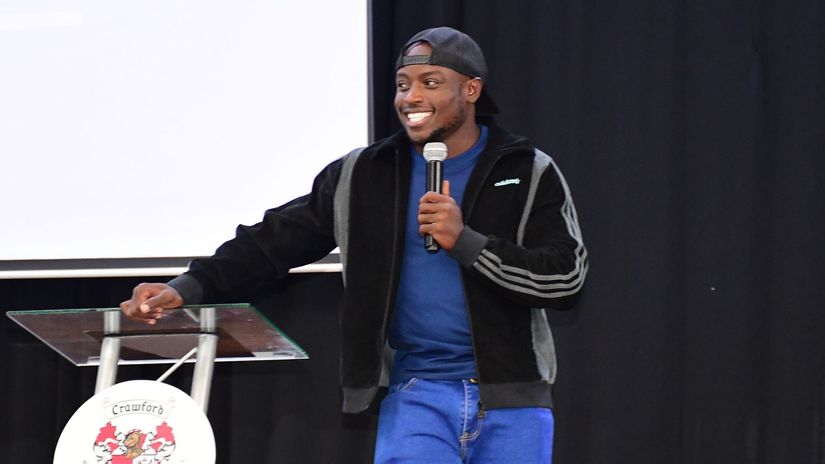
He concluded with a pointed message to those in leadership positions, urging them to act with integrity and courage.
“Not just sitting and talking. I’m not putting pressure on you, but it’s because you hold the office. You know the reason why you are in that office, and the moment you’ll be on your deathbed, guilt will be the end of you because you don't want to say the truth and face the truth.”