


2025 School Games: Inside fierce rivalries, rising talents, and hunt for regional glory








Reading Time: 5min | Sun. 04.01.26. | 13:22
Perhaps most importantly, the games reinforced the role of school sport as a foundation for national teams, professional careers, and lifelong engagement with sport
The 2025 Kenya Secondary Schools Sports Association (KSSSA) calendar unfolded as more than just a sequence of tournaments.
From the sun-soaked pitches of Mombasa, in April for the term one games, through the intense term two games battles in Kakamega, to the regional competitions of the Federation of East Africa Secondary Schools’ Sports Association (FEASSA) Games in August, the school games offered a vivid snapshot of Kenya’s sporting future in motion.
Follow our WhatsApp channel for more news
Across three major competitions - the Term One National Games, the Term Two National Games and the FEASSA Games - familiar giants reasserted themselves, new contenders emerged, and regional rivalries sharpened.
Setting tone at Term One National Games
The 2025 KSSSA Term One National Games, held in April in Mombasa, set the competitive tempo for the year.
With disciplines including: athletics, basketball (5×5), hockey, rugby 15s, handball, cross country and swimming, the coastal city became a convergence point for the country’s most prepared school teams.
From the outset, Rift Valley Region stamped its authority on the championships.
Their depth across multiple disciplines once again translated into overall regional dominance, underlining the region’s long-standing investment in structured school sport.
Western and Nyanza regions followed closely, maintaining pressure across team and individual events.

Basketball once again delivered high-octane drama.
Butere Girls continued their era of dominance, retaining the national title with a commanding win over Kaya Tiwi, while Laiser Hill Academy edged Dr Aggrey in a thrilling boys’ final that went down to the wire.
These results not only reinforced pedigree programs but also highlighted the growing competitiveness beyond traditional basketball strongholds.
In rugby 15s, Vihiga High School emerged as national champions after overcoming Kisii School, a result that reaffirmed Western Kenya’s influence in the oval-ball game at the school's level.
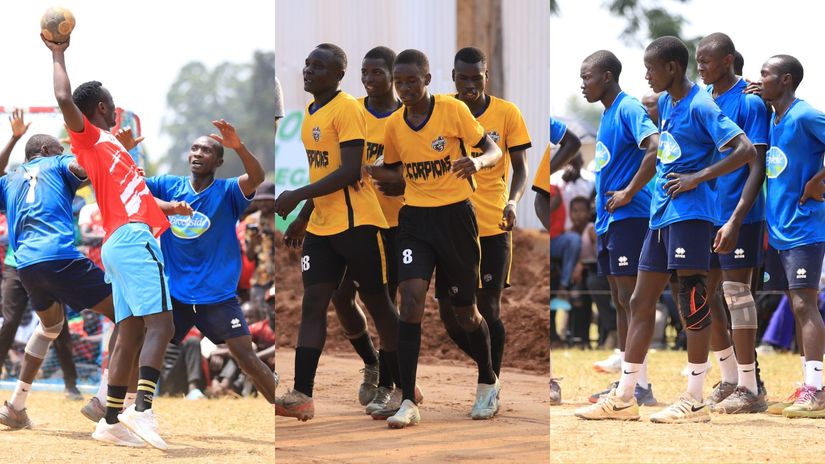
Handball titles for Kimilili Boys and Moi Girls Kamusinga reflected sustained excellence and continuity in coaching structures in Bungoma County, and Western region in general.
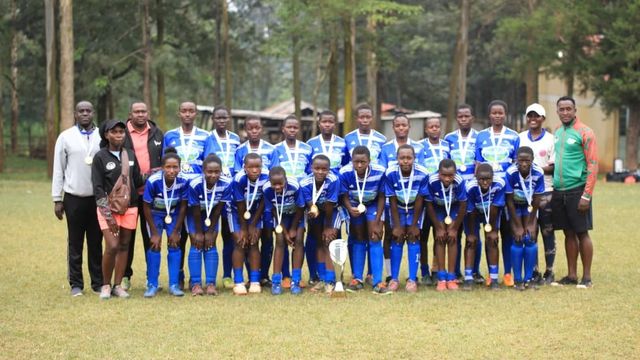
Hockey remained firmly under the grip of familiar names, with Musingu Boys and Tigoi Girls successfully defending their crowns.
Their performances once again demonstrated how institutional culture and long-term development programs continue to shape success in school hockey.
Notably, football was absent from the Term One program, leaving the spotlight on other disciplines and setting the stage for a football-heavy Term Two calendar.
Football takes centre stage
The focus shifted to Kakamega, in late July and early August, for the Term Two National Games, where football, volleyball, netball, rugby sevens, basketball 3×3 and indoor sports dominated the schedule.
Once again, Rift Valley Region topped the overall regional standings, reinforcing a narrative of consistency across both terms.
However, Term Two belonged mainly to football, a sport that consistently commands attention and emotion at the school's level.
In boys’ football, St Joseph’s Boys High School emerged as national champions after beating western’s current powerhouse Musingu, navigating a tightly contested tournament that underlined the fine margins at elite school level.
On the girls’ side, Butere Girls added yet another national crown to their growing collection, completing a rare double by featuring prominently across multiple sports in the same year.
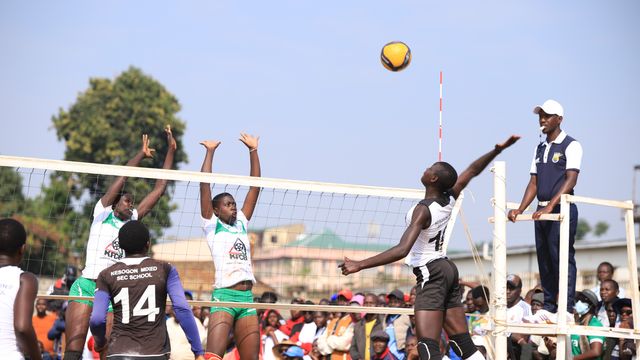
Volleyball saw Cheptil High School and Kwanthanze Girls successfully defend their national titles, confirming their status as benchmarks in boys’ and girls’ volleyball, respectively.
Rugby sevens, netball and basketball 3×3 delivered packed schedules, tight turnarounds, and emerging talents who would later feature on the regional stage at FEASSA.
Crucially, Term Two served as a qualifying gateway to East Africa, with national champions and standout performers earning the right to represent Kenya beyond its borders.
East Africa Meets in Kakamega
The climax of the school sports calendar arrived in August when Kenya hosted the FEASSA Games in Kakamega.
Bringing together elite school teams from across East Africa, the championship offered both prestige and a measure of regional standing.

Team Kenya rose to the occasion, finishing as overall champions with a commanding medal haul that reaffirmed the country’s position as a regional powerhouse in school sport.
Uganda and Rwanda followed, continuing a rivalry that has intensified over recent editions of the games.
Football, once again, delivered defining moments. Kenya fell just short in the boys’ final, with Bukedea Comprehensive School of Uganda edging Musingu High School in a closely fought contest. In the girls’ competition, St Noa Girls School (Uganda) retained its title, underlining Uganda’s growing influence in women’s school football.
Beyond football, the FEASSA Games showcased the breadth of competition. Rwanda made history in basketball, volleyball titles were successfully defended by Kenyan representatives, and rugby honours were shared across categories.
In hockey, Kenya and Uganda split the crowns, reflecting a balanced rivalry that continues to elevate standards in the sport.
Patterns, progress and bigger picture
Taken as a whole, the 2025 school games calendar revealed several consistent themes.
Rift Valley’s regional dominance, Western Kenya’s strength in rugby and basketball, and the sustained excellence of established institutions pointed to the value of long-term investment in coaching, facilities and competition exposure.
Football’s delayed, but impactful presence highlighted how different sports peak at different points of the calendar, while FEASSA once again confirmed its role as a critical bridge between national school competitions and elite youth sport pathways.

Perhaps most importantly, the games reinforced the role of school sport as a foundation for national teams, professional careers, and lifelong engagement with sport.
Every final, upset and breakthrough performance contributed to a broader ecosystem that continues to shape Kenya’s sporting identity.
Attention already shifts to 2026, with regional rivals plotting improvements and schools seeking to build on this year’s lessons.

With FEASSA set to move to Tanzania next year, the challenge will be to maintain dominance on foreign soil.
What remains clear is that the school games are no longer just competitions on a calendar.
They are narratives in motion of growth, rivalry, ambition, and in 2025, they once again proved why they remain the heartbeat of Kenyan sport.