


TACTICAL ANALYSIS: Nairobi United's brave gameplan that fell short against AS Maniema



Reading Time: 4min | Mon. 01.12.25. | 22:00
Nairobi United, who suffered their second loss of the competition in their second group match, approached the contest with a clear structural identity despite the defeat
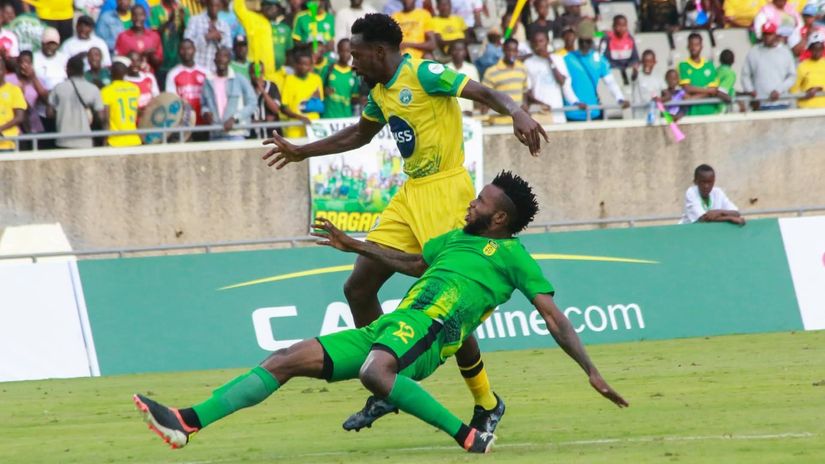
Kenya played host to a CAF interclub group stage match after a six-year hiatus. The team tasked with representing the country were Mozzart Bet Cup champions Nairobi United.
The Naibois and AS Maniema Union’s CAF Confederation Cup encounter unfolded as a layered tactical battle defined by structural contrasts, in-possession mechanisms, and evolving game-state adjustments.
From the onset, both sides revealed distinct playing principles rooted in their line-up configurations, which shaped the rhythm, patterns, and territorial balance of the match.
Follow our WhatsApp channel for more news
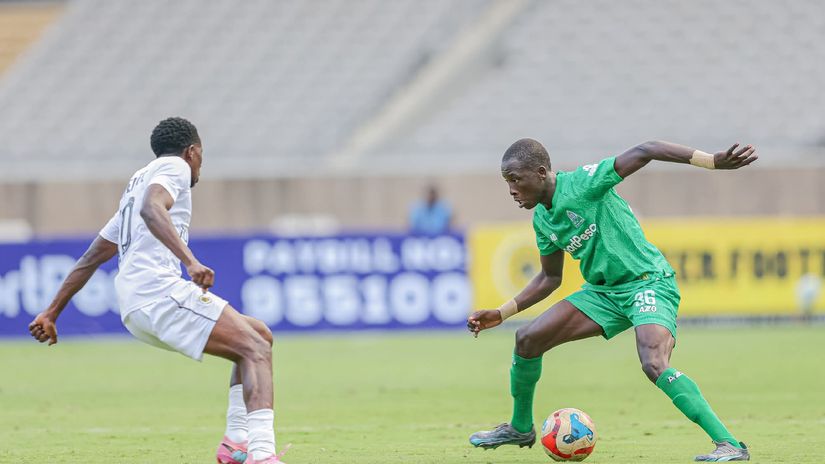
AS Maniema Union set up in a bold 4-2-4 attacking structure, signalling their intention to control width and create multiple high reference points in the final third.
Detan Ogundare started in goal, protected by a backline featuring fullbacks Lupini Diumerci and Exaucia Moanda, while the central defensive axis of Lita Jeancy and Osee Ndombele provided aerial command and rest-defence orientation.
Their midfield double pivot, Onoya Sngana and Mukoko Jordi, acted as the stabilisers between Maniema’s expansive front four and their defensive block, tasked with both recycling possession and controlling transitions.
Up front, Christian Balako functioned as the primary target man, operating in direct duels and triggering vertical attacks, supported closely by Mukeni Chadoma, who positioned himself just metres behind to exploit second balls and interior pockets.
Clement Pitroipa and Obed Mbala provided the width to stretch Nairobi’s defensive shape.
Nairobi United, who suffered their second loss of the competition in their second group match, approached the contest with a clear structural identity despite the defeat.
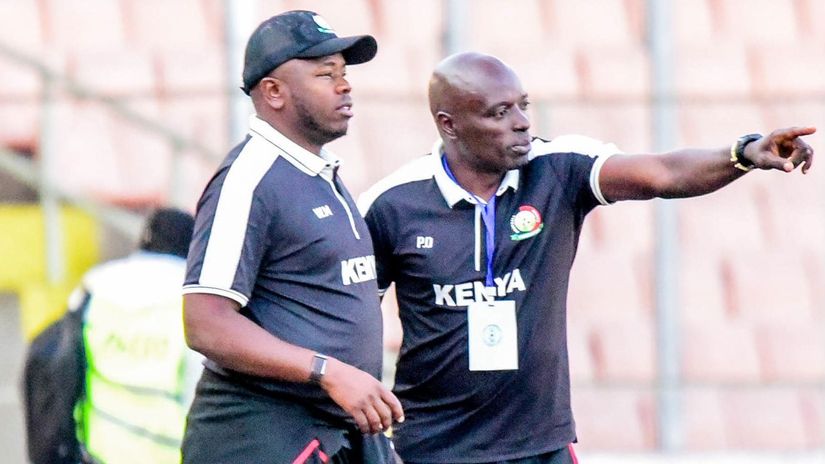
They lined up with Kevin Oduor in goal behind a central defensive partnership of Lennox Oguttu and John Otieno, whose compact positioning ensured vertical stability.
The fullbacks, Kevin Osanya and Yusuf Mainge, had dual responsibilities - offering width in controlled phases while timing overlapping runs when the wide channels opened.
In midfield, Brian Magare operated as the deep-lying anchor, providing a secure outlet in low build-up while shielding the backline.
Ahead of him, Lesley Owino dropped intelligently between the lines to stitch together the second phase, whereas Enock Machaka, Nairobi’s box-to-box engine, oscillated between linking attacks, supporting the fullbacks in their surges, and attacking half-space channels with well-timed delayed runs.
On the wings, Shami Mwinyi and Duncan Omalla provided dynamic width, defensive coverage, and positional rotations, frequently switching flanks to disrupt Maniema’s marking references.
Michael Karamor, deployed centrally, acted as a hold-up specialist - offering aerial presence, link play, and depth-threatening movement.
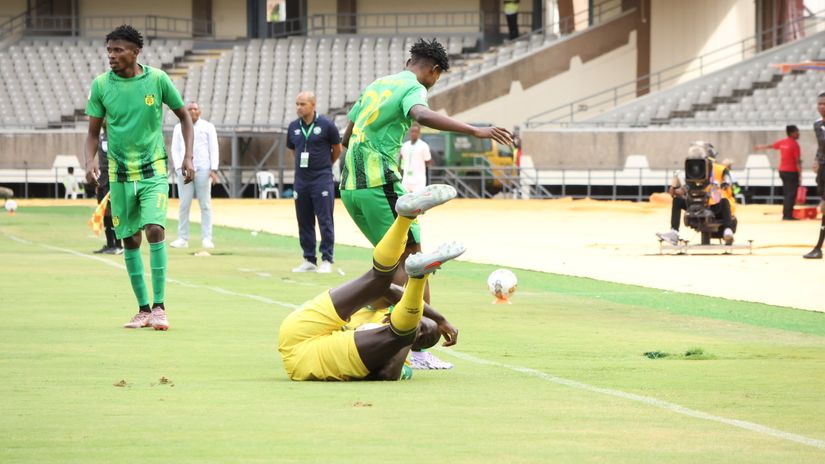
With these structures in place, the tactical narrative of the first half began to unfold. Nairobi’s out-of-possession discipline was immediately evident, especially in set-piece scenarios where they employed a hybrid system of five man-markers and four zonal markers to combat Maniema’s aerial presence.
Their restarts were deliberately direct, with Oduor launching long balls towards the flanks to exploit the advanced positioning of Osanya and Mainge.
This allowed them to bypass Maniema’s initial pressure and create early territorial gains.
In possession, Nairobi constructed neat third-man combinations, using Mwinyi’s/Machaka’s dropping movements and Karamor’s secure hold-up play to create passing triangles through the half-spaces.
These sequences allowed them to advance coherently, especially when supported by Mwinyi and Omalla’s in-game positional interchanges, which introduced unpredictability in wide areas.
The near-side central midfielder frequently joined the wide channel to create 3v2 overloads, enabling Nairobi to attack Maniema’s flanks with numerical superiority.
Maniema’s build-up was structurally different but equally deliberate.
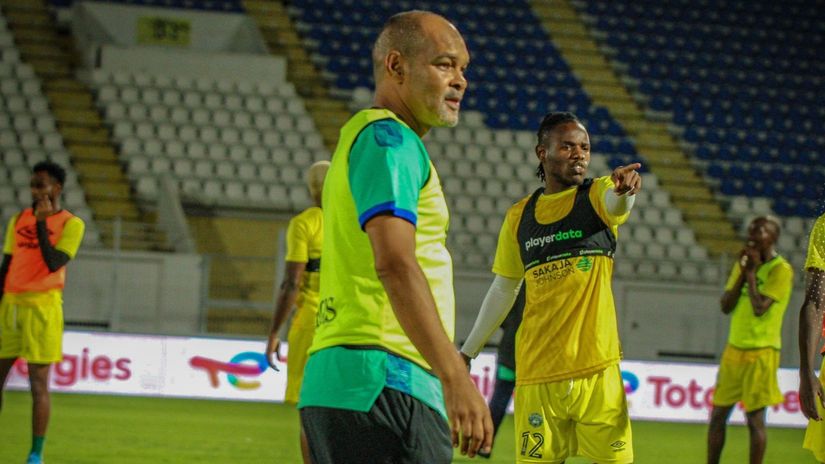
Their 2-4-4 in-possession shape prioritised width and high occupation of the last line. Ogundare frequently opted to go long, targeting Balako, whose aerial duels and hold-up sequences became central to Maniema’s forward progression.
In the middle third, their quick first-time passing and triangular combinations allowed them to accelerate transitions, especially around the 30-minute mark when their rhythm improved significantly.
Out of possession, Maniema retained a compact 4-4-2 block, with their front two initiating aggressive presses on Oduor’s touches or any lateral defensive passes they could force - clear pressing triggers that aimed to disrupt Nairobi’s build-up.
The second half introduced fresh dynamics. Maniema made a double change, Tshishenge replacing Balako and Mboka coming in for Mbala, injecting pace and renewed attacking orientation.
Their attacking focus narrowed through Jeancy Mboma on the left wing, whose directness and speed immediately threatened Nairobi.
The breakthrough arrived in the 65th minute when Mboma carried the ball from wide left, surged into the box, and beat Oduor with a composed low finish - an action born from Maniema’s wider emphasis on isolating Nairobi’s fullbacks and attacking them with pace.
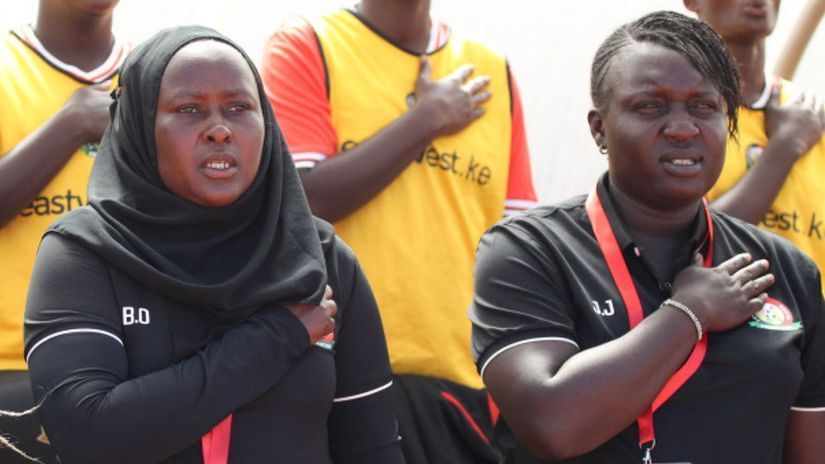
Nairobi responded with a triple substitution, introducing Chris Opondo, Adams Nyambane, and Kefa Nakhumicha, seeking fresh legs, verticality, and improved ball progression.
Their build-up became more patient, with Oduor integrating into the first line to form a plus-one overload against Maniema’s front-two press.
This allowed Nairobi to progress cleanly through the first phase, though Maniema’s discipline in recovering second balls and defensive duels limited Nairobi’s penetration.
As game-state pressure grew, Nairobi pushed more men forward, adopting more direct passes and aggressive field occupation.
Maniema adapted by retreating deeper into a compact 4-4-2 block, prioritising safety-first clearances, slowing the tempo, and disrupting Nairobi’s rhythm.
Their late-game management - long clearances, controlled defensive spacing, and deliberate time-rhythm manipulation - ensured they protected their lead until the final whistle.