


TACTICAL ANALYSIS MOZZART BET CUP: How KCB Overpowered Zetech Titans


Reading Time: 5min | Sun. 08.03.26. | 21:40
KCB’s 4-0 victory was not simply the result of individual moments but rather a product of consistent structural advantages and better decision-making in key phases of play
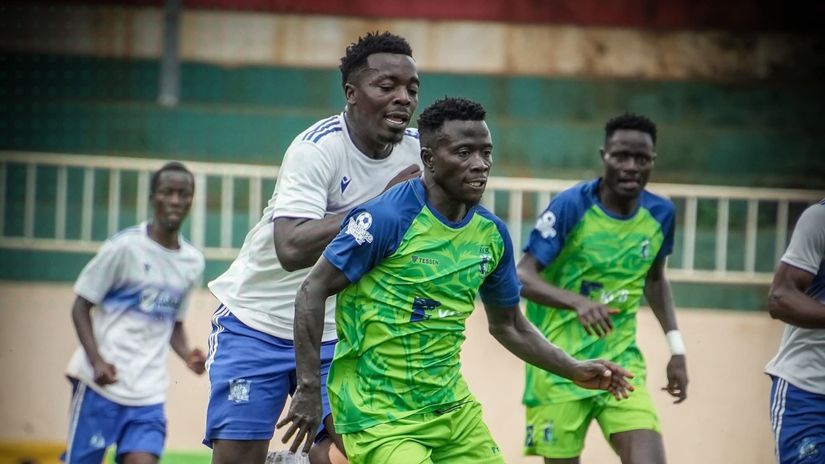
Zetech Titans suffered a comprehensive defeat against KCB FC in a match shaped largely by aggressive pressing, transitional attacks, and efficient exploitation of wide areas.
KCB’s 4-0 victory was not simply the result of individual moments but rather a product of consistent structural advantages and better decision-making in key phases of play.
Zetech Titans began the match in a 4-3-3 structure.
William Odek started in goal behind a defensive line composed of John Ouma at right-back, Bruce Shisia at left-back, and central defenders Larry Odhiambo alongside captain Prince Ila.
In midfield, Kingsley Chibueze operated as the deepest pivot with George Odhiambo providing support, while Josphat Waweru played slightly higher as the advanced midfielder.
The front three consisted of Abdallah Bwire on the right wing, Richard Otieno on the left, and Michael Okoth leading the line as the central striker.
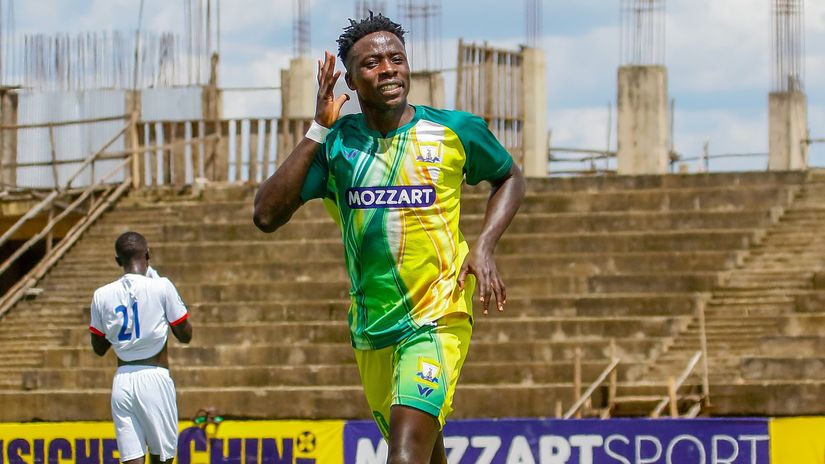
KCB lined up in a 4-1-2-3 structure.
Elvis Ochieng was in goal with Nashon Wekesa at right-back and Mohamed Siraj on the left. Amatton Samunya partnered Nashon Alembi in central defence.
Fortune Omotto functioned as the single defensive midfielder, while Humphrey Mieno and Richard Omondi played ahead of him with the latter often drifting between lines to support attacking phases.
The forward line featured Boniface Omondi on the right wing, David Sakwa on the left, and Kevin Etemesi as the central striker.

From the opening minutes, KCB implemented an aggressive high-pressing scheme aimed at preventing Zetech from building comfortably from the back.
Their front three pressed the Titans’ centre-backs while the midfield line stepped forward to close passing lanes into central areas.
This forced Zetech to avoid central progression and instead direct their build-up down the flanks.
The pressure also encouraged hurried clearances and long restarts from goalkeeper William Odek, limiting the Titans’ ability to construct patient possession sequences.
KCB’s pressing structure was particularly effective because of the compact distances between players.
With Omotto screening the defence and Mieno pushing higher to support pressing triggers, the team was able to recover loose balls quickly and immediately launch counter-attacks.
The visitors’ attacking approach during the early stages relied heavily on quick transitions and wide deliveries into the box.
KCB frequently targeted the right side through Boniface Omondi and overlapping full-back Nashon Wekesa.
.JPG)
Wekesa’s long throw-ins and crossing ability created repeated pressure on Zetech’s defensive line.
Simultaneously, Mohamed Siraj’s inswinging corner deliveries and free-kicks added an additional set-piece threat.
Although the initial attempts lacked the finishing quality required to produce goals, the pattern was clear: KCB sought to destabilize the Titans through wide deliveries and aerial duels.
Zetech attempted to respond by searching for runs in behind the defensive line, particularly through Michael Okoth and the wide forwards attacking through wide areas.
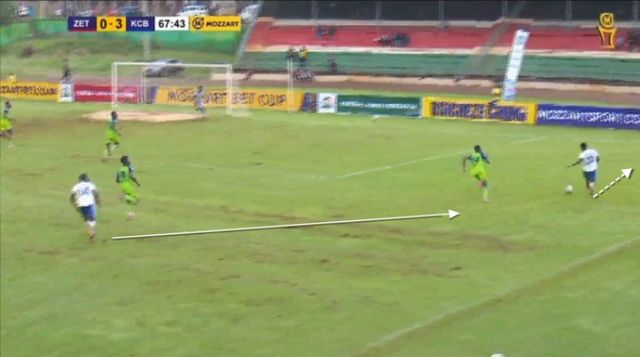
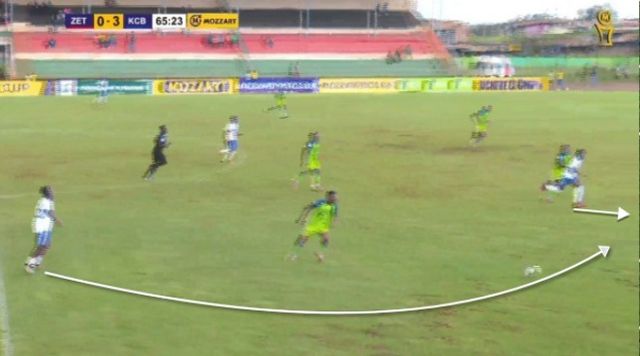
However, their build-up remained largely direct, often relying on long goal kicks and forward passes rather than sustained positional play.
Despite creating early opportunities, KCB initially struggled to convert their pressure into goals.
A notable chance arrived in the 37th minute when Siraj’s free-kick delivery found David Sakwa, whose effort narrowly missed the target.
However, KCB finally broke the deadlock in the 40th minute. A cross from the left by Sakwa caused confusion in the defensive line, allowing Richard Omondi to capitalize and deflect the ball into the net.
The goal highlighted Zetech’s vulnerability when defending crosses and their difficulty maintaining defensive coordination under sustained pressure.
Just three minutes later, KCB doubled their advantage.
Boniface Omondi received the ball in isolation on the right side of the penalty area and fired a powerful low shot beyond the goalkeeper.
The situation arose because Zetech’s defensive block failed to close down the winger quickly enough, allowing him time and space to execute the shot.
By halftime, KCB’s structural superiority and efficiency in wide areas had already established a decisive 2-0 lead.
At the start of the second half, KCB introduced Francis Kahata in place of David Sakwa, adding creativity and composure in advanced areas.
Zetech also made attacking adjustments by introducing another winger in an attempt to stretch the opposition defence.
Zetech attempted to increase their attacking tempo by using third-man combinations and passing triangles along the flanks.
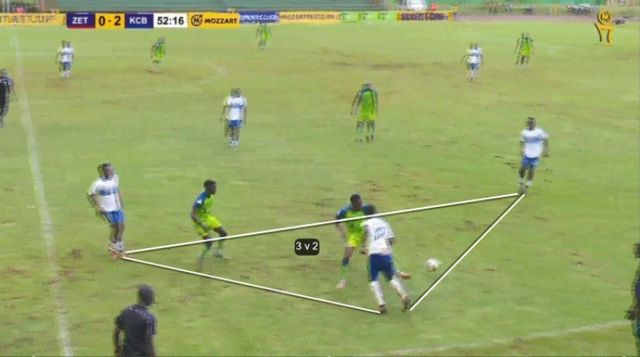
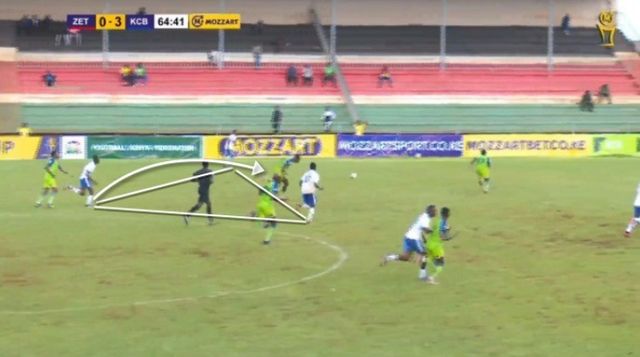
These sequences briefly improved their ball circulation and helped them enter the attacking third more frequently.
However, the final execution remained poor.
Their attacking moves often collapsed due to inaccurate final passes or a lack of composure in front of goal.
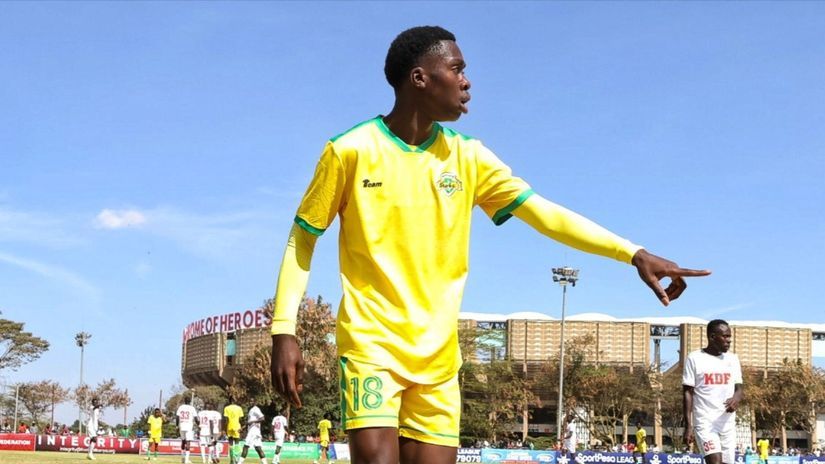
Meanwhile, KCB continued to exploit transitions effectively.
One of the defining features of KCB’s performance was their counter-pressing structure.
Immediately after losing possession, nearby players aggressively closed down the ball carrier while teammates blocked passing lanes.
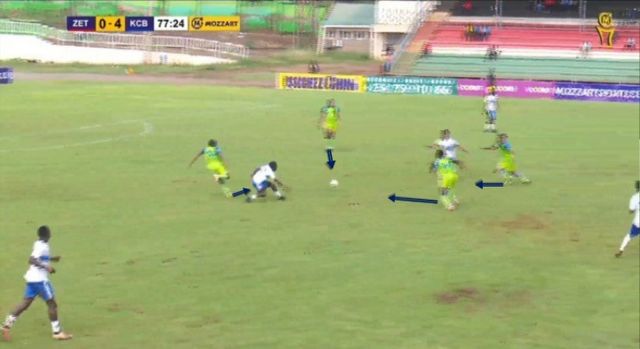
This compact positional setup ensured that Zetech rarely progressed through central areas and frequently lost possession in dangerous zones.
The impact of this approach became evident in the 58th minute when KCB scored their third goal.
Francis Kahata delivered a lofted pass that found Boniface Omondi making a perfectly timed run into the box.

The winger calmly finished to extend the lead to 3-0.
The goal demonstrated KCB’s effective combination of quick vertical passing and intelligent off-ball movement.
As the match progressed, KCB introduced further attacking substitutions including Samuel Feargod.
Their strategy began to incorporate longer goal kicks aimed at the striker’s aerial ability, providing a direct outlet for relieving pressure.
Zetech continued to circulate possession but struggled to penetrate KCB’s organized defensive block.
In the 76th minute, KCB sealed the victory with their fourth goal.
A delivery from the right wing reached Samuel Feargod, who finished calmly after finding himself unmarked inside the penalty area.
The goal again reflected Zetech’s defensive issues in dealing with wide service and marking runners inside the box.
Beyond their attacking efficiency, KCB also demonstrated strong defensive organization.
Players maintained close spacing across the pitch, reducing the distances Zetech needed to exploit when building attacks.
This compact structure enabled KCB to regain possession high up the pitch and prevent sustained pressure.
Late in the match, Zetech nearly scored a consolation goal, but a lack of composure from their striker resulted in a missed opportunity.
Moments later, captain Prince Ila received a second yellow card for denying Boniface Omondi a clear goal-scoring opportunity, reducing Zetech to ten men.
The match ultimately illustrated a clear contrast in tactical execution.
KCB combined aggressive pressing, efficient wide play, and intelligent transitional attacks to dominate the contest from start to finish.
Zetech Titans, despite attempting to use direct balls and flank combinations, struggled to progress consistently due to KCB’s compact defensive structure and effective counter-pressing.
The result was a convincing performance in which KCB’s tactical discipline and exploitation of wide spaces proved decisive.