


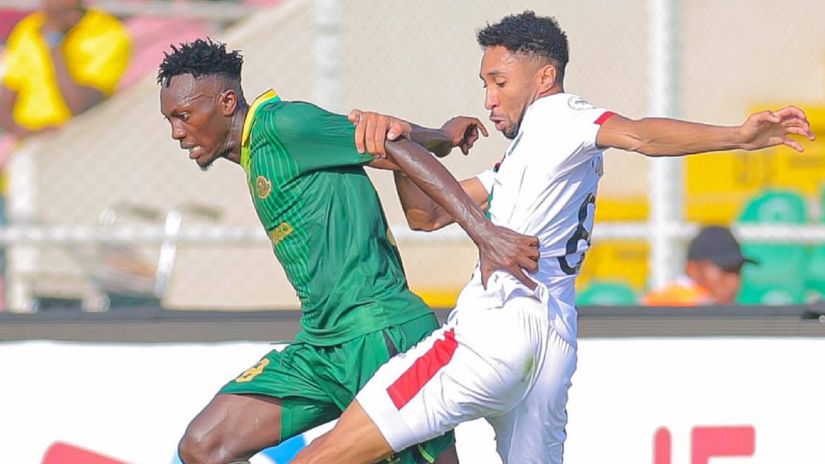
TACTICAL ANALYSIS: How Harambee Stars midfielder tilted game in Yanga’s favour against AS FAR Rabat







Reading Time: 5min | Tue. 25.11.25. | 13:22
The Tanzanian champions showcased structural clarity, controlled pressing mechanisms and intelligent manipulation of space in and out of possession, ultimately overcoming an AS FAR side that demonstrated resilience, defensive organization and tactical adjustments throughout the match
Looking to right the wrongs of last season on the continental stage, where they did not make it past the group stage, Young Africans opened their 2025/2026 CAF Champions League Group B campaign with a tactically mature performance against AS FAR Rabat at the New Amaan Complex Stadium.
Follow our WhatsApp channel for more news
The Tanzanian champions showcased structural clarity, controlled pressing mechanisms, and intelligent manipulation of space in and out of possession, ultimately overcoming an AS FAR side that demonstrated resilience, defensive organization, and tactical adjustments throughout the match.
Young Africans began the match in a 4-3-3 organizational structure, with Djigui Diarra in goal and a back line comprised of Hussein Mohamed at left-back, Mwenda Israh at right-back, and the centre-back pairing of Job Dickson and Bakari Nondo.
The midfield featured Duke Abuya as the deep pivot responsible for screening the back line and dictating tempo, supported by Max Nzengeli, while Mudathir Yahya operated as the more advanced midfielder, rotating frequently into the half-spaces.
In the attack, Celestine Ecua manned the right flank, Pacome Zouzoua the left, and Prince Dube led the line.
AS FAR Rabat lined up in a 4-4-2, with Ahmed Tagnaouti in goal.
The Moroccan side deployed Anas Bach at right-back, Carneiro Augusto at left-back, and Louadni Marouane and Abdelhamid Yunis as the central defensive pairing.
Mohamed Rabie Hrimat served as the deep pivot, shielding the defence and initiating the first phase of build-up, partnered by Zinedine Derrag in midfield.
On the wings, Khalid Ouarkhane and Ahmed Hammoudan provided width, while Reda Slim and Youssef Alfahli operated as the front two.

From the early stages, Young Africans imposed their rhythm through passing triangles and third-man combinations, particularly on the left flank where Hussein Mohamed, Zouzoua and Yahya frequently combined to manipulate AS FAR’s defensive line.
These patterns created layers of progression that allowed Yanga to dominate central and wide corridors.
Their set-piece threat also emerged early, with well-executed routines creating dangerous moments inside the AS FAR penalty area.
While Yanga controlled possession, AS FAR remained organized defensively, using zonal marking during corners and maintaining compact distances between their midfield and defensive units.
Pressing remained a key tool for Yanga.
Out of possession, they shifted into a 4-2-3-1 high press, with the front line suffocating AS FAR’s attempts to build from the back.
Abuya and Max Mzengeli provided horizontal coverage in midfield, while the wingers acted as inside forwards, tucking inside to draw defenders and create channels for the full-backs to advance.
The press targeted Hrimat, AS FAR’s lone pivot, forcing Derrag to occasionally drop deep to support build-up.
This pressure disrupted AS FAR’s rhythm, forcing the Moroccans to switch to long goal kicks to bypass Yanga’s front press.
When they targeted the half-space channels with direct balls, Yanga’s high line - coordinated by Job and Nondo - held firm, catching the AS FAR forwards offside repeatedly.
While under pressure, AS FAR attempted to impose their own pressing identity using wide-area triggers.
A lateral pass into either full-back immediately activated their press, with the wide midfielder and nearest forward collapsing to compress Yanga on one side of the field.
This approach allowed AS FAR to disrupt Yanga’s progression occasionally, but it also opened counter-attacking avenues due to the aggressive nature of their pressing shifts.

AS FAR Rabat used the lateral pass as a pressing trigger, swarming the full-back with the wide midfielder and nearest forward to compress play on one side - disrupting Yanga’s buildup but exposing themselves to counter-attacks due to the aggression of their press
While under pressure, AS FAR attempted to impose their own pressing identity using wide-area triggers.
A lateral pass into either full-back immediately activated their press, with the wide midfielder and nearest forward collapsing to compress Yanga on one side of the field.
This approach allowed AS FAR to disrupt Yanga’s progression occasionally, but it also opened counter-attacking avenues due to the aggressive nature of their pressing shifts.

Despite Yanga’s dominance, AS FAR demonstrated impressive defensive structure.
They closed central pockets efficiently, maintained pressure on Yahya’s half-space movements, and limited clean penetrative passes from the Tanzanian champions.
A large part of their resistance came from goalkeeper Ahmed Tagnaouti, who produced an outstanding 12 saves in the first half, preventing Yanga from capitalizing on their territorial advantage.
Yanga also posed a constant threat down the left, with Zouzoua and Mudathir combining to produce overloads and manipulate AS FAR’s left side.
Transition moments from this flank repeatedly created danger, especially when Yahya received between the lines and released early passes into space for Dube.
At halftime, AS FAR Rabat introduced two substitutes: Hamza Khabba and Abdelfettah Hadraf, replacing Reda Slim and Khalid Ouarkhane, bringing greater physicality and fresh dynamics on the flanks.
This shift preceded AS FAR’s defensive transition to a 5-3-2 low block when out of possession, adding numerical stability in the back line.
With this new structure, AS FAR began using double-width patterns, particularly on the right, where Anas Bach and Alfahli Youssef combined to stretch Yanga’s defensive shape.
Their attacking strategy evolved into using false overlapping runs and early half-space crosses, attempting to exploit gaps behind the high full-backs of Yanga.
However, it was Young Africans who found the breakthrough.
In the 57th minute, Yahya threaded a precise pass into the right channel where Prince Dube made a powerful horizontal run behind the AS FAR defence.
Outpacing and outmuscling Yunis Abdelhamid, Dube drove into the box and finished past Tagnaouti, giving Yanga a 1-0 lead.
After taking the lead, Young Africans adopted a calmer approach, controlling the game at a low-to-medium tempo.
They drew AS FAR players forward before launching controlled transitions.
Their defensive shape alternated between a 5-4-1 low block in deeper phases and a 4-4-2 mid block when initiating pressure.
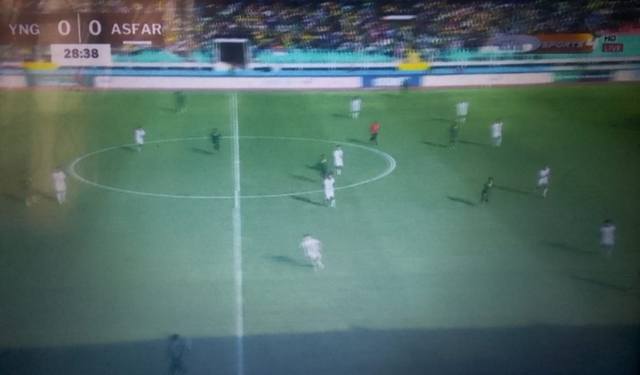
AS FAR Rabat dropped into a compact 4-4-2 mid-block out of possession, staying narrow and vertically tight to limit central progression and force Yanga toward the flanks.
This flexibility showcased Yanga’s maturity.
The wingers dropped deeper when required, full-backs adjusted their height intelligently, and Abuya continued screening the centre with precision.
AS FAR pushed forward aggressively in search of an equalizer, but Yanga’s compactness, counter-pressing, and disciplined rest-defense limited their penetration.
In the end, Young Africans’ tactical discipline, intelligent pressing, and structured buildup earned them a deserved victory in Group B’s opening match.
AS FAR Rabat showed resilience, defensive organization, and moments of tactical creativity, but Yanga’s coordinated movements, superior spacing, and effective game management set the foundation for a strong start in their CAF Champions League campaign.