


TACTICAL ANALYSIS: Harambee Stars' flawed gameplan that Senegal exploited to devastating effect


Reading Time: 5min | Wed. 19.11.25. | 09:46
Beyond the painful scoreline, however, the match was a tactical masterclass from Senegal and a harsh reminder of Kenya’s structural vulnerabilities at both ends of the pitch
“Sadio Mané, enough is enough!!” This was the cry of a visibly distressed Kenyan fan that pierced through the cold Turkish night at the Mardaan Stadium, moments after the Al Nassr forward calmly slotted home his second of the match and Senegal’s fourth - barely 31 minutes into the game.
Follow our WhatsApp channel for more news
It was a statement that captured the full emotional weight of a night to forget for head coach Benni McCarthy, as Kenya endured one of their most humbling defeats in recent memory.
Beyond the painful scoreline, however, the match was a tactical masterclass from Senegal and a harsh reminder of Kenya’s structural vulnerabilities at both ends of the pitch.
Kenya began the match in a 4-2-3-1, with Brian Bwire in goal, Baron Ochieng and Bryton Onyona taking up the full-back roles, and a centre-back pairing of Alphonce Omija and Sylvester Owino.
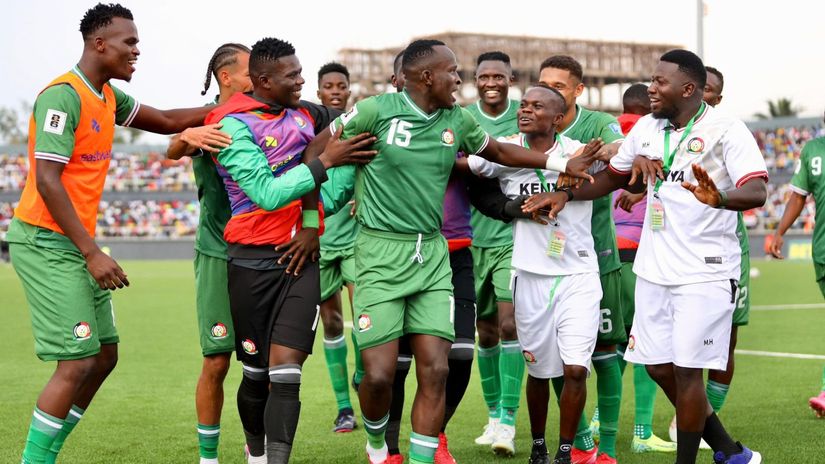
The double pivot of Alpha Onyango and Teddy Akumu was tasked with anchoring possession, supporting build-up, and screening transitions.
William Lenkupae operated on the right wing, Austin Odhiambo drifted inside from the left into half spaces to link play, Duke Abuya occupied the advanced midfield role, and Jonah Ayunga led the line as a deep-dropping striker responsible for hold-up and connection with midfield runners.
However, once play settled, Kenya’s on-paper structure morphed into a 4-1-4-1 in possession. Akumu dropped deeper at times to form a single pivot, while the second line of four pressed SenegaI’s first phase aggressively.
In build-up, Kenya used a 4-2 structure, keeping centre-backs wide, fullbacks in close proximity with them and the double pivot close for short combinations.
But this is precisely where Senegal forced the first cracks.
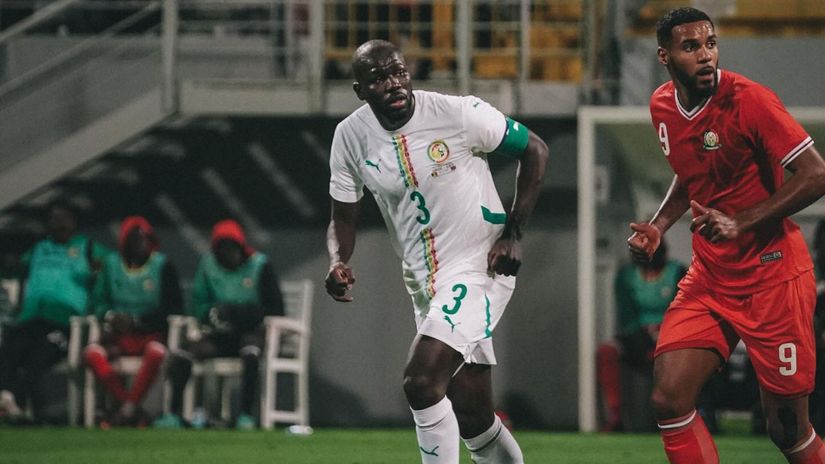
Head coach Pape Thiaw deployed a highly modern and fluid 3-4-3, shifting into a 3-2-5 in-possession structure. The back three - Mamadou Sarr, Abdoulaye Seck, and the experienced Kalidou Koulibaly - provided stability, while the wingbacks Ilay Camara (right) and El Hadj Malick Diouf (left) pushed extremely high to pin Kenya’s centre-backs and fullbacks alternatively with regard to the situation.
In midfield, the partnership of Pape Gueye and Pathé Ciss created control, recycling possession and triggering vertical runs. Up front, the trio of Sadio Mané, Ibrahim Mbaye, and Jackson Nicolas paired pace, dynamism, and fluid rotation.
A key early principle from Senegal was simple but devastatingly effective: one of the three forwards dropped into midfield, attracting a Kenyan press, while a wingback immediately pushed high to exploit the vacated channel.
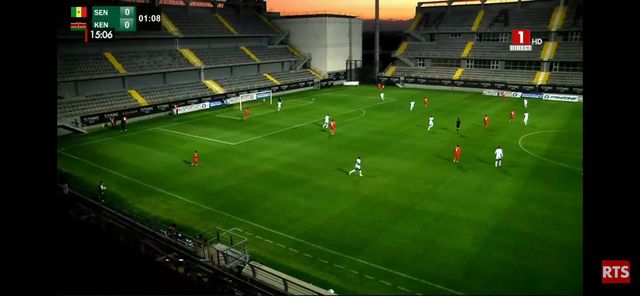 Senegal high press
This sequence repeatedly stretched Kenya’s defensive line and created spaces for long penetrative passes behind.
Kenya tried to play out from the back, but Senegal’s front three pressed the centre-backs directly. Within nine minutes, the warning became punishment: Jackson dribbled past a backpedalling defense and finished low across Bwire. 1–0.
Three minutes later, Kenya were punished again. High pressure forced a turnover, Mbaye pounced and fed Diouf, who dispatched the second. The left channel - Diouf and Mané - was a repeat danger zone, and Kenya never solved it.
In the 15th minute, the Kenyan high line was exposed. Seck pierced Kenya’s high defensive line with a direct through ball, isolating Jackson one-on-one with the goalkeeper. He converted with ease. 3–0.
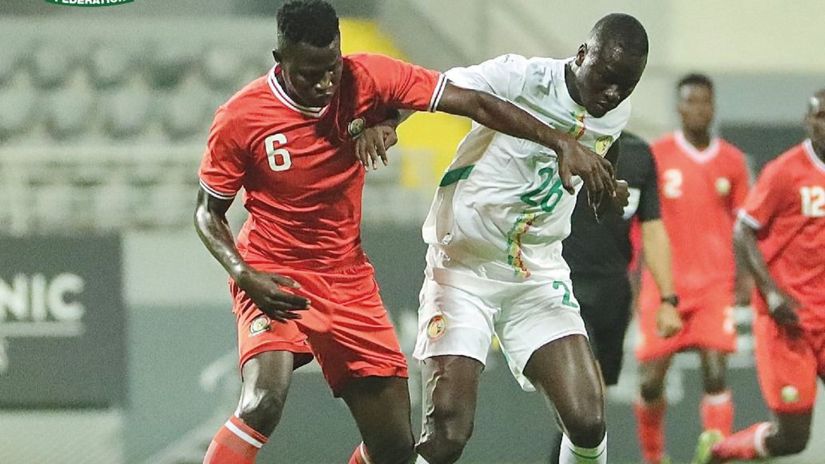
Again quick transition in the 17th minute saw Mané racing into space, overpowering two defenders before smashing in Senegal’s fourth. By this point, Kenya’s rest defense was numerically inferior, often leaving only two defenders against three Senegal runners.
In the 31st minute, Mbaye’s slaloming run on the left drew a foul inside the box; Mané stepped up and converted emphatically. 5–0.
Miscommunication at Kenya’s backline was duly punished again with a deep Jackson cross, causing confusion between Baron Ochieng and goalkeeper Bwire. The loose ball fell kindly to Mané, who completed his first-half hat-trick. 6–0.
Senegal’s relentless approach was driven by fluid forward rotations that constantly disrupted Kenya’s defensive reference points, while their wingbacks pushed high to create 2v1s on the flanks and stretch the back line.
Combined with well-timed long balls into the spaces behind Kenya’s high defense and an aggressive pressing scheme designed to lure Kenya into traps before springing forward at pace, Senegal repeatedly carved through the structure with ease.
Kenya seemed to abandon the build-from-back approach as the first half neared the end, aware of how dangerously Senegal exploited every hesitation.
In the second half, Kenya introduced four substitutes - Mike Kibwage, Ovella Ochieng, Rooney Onyango, and Ryan Ogam - in an attempt to stabilise the match after the first-half collapse, while Senegal rotated Sadio Mané, Mamadou Sarr, and Pape Gueye for Lamine Camara, Boulaye Dia, and Rassoul Ndiaye. Despite the fresh legs on both sides, the overall pattern of play remained unchanged.
Just two minutes after the restart, Boulaye Dia drew Kenyan defenders centrally before slipping in Mbaye, who finished with a precise low shot to make it 7–0. Senegal continued to exploit the wide channels with direct balls over the top, taking full advantage of Kenya’s slow defensive recovery and poor cohesion in transition.
.jpeg) Senegal front three
Senegal front threeAs the match progressed toward the 70th minute, Senegal shifted into a more controlled possession rhythm, yet still threatened Kenya whenever they accelerated into wide transitions, an area the Kenyan full-backs consistently struggled to protect.
The eighth goal arrived in the 80th minute when a fatigued Sylvester Owino brought down substitute Cherif Ndiaye inside the box, and the forward converted the penalty with composure, sealing a painful 8–0 result.
Senegal’s dominance stemmed not merely from superior individual quality but from a systematic and coordinated tactical superiority. Their 3-2-5 structure, fluid rotations in the front line, and aggressive wingback surges created constant numerical and positional overloads, tearing apart Kenya’s defensive shape.
Kenya’s high line lacked both pace and compactness, making it vulnerable to Senegal’s direct vertical play, while their 4-2 build-up struggled to withstand the intensity of Senegal’s pressing traps.
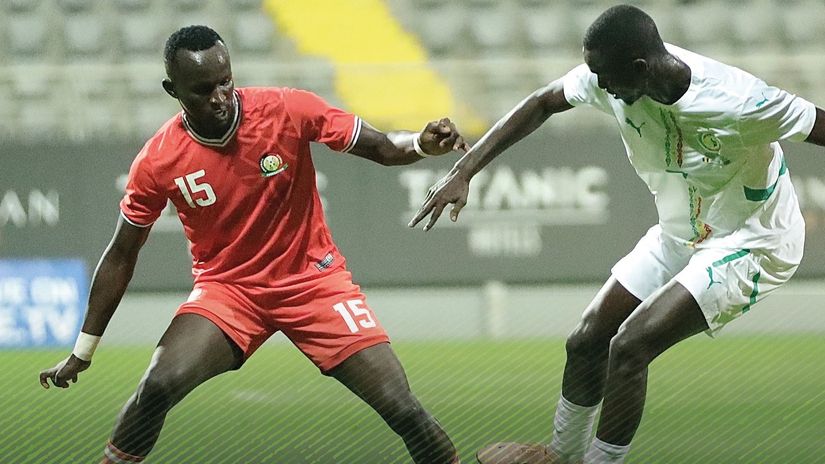
The defeat was heavy, but the lessons are crucial - Kenya must improve press resistance in early phases, reinforce their rest defense, enhance wide coverage and transitional reactions, and develop greater adaptability against elite opponents.
It was a night to forget, but one that offers vital insights for the future!