


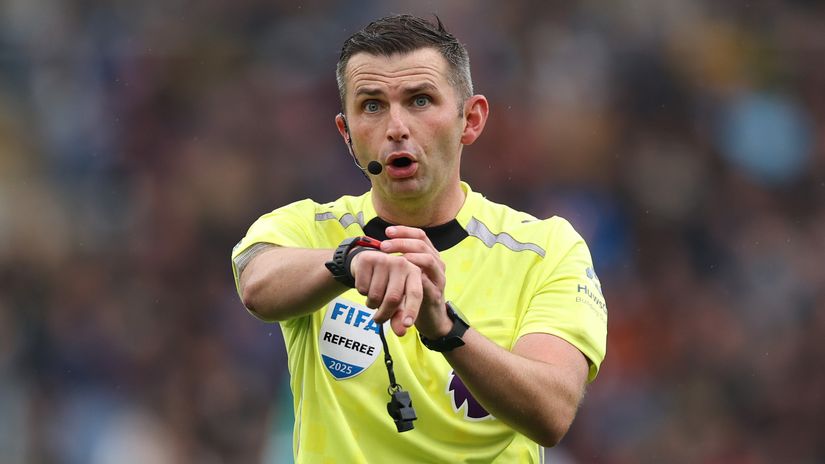
Cure for time-wasting – countdown timers to be introduced in football
.jpg)





Reading Time: 2min | Sat. 28.02.26. | 18:38
A series of new football-related decisions will most likely be implemented from the World Cup onwards
A broader role for VAR and tougher rules on time-wasting are set to headline this summer’s World Cup after sweeping changes were approved.
The International Football Association Board (Ifab) signed off on the updates during its annual meeting at Hensol Castle. From June 1, referees will be able to consult VAR not only for traditional key incidents, but also for corners and second yellow-card decisions. The amendments will officially apply from the 2026-27 season.
In a bid to speed up matches, football’s lawmakers are also clamping down on delays. Countdown timers — already successfully introduced for goalkeepers holding the ball — will now be extended to goal-kicks and throw-ins. Players who exceed the limit risk surrendering possession, meaning a slow goal-kick could turn into a corner, or a delayed throw-in handed to the opposition.
🚨 𝗕𝗥𝗘𝗔𝗞𝗜𝗡𝗚: Starting from season 2026/27, if a player takes too long in restarting the game, possession will switch to the opposition side.
— The Touchline | 𝐓 (@TouchlineX) February 28, 2026
A goal kick will become a corner, a throw in will become a throw in for the opposition, and if a substituted player takes longer… pic.twitter.com/KyJ69ncWWQ
Further anti-time-wasting steps include stricter substitution rules. A replaced player must exit the pitch within 10 seconds; otherwise, their substitute will be forced to wait, leaving the team a player short for at least a minute or until the ball next goes out of play. Injured players will also remain sidelined longer, with the mandatory absence increased to 60 seconds — double the current rule in the Premier League.
Ifab has also adjusted the interpretation of denying an obvious goalscoring opportunity (DOGSO). Previously limited to situations where a player was through on goal, the rule will now consider the wider attacking context, including the “location and number of attackers.”
Another debate gaining momentum concerns offside. Arsene Wenger — now FIFA’s head of global football development — has long pushed for a “daylight” approach, requiring a visible gap between the attacker and the second-to-last defender. After six years of discussion, trials of the proposal are finally set to begin, despite criticism that it could tilt the balance too heavily in favor of attackers.
Meanwhile, football authorities are also examining ways to discourage players from covering their mouths during heated exchanges. The issue resurfaced after Gianluca Prestianni of Benfica was accused of racially abusing Vinicius Junior of Real Madrid while concealing his speech with his shirt.
🚨 𝗕𝗥𝗘𝗔𝗞𝗜𝗡𝗚: Arsene Wenger's radical offside rule change has been opposed by British FAs and UEFA.
— The Touchline | 𝐓 (@TouchlineX) January 13, 2026
— @martynziegler pic.twitter.com/IGjguCyeL8
Altogether, the package of reforms reflects a clear attempt to protect the tempo of matches and enhance transparency in decision-making at the highest level of the game.